
Iraq is facing its worst drought in nearly a century as the Tigris and Euphrates decline because of upstream dams, damaged infrastructure and climate change. In November, Baghdad agreed to fund Turkish‑built water projects using proceeds from daily oil sales, converting oil revenue into a dedicated water fund. Critics warn the deal risks long‑term sovereignty and dependence, while officials say it will deliver urgent infrastructure; farmers displaced by shortages hope it will bring relief.
Iraq’s Oil‑for‑Water Gamble: A Risky Pact as the Tigris and Euphrates Run Dry

The riverfront overlooking the Tigris River in Mosul, north of Iraq, on November 20, 2025. - Zaid Al-Obeidi/AFP/Getty Images
Iraq — long known as the historic “land between two rivers” — is confronting an acute water emergency as the Tigris and Euphrates shrink amid a severe drought and growing upstream restrictions. The crisis is forcing Baghdad to take an unprecedented step: using oil revenues to finance Turkish‑built water infrastructure in a controversial November agreement that many fear could compromise long‑term sovereignty.
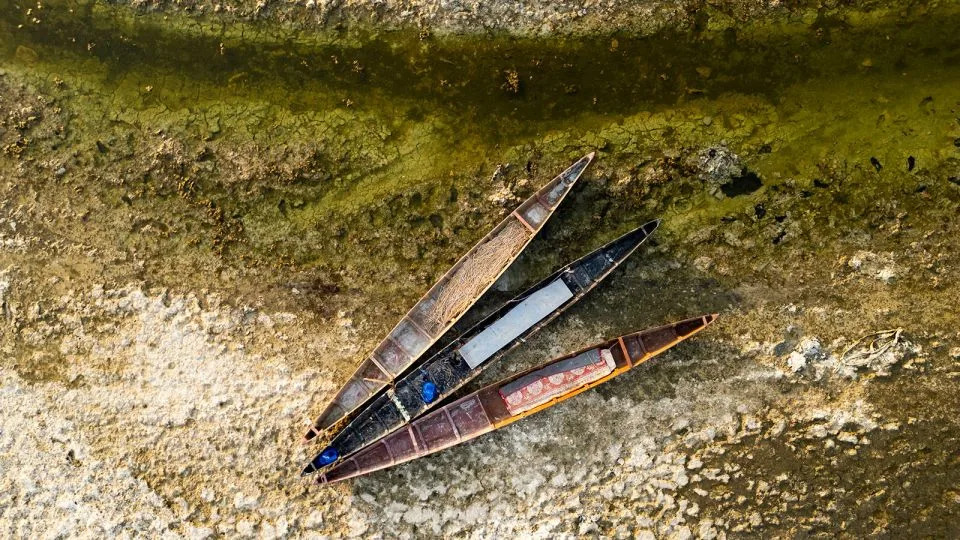
Traditional wooden fishing boats lie abandoned in dried-up marshes in Iraq's southern Basra province on September 4, 2025. - Hussein Faleh/AFP/Getty Images
What’s Driving the Shortage
A mix of regional and domestic factors has produced a sharp decline in available water. Upstream dams in Turkey, Iran and Syria have reduced cross‑border flows; decades of conflict, sanctions and underinvestment have left domestic water systems broken and inefficient; and climate change has produced Iraq’s worst drought in almost a century. At the same time, demand is rising as urban populations grow and agriculture — which uses more than 80% of the country’s water — remains water‑intensive.
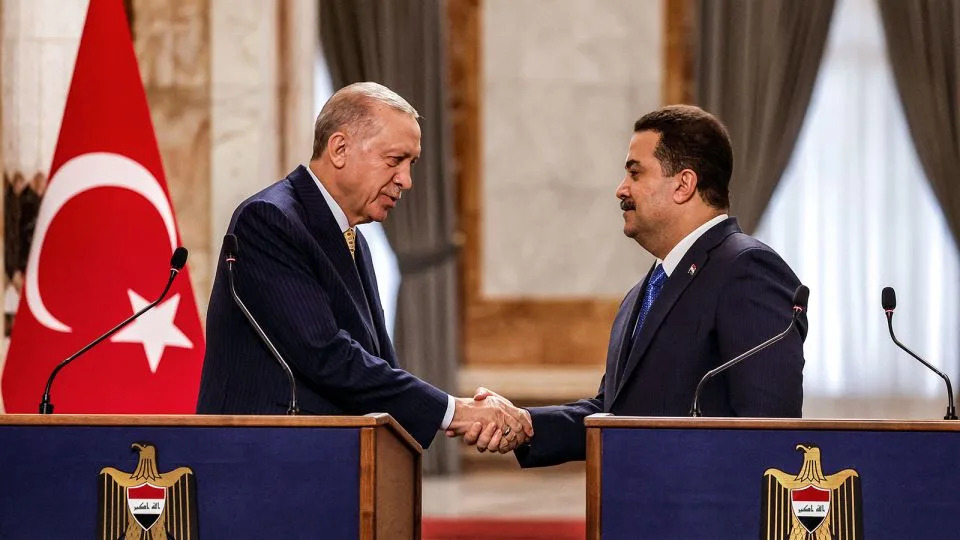
Turkey's President Recep Tayyip Erdogan, left, and Iraq's Prime Minister Mohammed Shia Al-Sudani shake hands in Baghdad on April 22, 2024. - Thaier Al-Sudani/POOL/AFP/Getty Images
Key Statistics
- Population: more than 46 million people rely on increasingly strained water resources.
- Agricultural Use: agriculture consumes over 80% of water withdrawn.
- Transboundary Dependence: roughly 60% of Iraq's water originates in Turkey.
- Displacement: more than 168,000 people have been displaced by climate and environmental pressures, according to the International Organization for Migration.
The Oil‑For‑Water Agreement
In November, Iraq and Turkey signed a Water Cooperation Framework Agreement under which Iraqi oil sales will be directed into a fund to pay Turkish contractors to build water‑efficiency and storage projects — including water‑harvesting dams, reservoir improvements and land reclamation initiatives. Iraqi officials say the fund will be ring‑fenced and managed to deliver urgent infrastructure faster than Iraq could on its own.
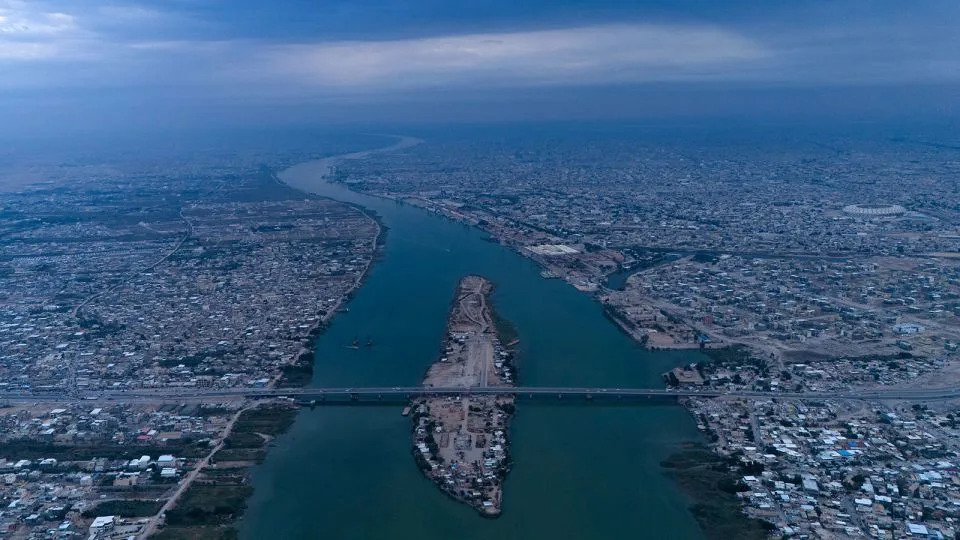
An aerial picture shows Sinbad island and the Khaled bridge on the Shatt al-Arab waterway, formed at the confluence of the Euphrates and Tigris rivers, in Iraq's southern city of Basra on December 4, 2024. - Hussein Faleh/AFP/Getty Images
“For the first time, there is a clear and binding mechanism for water sustainability in the Tigris and Euphrates,” Torhan al‑Mufti, water affairs adviser to Prime Minister Mohammed Shia Al‑Sudani, said at the signing.
Turkey framed the deal as mutually beneficial for regional stability and development. Turkish Foreign Minister Hakan Fidan said Ankara is committed to supporting Iraq’s security and development.
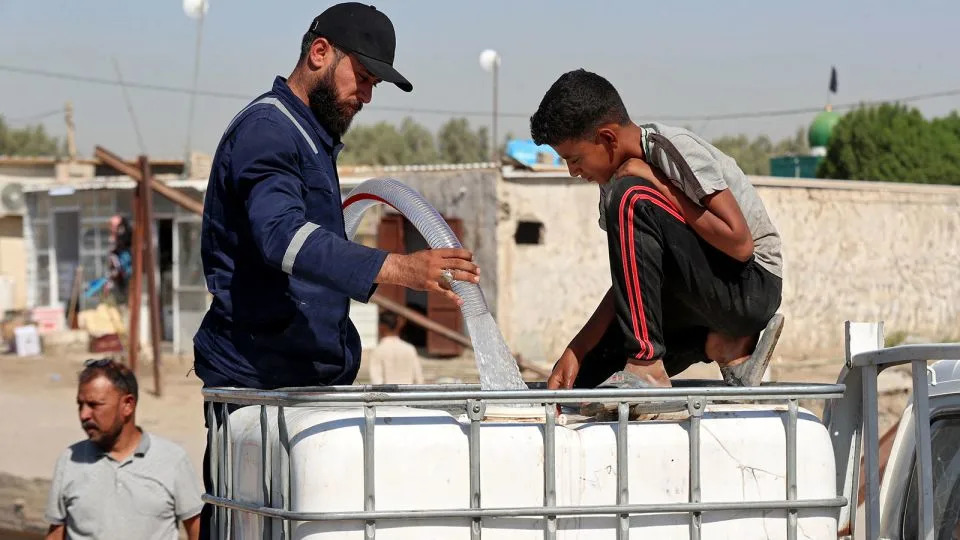
Residents of drought-affected villages fill their water containers at a distribution point in the town of al-Khudariyah, in Iraq's central Babel province, on September 15, 2025. - Karrar Jabbar/AFP/Getty Images
Concerns and Criticisms
The pact has drawn sharp criticism from Iraqi politicians, water experts and regional analysts. Critics argue the arrangement commodifies water and risks tying Iraq’s most vital resource to foreign contractors and external political interests. Observers warn of several potential problems:
- Sovereignty Risk: Heavy reliance on a bilateral, oil‑backed fund could weaken Iraq’s long‑term control over natural resources.
- Dependence: The deal may create political and economic leverage for Turkey at a moment when Iraq is negotiating from a position of scarcity.
- Short‑Term Focus: Experts call for broader reforms — especially in irrigation, agriculture policy and water governance — rather than primarily infrastructure projects.
“Water is a human right and should not be reduced to a commodity tied to oil revenues,” said Shurook Alabayachi, a Baghdad‑based water policy expert. Others note the agreement could nevertheless fast‑track essential infrastructure if managed transparently.
Human Impact
Beyond geopolitics, the crisis is a daily reality for many Iraqis. Thousands of farmers have abandoned fields or taken temporary work as orchards and croplands fail. Ahmed al‑Jash’ami of Babel province remembers seeing his family’s orchard die; Hussam Anizan from near Fallujah sold his five‑acre orange grove and now drives a taxi.
“We are farmers, generation after generation; I never imagined a day when we would see our farms and orchards die,” Ahmed al‑Jash’ami said.
Some affected farmers express guarded hope that the oil‑for‑water projects will bring relief, while experts stress that long‑term recovery will require sweeping governance reforms, improved water management, and international diplomacy among riparian states.
Conclusion
Iraq’s deal with Turkey highlights a stark regional dilemma: how riparian countries share dwindling freshwater in an era of climate stress. The agreement may provide rapid infrastructure investment, but it also raises fundamental questions about sovereignty, long‑term dependence and the reforms needed to make water resources sustainable for generations to come.


