Kim Jong Un has announced a major construction campaign to build health, leisure and industrial facilities across nearly one-third of North Korea, with projects planned in 20 regions, state media said. He praised soldiers mobilised for the work and framed the effort as a national transformation. Analysts say the push may reassign conventional military manpower to infrastructure even as the regime maintains its nuclear focus. The announcement comes ahead of a rare Workers' Party congress and amid sanctions and economic strain.
Kim Jong Un Launches Nationwide Building Campaign to 'Transform' One-Third of North Korea
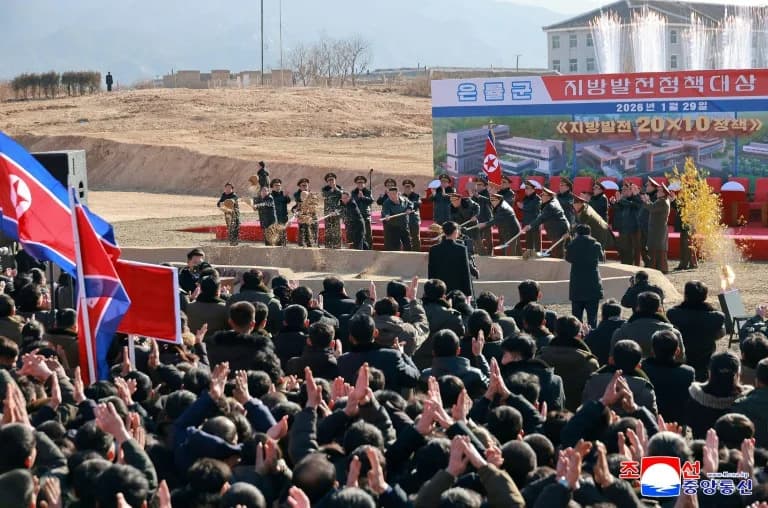
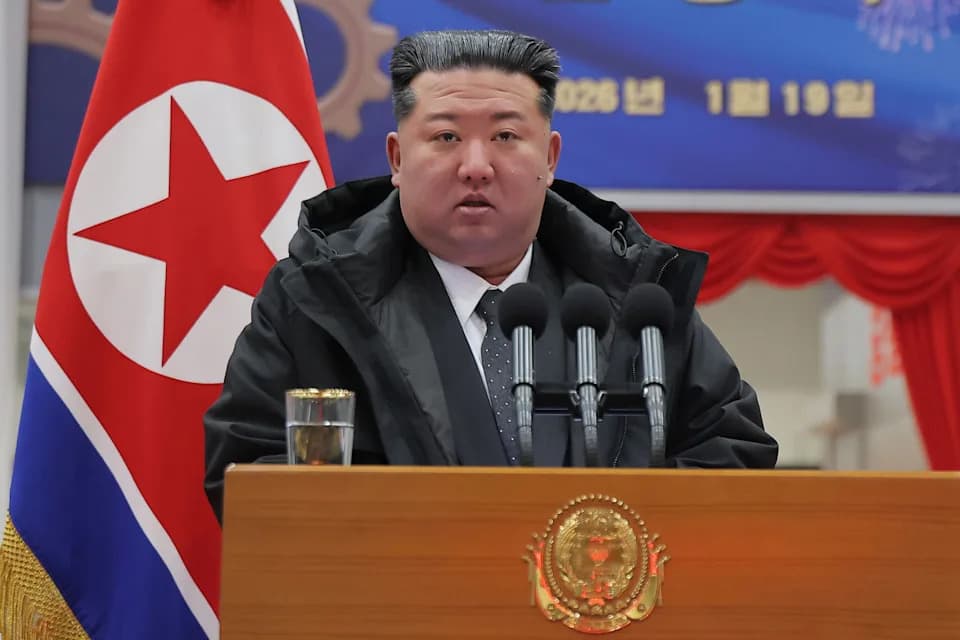
Kim's speech comes ahead of a landmark congress of the impoverished country's ruling Workers Party -- its first in five years -- which is expected to convene in the coming weeks (STR)(STR/KCNA VIA KNS/AFP)
Kim Jong Un pledged a sweeping construction campaign to "transform" North Korea by building public-health facilities, leisure complexes and industrial plants across roughly one-third of the country, state media reported Friday.
Speaking at a groundbreaking ceremony in Unnyul County, South Hwanghae Province, the official Korean Central News Agency (KCNA) said Kim unveiled plans for projects in 20 regions nationwide.
"We are now standing on the starting line of our gigantic struggle for another year, aimed at transforming the regions," Kim told attendees, adding that "nearly one-third of the cities and counties across the country will have been transformed."
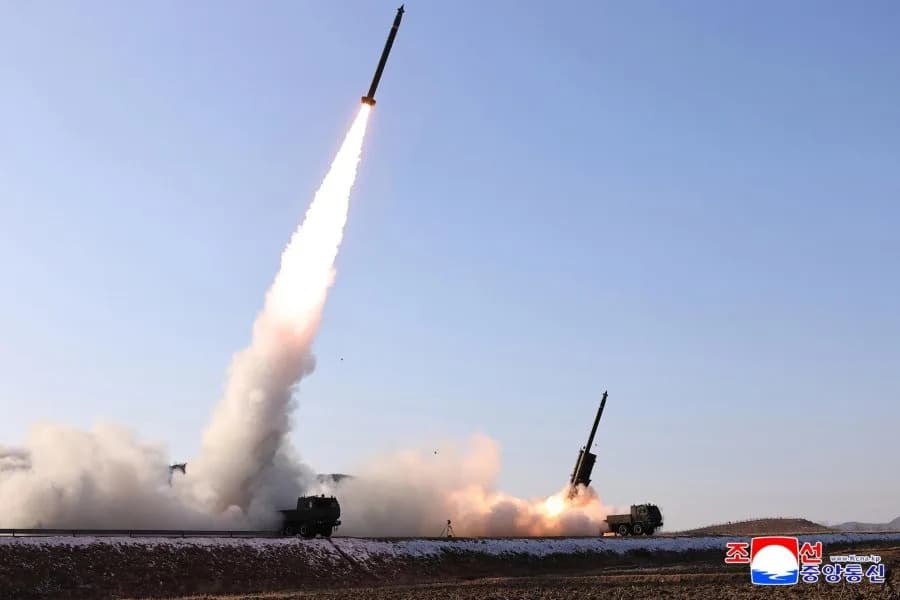
KCNA said the leader praised soldiers mobilised to work on construction sites as "creators of the people's wellbeing." State-released images showed Kim shoveling soil alongside officials as an enthusiastic crowd waved North Korean flags. Photographs also captured a large celebratory explosion described by state media as "thrilling."
Analysts' View and Wider Context
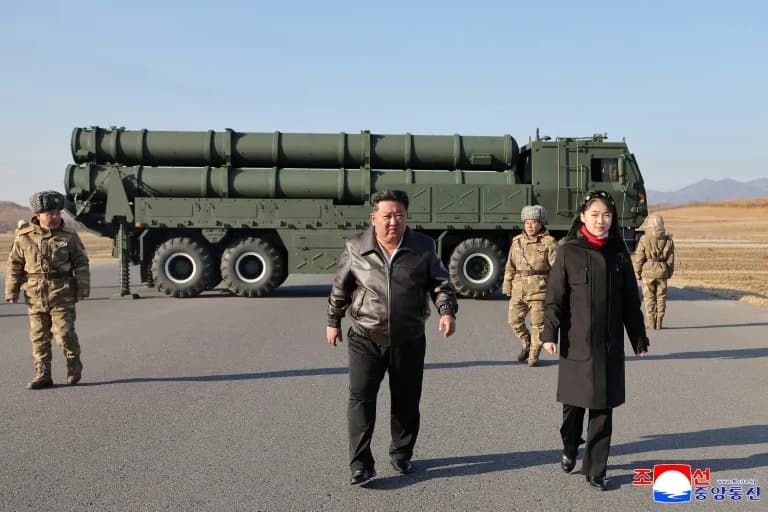
Observers told AFP the drive could signal a partial reallocation of conventional military manpower toward large-scale construction projects while the regime continues to prioritise its nuclear program. Ahn Chan-il, a researcher originally from North Korea, suggested the move may shift significant portions of military personnel into development roles.
The announcement comes ahead of a landmark congress of the ruling Workers' Party — the first in five years — expected in the coming weeks. North Korea remains under multiple layers of international sanctions for its weapons programmes and continues to struggle with a state-controlled economy and chronic food shortages.
Political and Economic Signals
Critics have long argued that the regime prioritises military and banned weapons programmes over civilian needs. In recent years Kim has deepened ties with Russia — with some reports claiming Pyongyang sent troops to assist Moscow in Ukraine — and moved to revive inbound tourism by developing coastal and mountain resorts as a source of hard currency. Two years ago, Kim pushed a regional development policy widely seen as acknowledging stark disparities between showcase Pyongyang and the rest of the country.
Kim has also publicly expressed frustration with slow project progress, rebuking officials and reportedly dismissing a vice premier in public last week for alleged incompetence — a sign of the regime's impatience with implementation.
While state media emphasises mass mobilisation and dramatic ceremonies, outside analysts caution that North Korea's economic constraints, sanctions and resource shortages may limit how quickly or extensively these construction plans can be fulfilled.
Help us improve.