Following an October ceasefire in Gaza, Bethlehem has seen a revival of festive life: the traditional midnight Mass in the Church of the Nativity, markets, lights and community events. Residents and choir members say the celebrations carry renewed meaning and hope, even as tensions and security operations persist across the West Bank. The return of pilgrims and shoppers is a crucial economic relief for a city where roughly 80% rely on tourism, after unemployment surged from about 14% to 65% during the war.
Bethlehem's Christmas Revival: Midnight Mass, Markets and Fragile Hope After Gaza Ceasefire

People pose for a picture in Manger Square in the West Bank city of Bethlehem, Tuesday, Dec. 16, 2025. (AP Photo/Mahmoud Illean)(ASSOCIATED PRESS)
At midnight on Christmas Eve, the familiar strains of the hymn "The Night of Christmas" will fill the tiny grotto beneath Bethlehem's Church of the Nativity — the spot traditionally venerated as the birthplace of Jesus Christ.
"On the night of Christmas, war is buried, On the night of Christmas, love is born,"
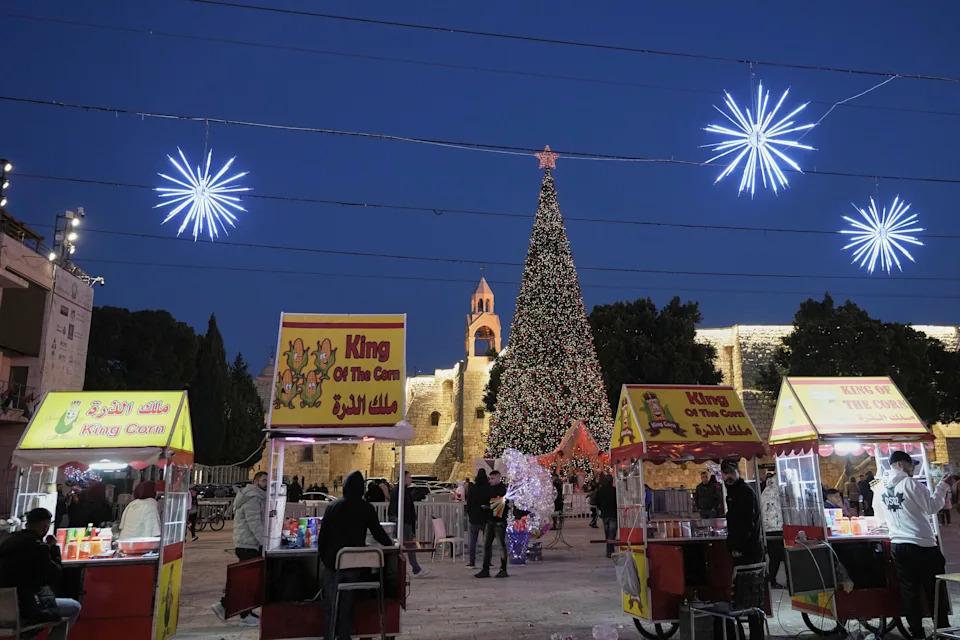
Palestinian vendors wait for clients in Manger Square in the West Bank city of Bethlehem, Tuesday, Dec. 16, 2025. (AP Photo/Mahmoud Illean)(ASSOCIATED PRESS)
Each year the local choir sings those lines during the midnight Mass. This year, after a ceasefire in Gaza that began in October, members say the words carry extra resonance.
"It reminds us that no matter the difficulties, the darkness, there is always a light and that hope is always alive," said Joseph Hazboun, conductor of the lay choir composed of local Catholics.
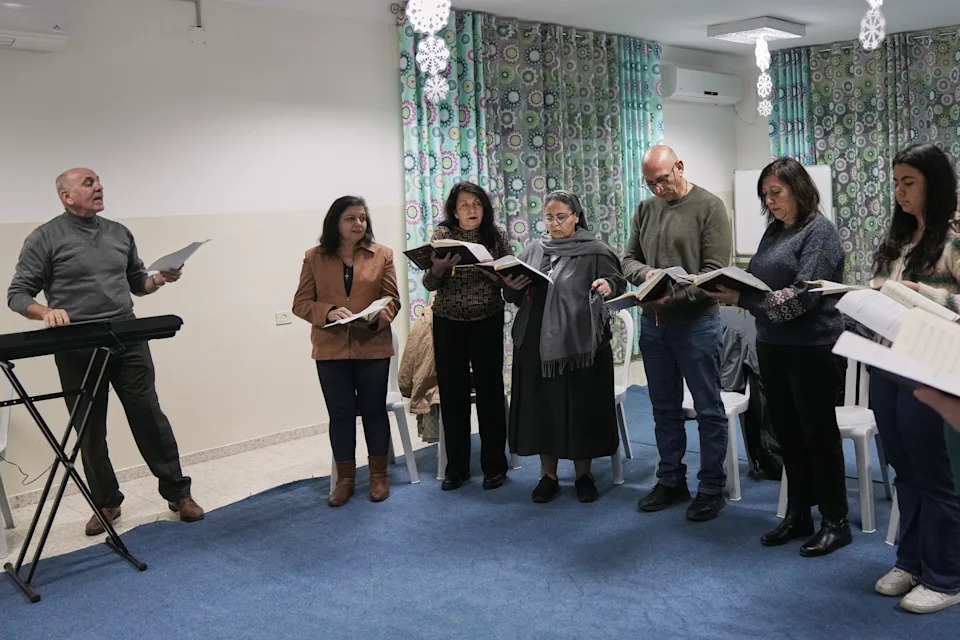
Joseph Hazboun, left, leads the rehearsal of a choir in St. Catherine's Church in the West Bank city of Bethlehem, Friday, Dec. 12, 2025. (AP Photo/Mahmoud Illean)(ASSOCIATED PRESS)
Festivities Return to Manger Square
After two years of subdued observance while the Gaza conflict continued, Bethlehem's streets and public spaces are coming back to life. Manger Square is once again adorned with festive lights, a Christmas market and children’s performances, and residents are gathering for services and celebrations that had been scaled back during the fighting.
"You can see the town come alive again," said Zoya Thalgia, a Bethlehem resident. "Everyone’s happy, everyone’s coming out to celebrate, no matter religion, no matter their stance, everyone is here."
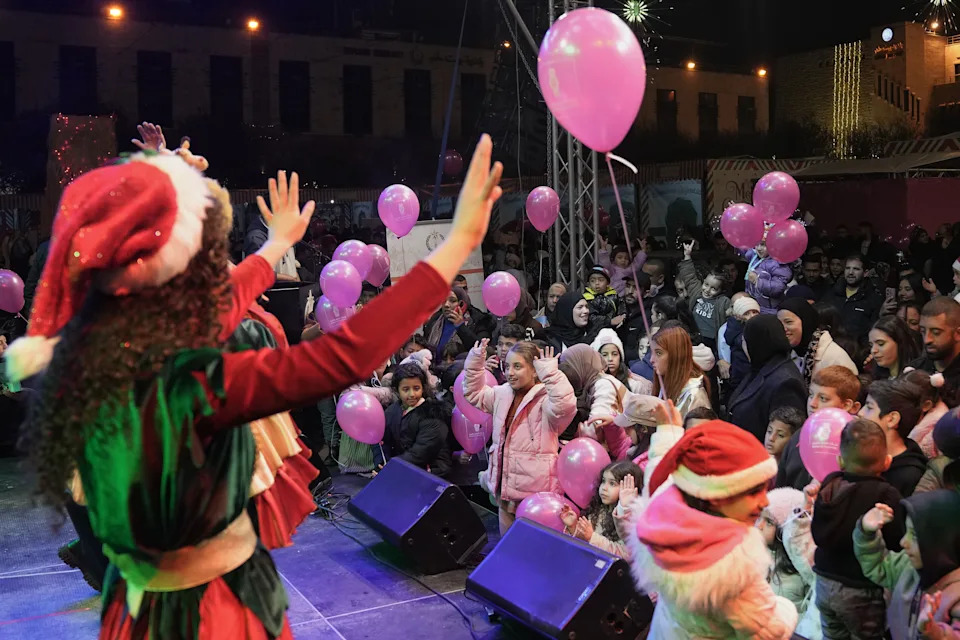
Palestinians watch performances in Manger Square in the West Bank city of Bethlehem, Friday, Dec. 12, 2025. (AP Photo/Mahmoud Illean)(ASSOCIATED PRESS)
Economic Lifeline Under Pressure
Tourism and pilgrimage have long been central to Bethlehem’s economy: the local government estimates roughly 80% of the city’s residents rely on tourism-related work. During prosperous times, those earnings circulate across the West Bank, a territory occupied by Israel since 1967 and long affected by poverty.
But the Gaza war severely strained livelihoods. Mayor Maher Nicola Canawati said the city's unemployment rate surged from about 14% to roughly 65% during the conflict. As poverty and joblessness rose, about 4,000 people reportedly left Bethlehem seeking work elsewhere.
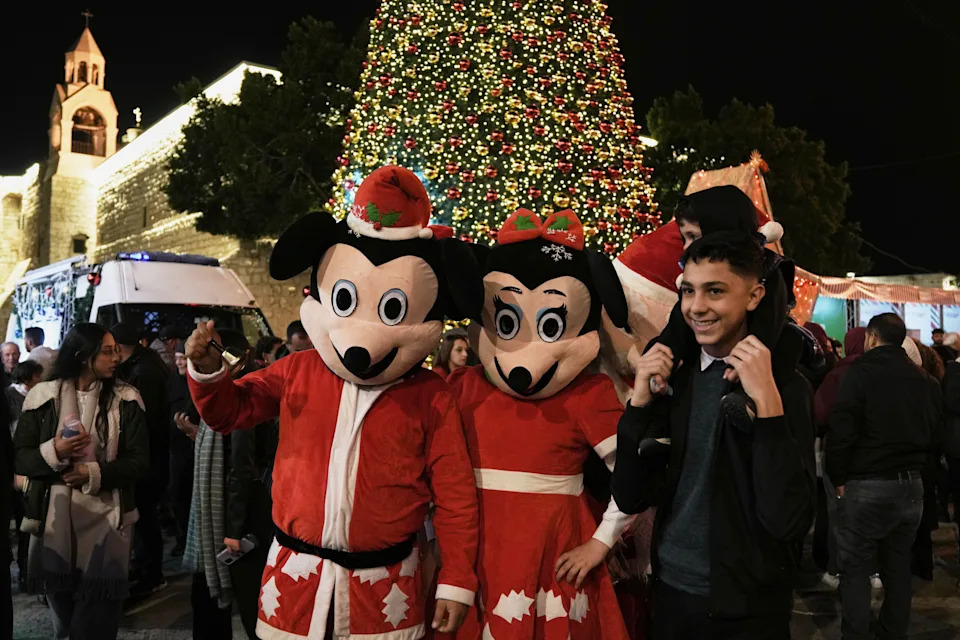
Palestinians pose for the pictures with performers in Manger Square in the West Bank city of Bethlehem, Friday, Dec. 12, 2025. (AP Photo/Mahmoud Illean)(ASSOCIATED PRESS)
Security Concerns and Enduring Communities
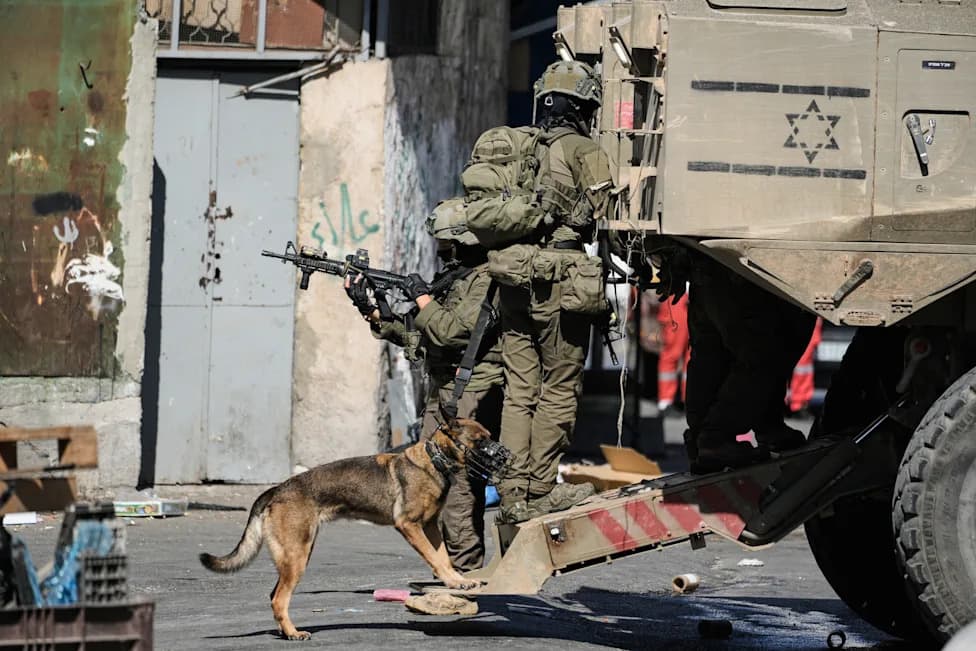
Although the ceasefire has allowed a return of festivities, tensions remain across much of the West Bank. Israel's military says it is targeting militants in the territory and continues to conduct raids, while attacks by Israeli settlers on Palestinians this year reached their highest recorded level since the U.N. humanitarian office began compiling data in 2006.
For Bethlehem's Christian community — now less than 2% of the West Bank's roughly 3 million residents — the ability to gather for midnight Mass and to sing in the grotto is both spiritually significant and a statement of endurance. "It's very holy, the place and the atmosphere and the songs and the words," said Odette Al Sliby, a lifelong choir singer. "As Christians in the Holy Land, there is a big message of being here."
Hazboun said he will pray this Christmas that Bethlehem's Christian population and Christian communities throughout the region do not shrink further amid ongoing economic pressure and regional instability.
Meanwhile, the lighting of Bethlehem's community Christmas tree this month — for the first time in two years — and revived markets in Ramallah and elsewhere across the West Bank offered families and children a welcome, if fragile, moment of seasonal joy.
"We continue to pray for peace. This is the land of peace, it’s the land where the Prince of Peace was born," Hazboun said. "We continue to pray and hope that one day we all will enjoy peace."
Help us improve.