Archaeologists in Jerusalem's City of David discovered a rare 1,300-year-old lead medallion stamped with a seven-branched menorah on both sides. Dated to the late sixth or early seventh century, the pendant likely belonged to a Jewish wearer during Byzantine rule, only decades before the Sasanian and early Islamic conquests. The IAA calls the find exceptionally rare and suggests the lead composition indicates it was used as a concealed amulet rather than decorative jewelry. The object shows Jews continued to enter Jerusalem despite formal restrictions on residency during parts of the Byzantine era.
1,300-Year-Old Lead Medallion With Seven-Branched Menorah Unearthed Near Jerusalem’s Temple Mount

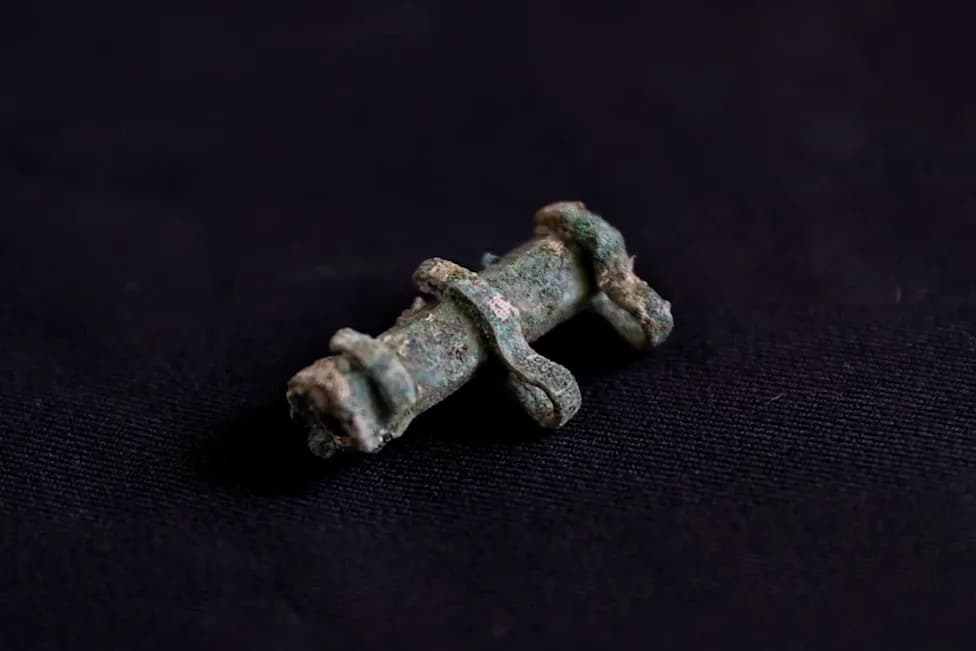
The rare medallion dates from from the turn of the sixth and seventh centuries, when Jerusalem was under the rule of the Byzantine Empire. | Credit: Emil Aladjem, Israel Antiquities Authority
Archaeologists working in Jerusalem's City of David have uncovered a rare, roughly 1,300-year-old lead medallion decorated on both sides with a seven-branched menorah — the iconic lampstand associated with the Second Temple in Jerusalem.
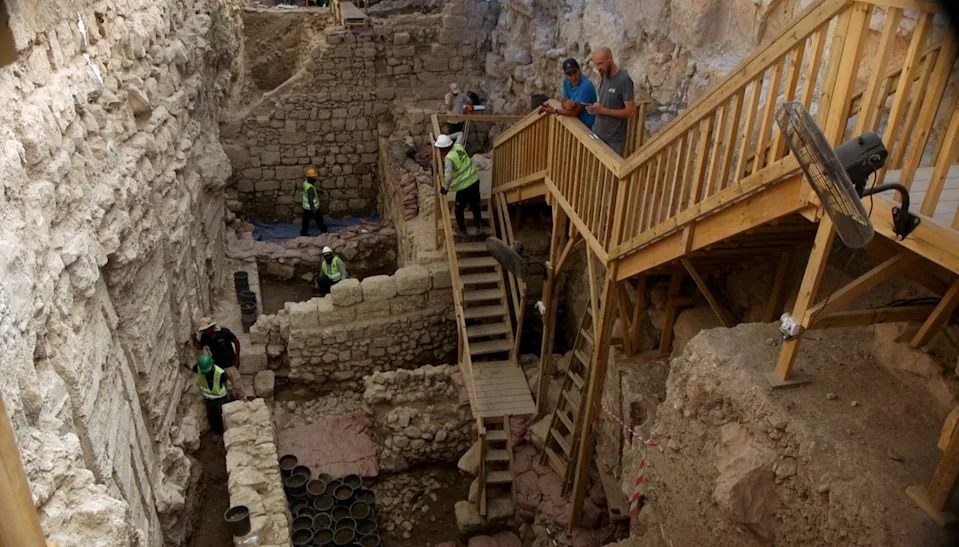
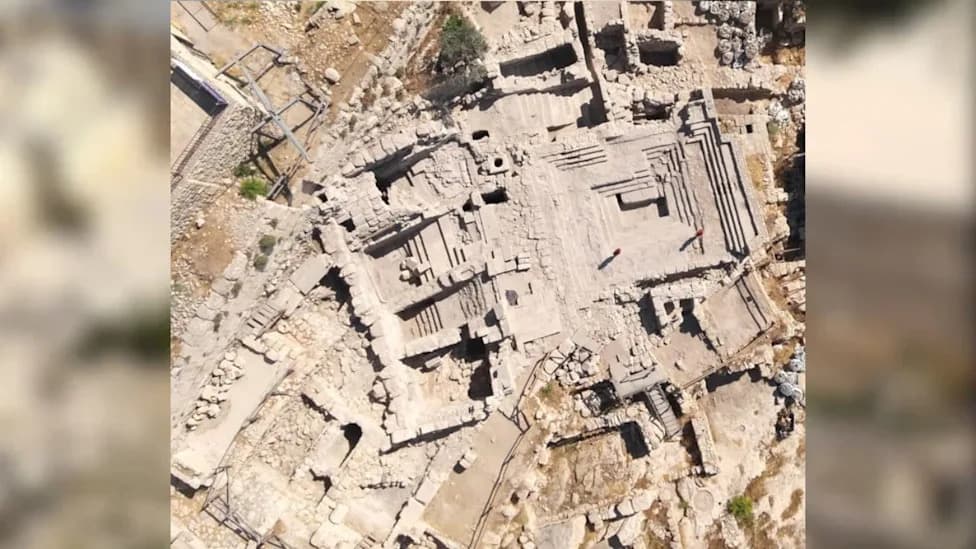
The medallion was discovered at an archaeological site in Jerusalem's ancient "City of David" archaeological site, south of the Temple Mount. | Credit: Emil Aladjem, Israel Antiquities Authority
The disc-shaped pendant, found near the southwest corner of the Temple Mount (the site today known as al-Haram al-Sharif), was recovered from a Late Byzantine-era structure that was later sealed beneath rubble laid down during Umayyad-period construction, the Israel Antiquities Authority (IAA) said.

Archaeologists think the lead medallion was worn as an amulet for magical protection, rather than as jewelry. | Credit: Eliyahu Yanai, City of David Foundation
Researchers date the object to the late sixth or early seventh century, when Jerusalem and its environs were governed by the Christian Byzantine Empire — only decades before the city was captured by the Sasanian Persians in 614 and then by Muslim Arab forces around 638.
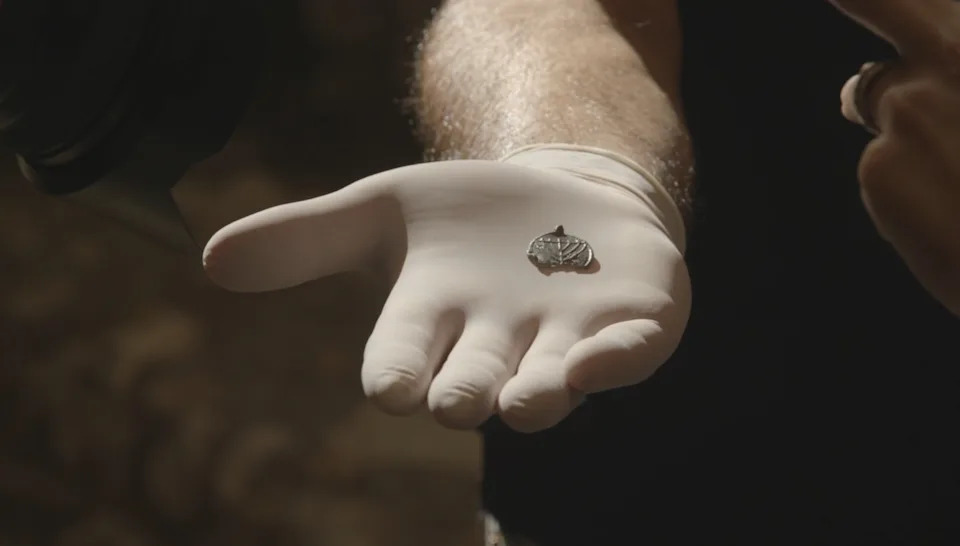
This is only the second lead medallion depicting a menorah ever found. | Credit: Emil Aladjem, Israel Antiquities Authority
Discovery and description
"One day while I was digging inside an ancient structure, I suddenly saw something different, gray, among the stones," said Ayayu Belete, an archaeological worker with the nonprofit City of David Foundation. "I picked up the object and saw that it was a pendant with a menorah on it."
The medallion is a flat lead disc with a suspension loop. Both faces show a seven-branched menorah with horizontal crossbars at the top of each branch and stylized flames above them. One side is well preserved; the other is covered with a natural patina from weathering. Compositional analysis indicates the piece is almost entirely lead.
Context and significance
The seven-branched menorah is associated with the Temple cult in ancient Jerusalem; by contrast, the nine-branched menorah is commonly used today during Hanukkah. The IAA noted that only one other millennia-old lead pendant bearing a menorah has previously been documented, calling this an "exceptionally rare" find. IAA archaeologists Yuval Baruch, Filip Vukosavović, Esther Rakow-Mellet, and Shulamit Terem emphasized that the depiction on both sides of the disc underlines the deep significance of the symbol.
Although Roman-era prohibitions after the Bar Kochba revolt (132–136 CE) generally restricted Jewish residence in Jerusalem — when the city was refounded as Aelia Capitolina and the province renamed Syria-Palaestina — scholars note those rules were not absolute. Günter Stemberger, emeritus professor of Jewish Studies at the University of Vienna, observed that prohibitions were sometimes relaxed and many Jews continued to live in nearby towns and to enter the city for various reasons.
Function and interpretation
Yuval Baruch, the IAA's Jerusalem District archaeologist, suggested the lead composition points to the pendant's use as an amulet rather than display jewelry: lead was a common material for amulets at the time and such objects were often concealed. The archaeological team speculated the medallion could have belonged to merchants, officials, or private individuals—possibly even clandestine pilgrims—who visited the city despite restrictions.
While the exact personal or ritual significance of the medallion remains uncertain, the find provides tangible evidence that Jews continued to visit and express religious identity in Jerusalem during periods when imperial edicts limited their formal residency.
Note: The medallion adds to a small corpus of emblematic Jewish objects from late antiquity and helps illuminate everyday religious practice and identity in a contested urban landscape.
Help us improve.