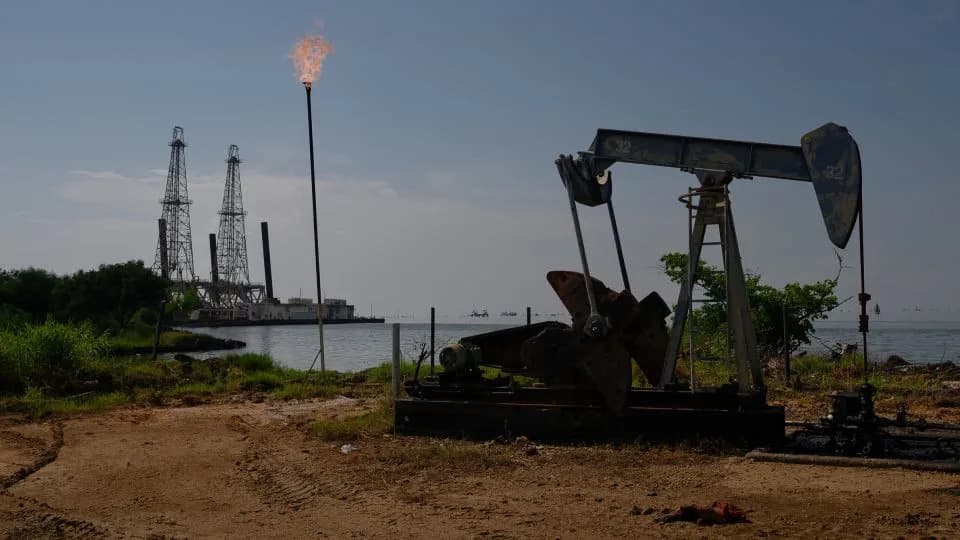
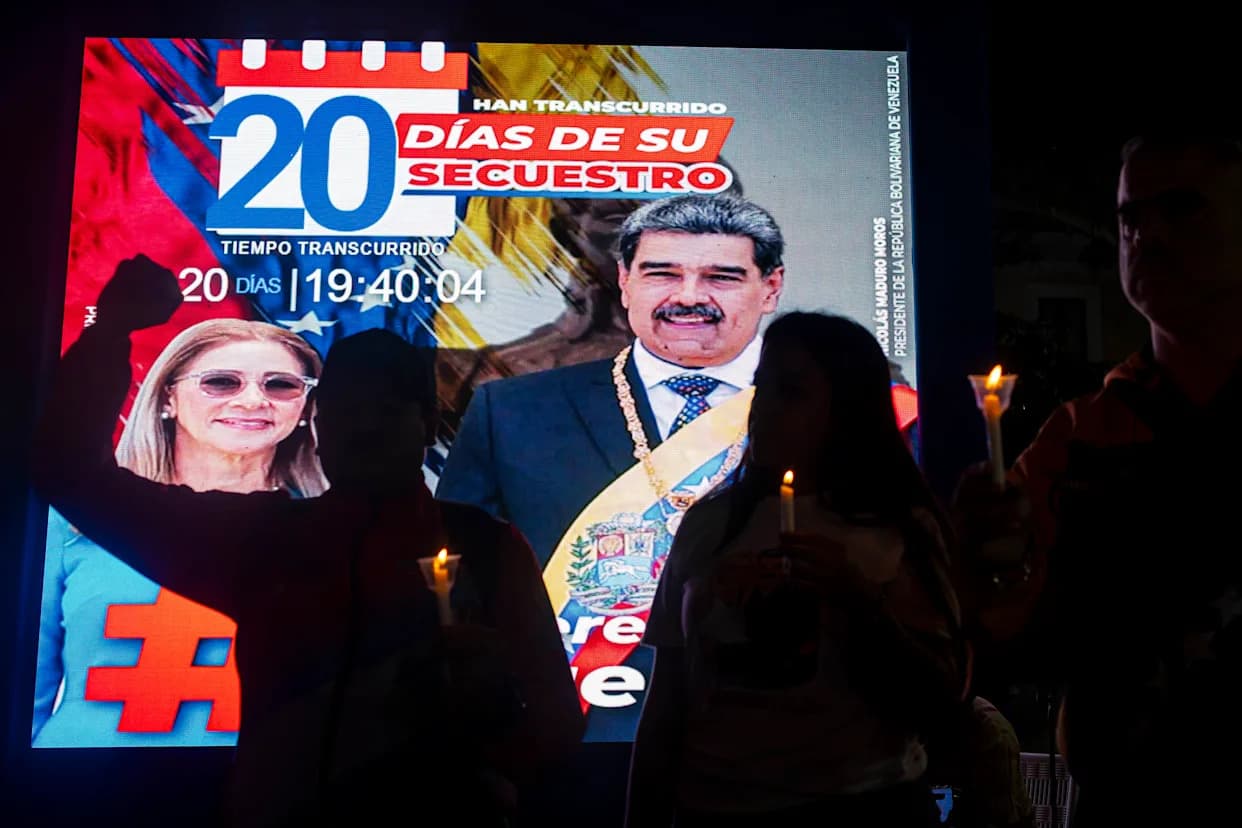
Quick Take: Stephen Miller's claim that Venezuelan oil "belongs to Washington" reflects a political argument, not a legal one. Venezuela holds roughly 303 billion barrels in proven reserves but exported only about $4.05bn of crude in 2023 after decades of nationalisation, mismanagement and sanctions. International law—under the UN-backed principle of Permanent Sovereignty Over Natural Resources—affirms that states own resources within their borders, meaning a US claim of ownership would be legally unfounded, even as sanctions and geopolitical actions complicate access.
Does the US Have a Legitimate Claim to Venezuelan Oil? Fact-Checking Stephen Miller's Statement

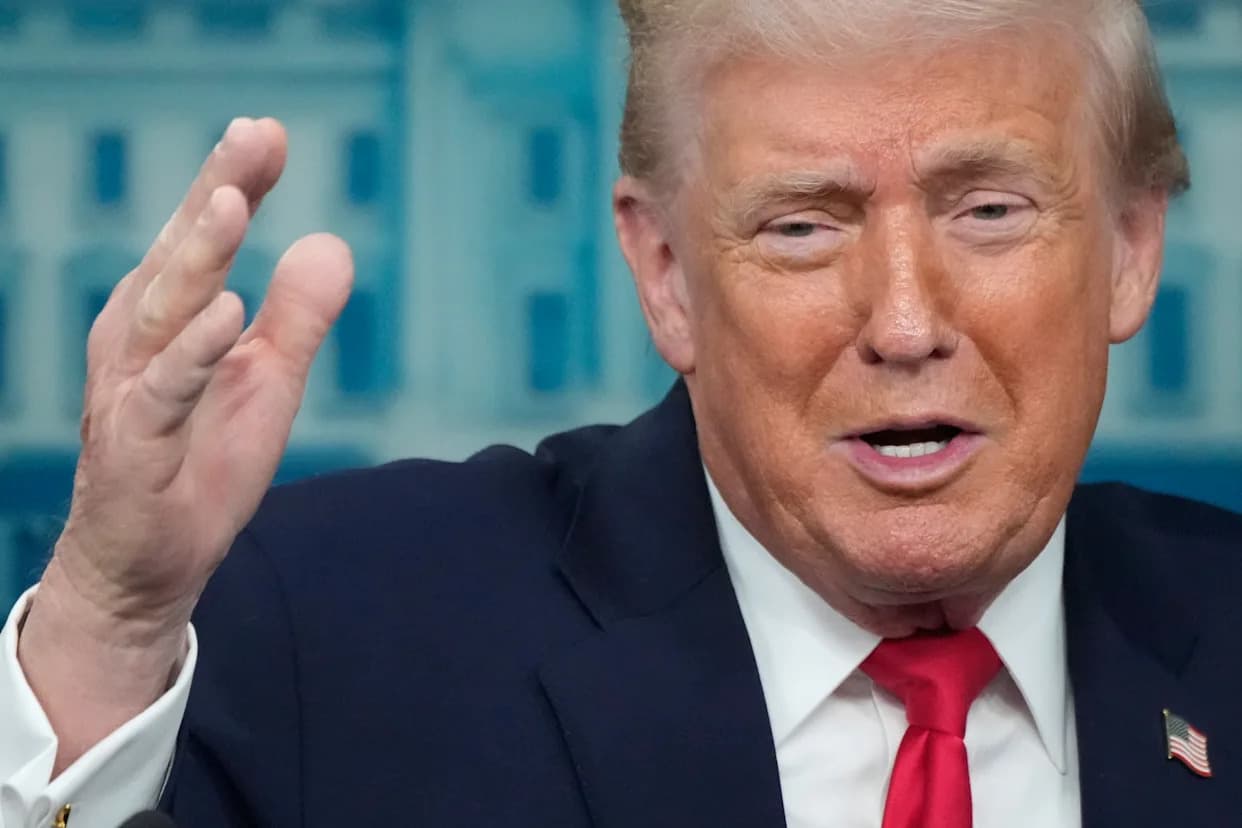
Stephen Miller speaks to reporters outside the White House in Washington, DC, on October 24, 2025 [Kylie Cooper/Reuters]
United States Homeland Security adviser Stephen Miller sparked controversy by asserting that Venezuela's oil "belongs to Washington," echoing social-media posts by former president Donald Trump calling for a "total and complete blockade" of sanctioned Venezuelan tankers. The claim has re-ignited questions about who legally owns Venezuela's petroleum and how geopolitics, sanctions and historical ties shape control over those resources.
What Miller And Trump Said
In a post on X, Miller wrote: "American sweat, ingenuity and toil created the oil industry in Venezuela. Its tyrannical expropriation was the largest recorded theft of American wealth and property." He added that those assets "were then used to fund terrorism and flood our streets with killers, mercenaries and drugs." Miller shared a screenshot of a Truth Social post from former President Trump claiming Venezuela had "stolen" US assets and ordering a "total blockade" of sanctioned tankers.
Military Presence And Enforcement Actions
The United States has increased its naval and aerial presence off Venezuela's coast, the largest regional deployment in decades, and has conducted strikes on vessels it says were involved in drug trafficking. These operations have been linked to roughly 90 reported deaths since September. US officials have not publicly released definitive evidence tying these particular vessels to major trafficking that would justify seizure of state oil assets, and critics argue the moves risk appearing motivated by oil and political objectives.
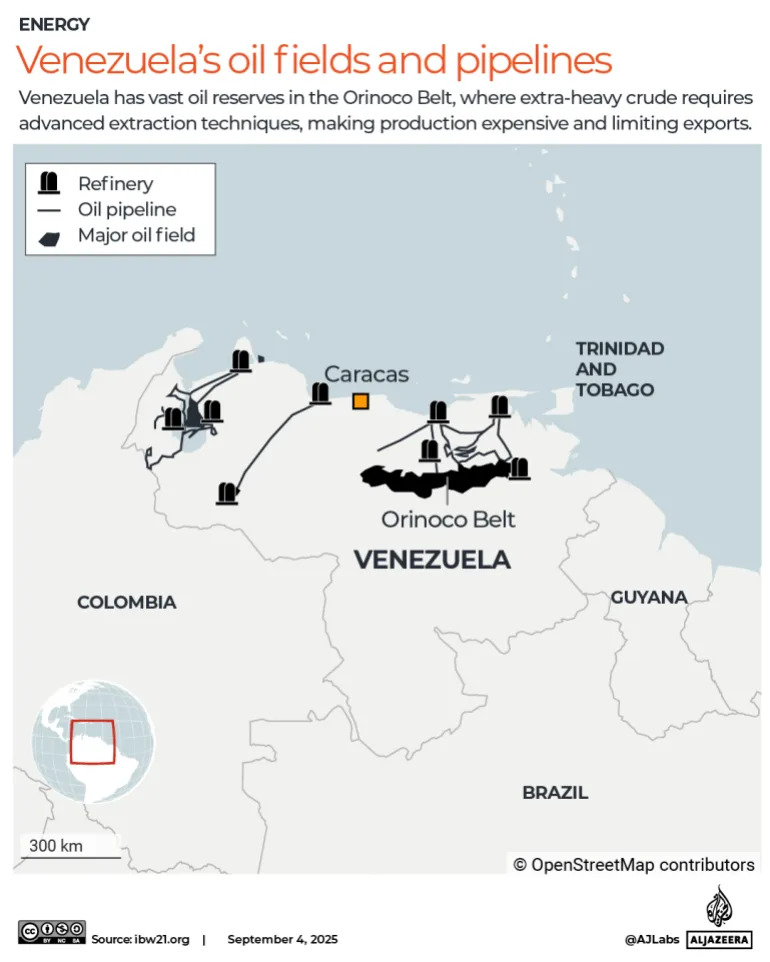
(Al Jazeera)
Venezuela's Oil: Reserves Versus Current Exports
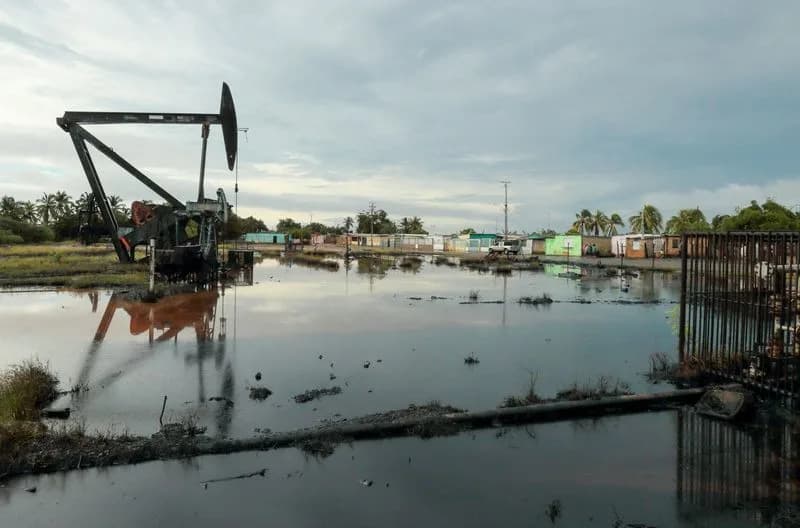
Venezuela's oil is concentrated primarily in the Orinoco Belt, a vast eastern region of roughly 55,000 square kilometres. The country holds the world's largest proven oil reserves—about 303 billion barrels as of 2023—but produces and exports far less than its reserves suggest. According to the Observatory of Economic Complexity (OEC), Venezuela exported roughly $4.05 billion worth of crude in 2023, well below major exporters such as Saudi Arabia, the United States and Russia.
Historical Context And Ownership
US firms began large-scale oil operations in Venezuela in the early 20th century after major discoveries, notably Royal Dutch Shell's discoveries in Lake Maracaibo in 1922. Venezuela was a founding member of OPEC in 1960. In 1976 the state nationalised the oil industry and created Petroleos de Venezuela (PDVSA) to manage production and revenue. Later political shifts under Hugo Chávez and Nicolás Maduro further consolidated state control and reduced foreign ownership.
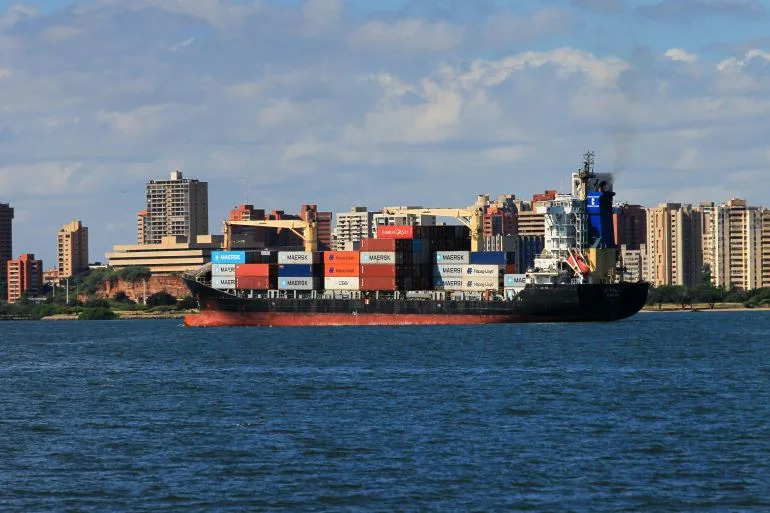
A commercial container ship sails on Lake Maracaibo, Venezuela, where oil was discovered in 1922 [Jose Bula Urrutia/UCG/Universal Images Group via Getty Images]
Sanctions, Companies And Current Operations
The United States has applied sanctions affecting Venezuelan oil and officials intermittently since the mid-2000s, with major tightening in 2017 and 2019 that sharply curtailed exports to and financial access through the US. More recent rounds of sanctions have targeted individuals, family members and tankers accused of carrying sanctioned cargo. PDVSA remains the state oil company and the dominant actor in the sector. Houston-based Chevron is the only major US oil firm still operating in Venezuela under joint arrangements with PDVSA, accounting for roughly one-fifth of Venezuela's official production.
Chevron received a special US licence in 2022 to operate despite sanctions, and that licence was subsequently extended by a later administration. Reported shipments by Chevron increased from about 128,000 barrels per day in October to roughly 150,000 barrels per day in the most recent month reported.
International Law: Who Owns The Oil?
International law recognizes the principle of Permanent Sovereignty over Natural Resources (PSNR), affirmed by the United Nations General Assembly in 1962, which holds that sovereign states have the right to control and benefit from natural resources within their borders. Under that principle, Venezuela legally owns the oil under its territory. A unilateral US claim of ownership over Venezuelan state resources would be inconsistent with established international norms and would raise serious legal and diplomatic challenges.
Bottom Line
Legally, Venezuela owns the oil beneath its soil, and international law provides no straightforward basis for the United States to claim sovereign ownership. However, geopolitics, sanctions, corporate arrangements and on-the-water enforcement actions create a complex reality in which access to and control over Venezuelan oil are shaped as much by power, diplomacy and economics as by legal principle.
Help us improve.