Parents, teachers and volunteers in Durham organized school perimeter patrols, rideshare networks and food deliveries to protect immigrant families during intensified ICE and CBP enforcement across North Carolina. The rapid mobilization drew on durable networks formed in prior campaigns, including the 2016 detention of high schooler Wildin Acosta. Local activists formed Durham Public School Strong and secured more than 2,600 sign-ups within 36 hours while pressing the district and city for clearer protections and policies.
Durham Neighbors Stand Guard at Schools to Protect Families From ICE

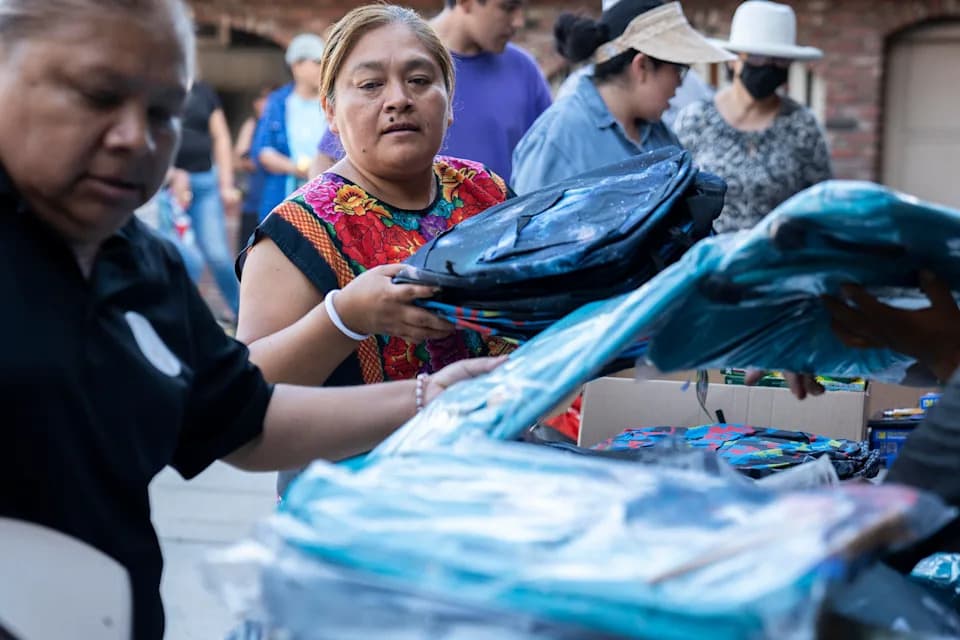
Mercedes McCurley (left), Natalie Kitaif (center) and Norma Portillo organize donations at the weekly Club Boulevard elementary food pantry in Durham, North Carolina.Photograph: Victoria Bouloubasis
Before the first bell on the morning of 19 November, groups of parents — many of them fathers — gathered bleary-eyed outside schools across Durham, North Carolina. After late-night organizing and buzzing group chats, they handed out whistles and gloves and moved to line school perimeters as informal welcoming committees and watch groups.
Visible Community Response
The volunteers organized both to greet children arriving for class and to serve as a visible deterrent to Immigration and Customs Enforcement (ICE) and U.S. Customs and Border Protection (CBP). About a week before Thanksgiving, federal immigration agents intensified operations across North Carolina in a campaign that touched cities including Charlotte and smaller communities. For nearly a month, masked agents in tactical gear — sometimes carrying rifles — patrolled neighborhoods and shopping areas. ICE doubled its North Carolina arrests in 2025 compared with the prior year, recording 3,400 arrests from 20 January through 15 October.
Local Mobilization and Mutual Aid
Durham, a city with a long organizing history and a progressive political bent, has public schools that are roughly 35% Latino. When federal enforcement activity spiked, local leaders moved quickly. Norma Portillo, an immigrant mother from Honduras and PTA president at Club Boulevard Elementary, organized rideshares for families too afraid to leave home and expanded a weekly food pantry run by mothers and grandparents. PTAs across the district used the rideshare network to deliver food and provide safe transportation home.
“I am so touched by how the community is willing to help people,” Portillo said. “We not only respect each other, but we care for each other.”
On chilly mornings in early December, minivans pulled up to schools and volunteers — including neighbors without children in the schools — stood watch. Dean Fitzgerald, a father of an elementary-school child, called out cheerful greetings while volunteers monitored who arrived and who picked up students. When the group ran out of whistles, someone even 3D-printed replacements.
Fear, Memory and Momentum
Fear is tangible: parents report children worrying that they might come home to find a parent missing. One volunteer, who goes by Jeana, saw unmarked SUVs with masked occupants near schools on 19 November and decided to join patrols despite not having kids in the system. Teachers, students and parents have relied on past organizing experience to mobilize quickly.
“This is not just a tactic,” said Holly Hardin, a middle school teacher at Lakewood Montessori. “Durham and the South have always been home to so much courage and noncompliance and resiliency in the face of historic oppressions. It’s not building a model of charity. It’s building a model of intentional care for each other, larger than any one group.”
How Past Campaigns Built Durable Networks
Organizers point to past fights that built the networks used in the recent response. In January 2016, ICE officers in plainclothes arrested Durham high schooler Wildin Acosta outside his family apartment as he was headed to school. Teachers, students and community members rallied for his release while he was detained at Stewart Detention Center in Georgia. Student journalists covered the case and lobbied lawmakers in Washington, D.C.; the campaign succeeded and Acosta finished high school in 2017 and remains in Durham. Activists say those efforts strengthened relationships and systems now mobilized for immediate care and protection.
Policy, Advocacy and Local Government
Organizing extended into city government. In September, Durham’s city council declared the city a “Fourth Amendment Workplace” after ICE officers in plainclothes appeared at the county courthouse earlier that summer. The Fourth Amendment protects against unreasonable searches and arrests and generally requires a judicial warrant for entry into private spaces.
The resolution was introduced by council member Javiera Caballero, an immigrant from Chile and the first Latina elected to Durham’s city council, who has deep ties to local schools and PTA organizing. Local leaders, including Alexandra Valladares — the first Latina and formerly undocumented person elected to Durham’s board of education — have helped connect municipal policy work with school-based efforts.
Grassroots group Durham Public School Strong (DPPS) formed in November; organizers say preparatory work began as early as January in anticipation of increased enforcement. Within 36 hours of news that ICE and CBP were deploying to Durham, more than 2,600 people signed up to connect with care and protection teams, according to DPPS founder Magan Gonzales-Smith.
DPPS, parents and teachers have pushed the school district for clearer campus directives in the event federal officers attempt to enter schools. Current district policy requires a judicial warrant for entry and directs federal agents to the district superintendent, but parents and educators argue that clearer, more actionable protocols and communications are needed to reduce anxiety and protect students.
“We need a policy that will protect us from those who see us as less than human,” said ninth grader Yair, speaking at a school board meeting with his mother and sister at his side.
Looking Ahead
Durham’s response combines mutual aid — rideshares, food deliveries and school perimeter patrols — with political pressure on local institutions to clarify protections. Organizers emphasize that this is sustained, community-driven care informed by past campaigns and built to keep children safe and reduce fear in immigrant neighborhoods.
Help us improve.