
Dense, toxic smog choked New Delhi, forcing the cancellation of more than 40 flights and causing long delays to trains as air quality readings surged into the hazardous "severe" range (AQI ~449–450). Hospitals reported increased respiratory and eye complaints while authorities banned construction, limited diesel generators and deployed water sprinklers. Environmentalists and health experts warn that short-term measures are inadequate and call for long-term reforms to tackle crop burning, vehicle emissions and industrial pollution linked to an estimated 1.5 million pollution-related deaths annually in India.
Toxic Smog Chokes New Delhi: Flights Grounded as Air Quality Reaches Hazardous Levels

People walk in a smog-covered morning in New Delhi, India, Monday, Dec. 15, 2025. (AP Photo/Piyush Nagpal)(ASSOCIATED PRESS)
NEW DELHI — Dense, toxic smog engulfed India's capital on Monday, driving air pollution to its worst readings in weeks, grounding flights, delaying trains and prompting strict emergency measures across the city.
More than 40 flights were canceled and several dozen delayed. Officials also reported that over 50 trains arriving at and departing from New Delhi experienced delays of several hours, disrupting travel for thousands of passengers.
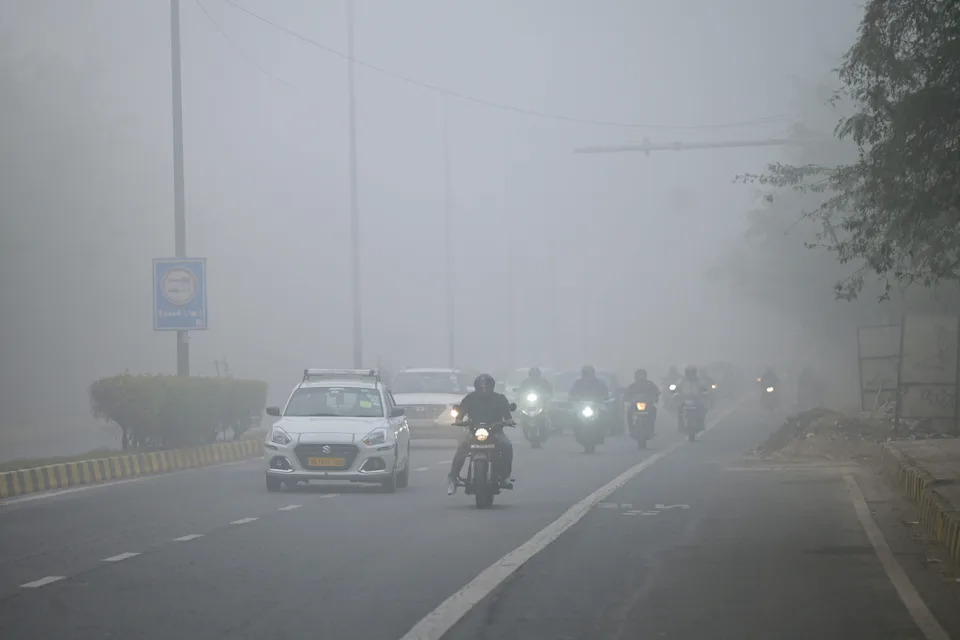
Traffic moves through dense smog in the morning in New Delhi, India, Monday, Dec. 15, 2025. (AP Photo)(ASSOCIATED PRESS)
Hospitals recorded a surge in patients with respiratory problems and eye irritation. Health experts urged residents to avoid outdoor activity and vulnerable groups — including children, pregnant women, the elderly and people with heart or lung disease — to take extra precautions.
"New Delhi is a gas chamber right now. Air purifiers help only a bit; it's high time the government comes up with permanent solutions," said Naresh Dang, a physician at Max Healthcare.
The federal government classified Delhi's pollution as "severe" for two consecutive days, warning that such levels can affect even healthy people and seriously endanger those with pre-existing conditions. Official air quality index (AQI) readings topped 450 at several monitoring stations on Sunday — up from 430 on Saturday — and stood at 449 on Monday, according to the Central Pollution Control Board. For context, AQI readings below 50 are considered good.
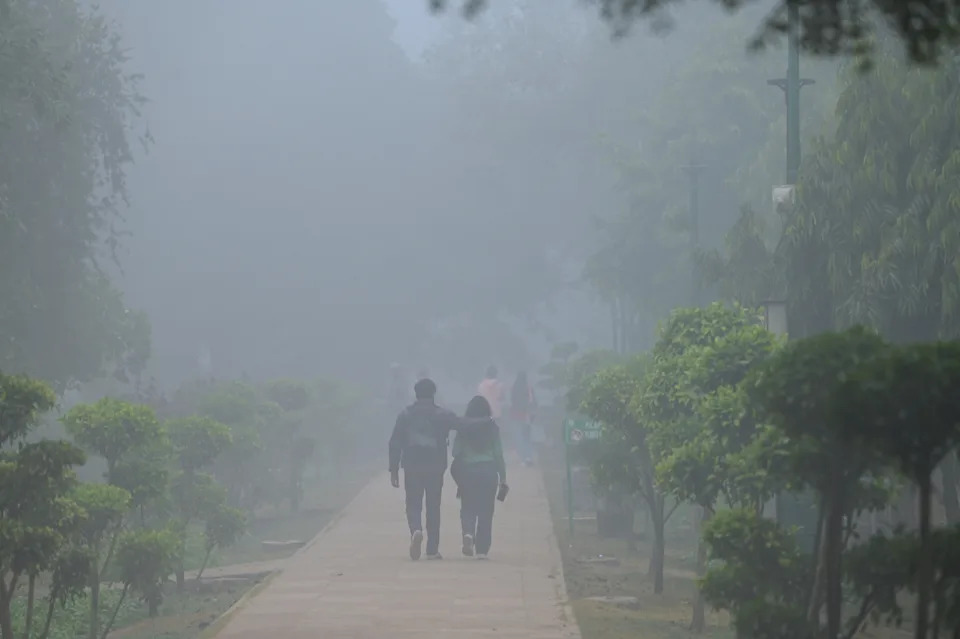
People walk through a public park in a dense smog-covered morning in New Delhi, India, Monday, Dec. 15, 2025. (AP Photo)(ASSOCIATED PRESS)
Short-Term Measures and Long-Term Concerns
Authorities have banned construction activity, restricted the use of diesel generators and private cars, and deployed water sprinklers to try to suppress the haze. Many schools and offices permitted students and staff to stay home.
Environmentalists say these stopgap measures are insufficient. New Delhi and its surrounding region, home to more than 30 million people, consistently rank among the world's most polluted metropolitan areas. A report from Switzerland-based IQAir earlier this year found India has six of the world's 10 most polluted cities, and New Delhi is the most polluted national capital.
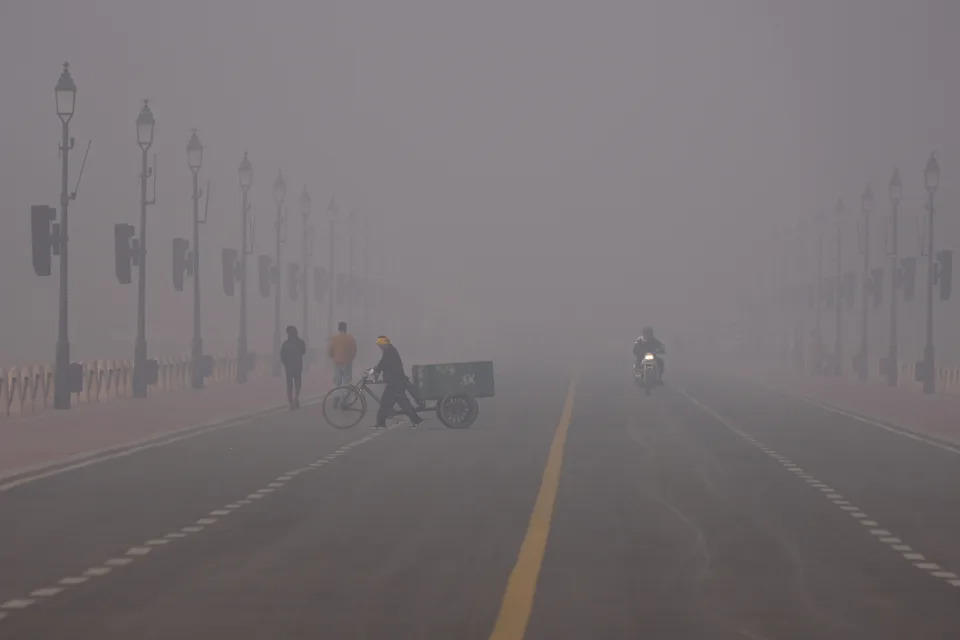
A man pushes a cycle cart in a smog-covered morning in New Delhi, India, Monday, Dec. 15, 2025. (AP Photo/Piyush Nagpal)(ASSOCIATED PRESS)
Seasonal crop-residue burning in neighboring states, vehicle emissions, construction dust and industrial pollution combine with cooler winter temperatures that trap smoke and pollutants near the ground. Pollution levels often spike to many times the World Health Organization's recommended limits.
"Delhi's air doesn't get cleaner at all; we only see the smog visibly from October to December, but the reality is that it remains polluted throughout the year," said Vimlendu Jha, a Delhi-based environmentalist.
Citizens staged protests earlier this month to voice frustration with the government's response. A study published in The Lancet last year linked long-term exposure to polluted air in India with roughly 1.5 million additional deaths annually. Activists say official counts understate the toll because systematic tracking of pollution-related deaths is lacking.
In October, authorities conducted a controversial cloud-seeding experiment intended to induce rainfall and clear the smog; the effort concluded without producing rain.
Arasu reported from Bengaluru, India. AP video journalist Piyush Nagpal contributed to this report.


