
Scientists at Georgia State University used CRISPR-Cas9 to reintroduce a reconstructed ancestral uricase gene into human liver cells. In both standard cultures and 3D liver spheroids the edited cells showed reduced uric acid and less fat accumulation. The team plans mouse studies using nanoparticle delivery before any human trials; major challenges include gene stability, immune responses and safe delivery.
Scientists Use CRISPR to Restore Ancient Uricase Gene — Potential New Approach to Prevent Gout and Fatty Liver

Scientist analyzing ancient human skull - Microgen/Shutterstock
Researchers at Georgia State University have reconstructed an ancestral gene and used CRISPR-Cas9 to restore its function in human liver cells, a step that could eventually lead to new treatments for gout, fatty liver disease and other conditions linked to high uric acid.
What they did. The team rebuilt a long-lost version of the enzyme gene uricase, which degrades uric acid, and inserted it into cultured human liver cells. The edited cells began producing functional uricase that reduced intracellular uric acid levels.

Scientists pointing at DNA strand on a screen - Gorodenkoff/Shutterstock
Why it matters. Humans and other great apes lost a working uricase gene about 20–29 million years ago. Some researchers have theorized that higher uric acid once helped early primates store energy during food shortages, but today elevated uric acid (hyperuricemia) is associated with gout, hypertension, chronic kidney disease, metabolic syndrome and fatty liver.
Key findings in the lab. In standard cell cultures the restored uricase broke down accumulated uric acid. When cells were exposed to fructose, the edited cells did not convert it into stored fat as typical liver cells did. The team then tested the gene in three-dimensional liver spheroids — miniature tissue models that better mimic organ behavior — and observed similar benefits: lower uric acid and reduced fat accumulation.
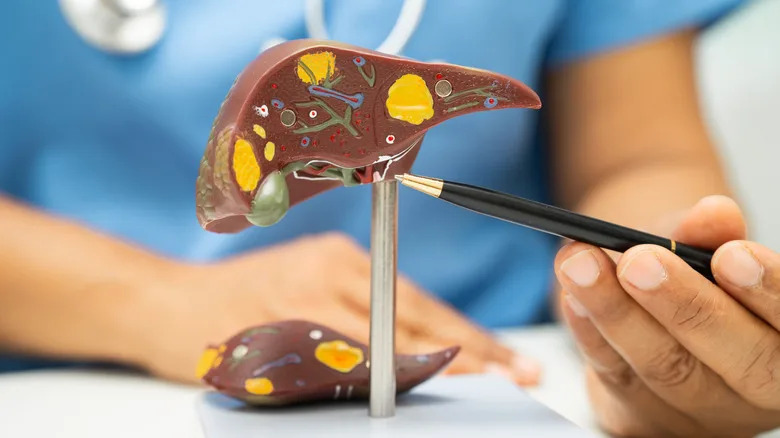
Doctor displaying liver anatomy - sasirin pamai/Shutterstock
Next steps and delivery strategies. The researchers plan to move from cell models to animal testing, beginning with mice. They are considering delivery methods such as nanoparticles or other vectors to transport the gene or CRISPR components into target cells — approaches related to technologies used in some vaccine platforms. Success in animals would be followed by carefully designed human trials.
Major challenges. Important hurdles remain before clinical use: proving long-term stability and expression of the reconstructed gene, avoiding harmful immune reactions, ensuring targeted and controllable delivery, and establishing lasting safety and efficacy. Regulatory, ethical and manufacturing issues will also shape the timeline.
Bottom line. Restoring an ancestral uricase gene with CRISPR is an intriguing proof of concept that could open new avenues for treating diseases linked to high uric acid. The work is promising but early — effective, safe therapies will require extensive animal studies and rigorous clinical trials.


