Yale’s Humanitarian Research Lab reports that the RSF carried out systematic mass killings in el‑Fasher between Oct. 26 and Nov. 28, 2025, and then attempted to conceal evidence by burying, burning and removing remains. The study — using satellite imagery, remote sensing and local reporting — found that 72% of suspected remains clusters had shrunk and 38% disappeared, and recorded at least 20 burn events and eight instances of disturbed earth. The findings add urgency to calls for independent investigations and accountability amid a conflict that has displaced millions and caused widespread casualties.
Yale Report: RSF Carried Out Systematic Mass Killings in el‑Fasher and Sought To Hide Evidence

Courtesy of Humanitarian Research Lab at Yale School of Public Health, New Haven
A new investigation by the Yale School of Public Health’s Humanitarian Research Lab (HRL) concludes that Sudan’s Rapid Support Forces (RSF) carried out a deliberate, multi‑week campaign of mass killings in el‑Fasher, North Darfur, and then engaged in systematic efforts to conceal evidence by burying, burning and removing human remains.
Courtesy of Humanitarian Research Lab at Yale School of Public Health, New Haven
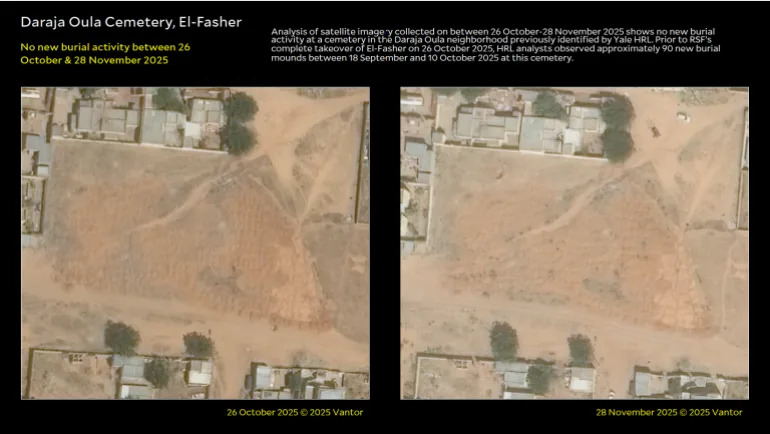
"RSF's mass killing campaign targeted civilians attempting to flee the city and those seeking refuge in the Daraja Oula neighborhood," the HRL report said, documenting a "systematic multi‑week campaign to destroy evidence of its mass killings through burial, burning, and removal of human remains on a mass scale."
Methodology
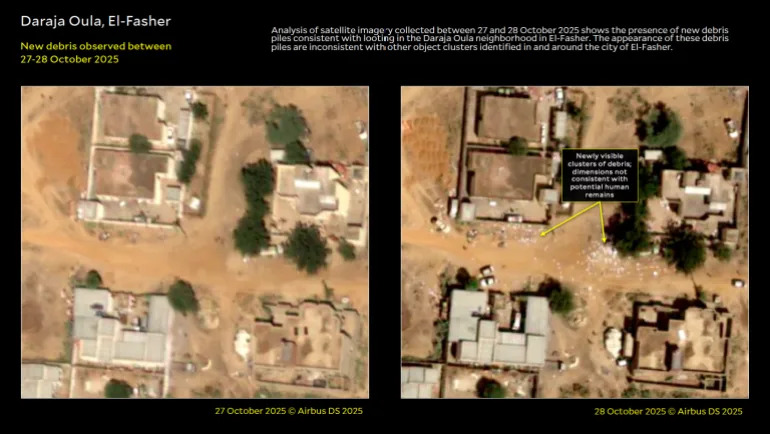
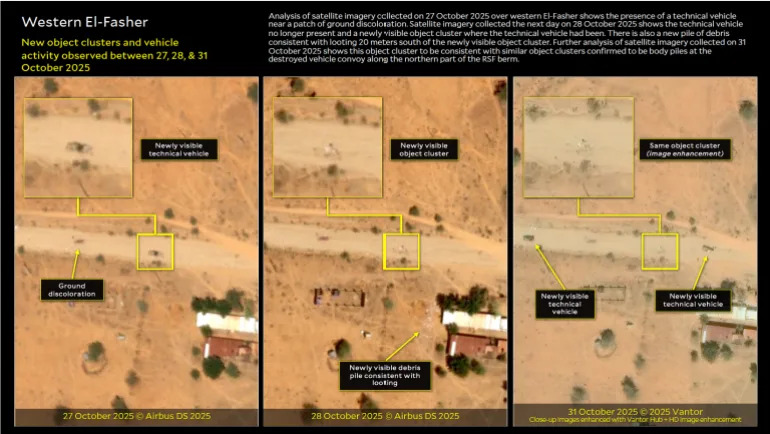
The HRL analysis, titled "RSF’s Systematic Mass Killings and Body Disposal in el‑Fasher, North Darfur between October 26 and November 28, 2025," combined multiple sources: satellite imagery, remote sensing data, open‑source material and local news reporting. Yale researchers who have tracked the Sudan conflict for years used temporal imagery and pattern analysis to identify clusters consistent with human remains and to observe changes over time.
Courtesy of Humanitarian Research Lab at Yale School of Public Health, New Haven
Key Findings
- Monitoring groups estimate at least 1,500 people were killed in the 48 hours after RSF forces seized el‑Fasher on October 26, following an 18‑month siege.
- HRL identified clusters in and around el‑Fasher consistent with human remains; by November 28, 72% of observed clusters had shrunk in apparent size and 38% were no longer visible, a pattern the researchers interpret as active concealment.
- The team documented at least 20 incidents of burning and eight instances of disturbed earth consistent with recent burial or removal activity.
- Patterns reported include killings during flight, door‑to‑door and execution‑style murders, mass killings at detention‑linked sites, and killings at military installations.
Context and Allegations
The RSF grew from the Janjaweed militias that were implicated in the Darfur atrocities of the 2000s. International bodies and several governments — including the United States — have accused the RSF of committing or enabling crimes that may amount to war crimes or crimes against humanity in the current conflict.
Courtesy of Humanitarian Research Lab at Yale School of Public Health, New Haven
Separately, a prominent Sudanese doctors' group has accused RSF fighters of raping at least 19 women during the takeover of el‑Fasher. As RSF forces took the city, they also launched operations in Kordofan, raising fears of further mass violence; a recent attack in South Kordofan's Kalogi reportedly killed more than 116 people, including children.
[Al Jazeera]
Humanitarian Impact and Next Steps
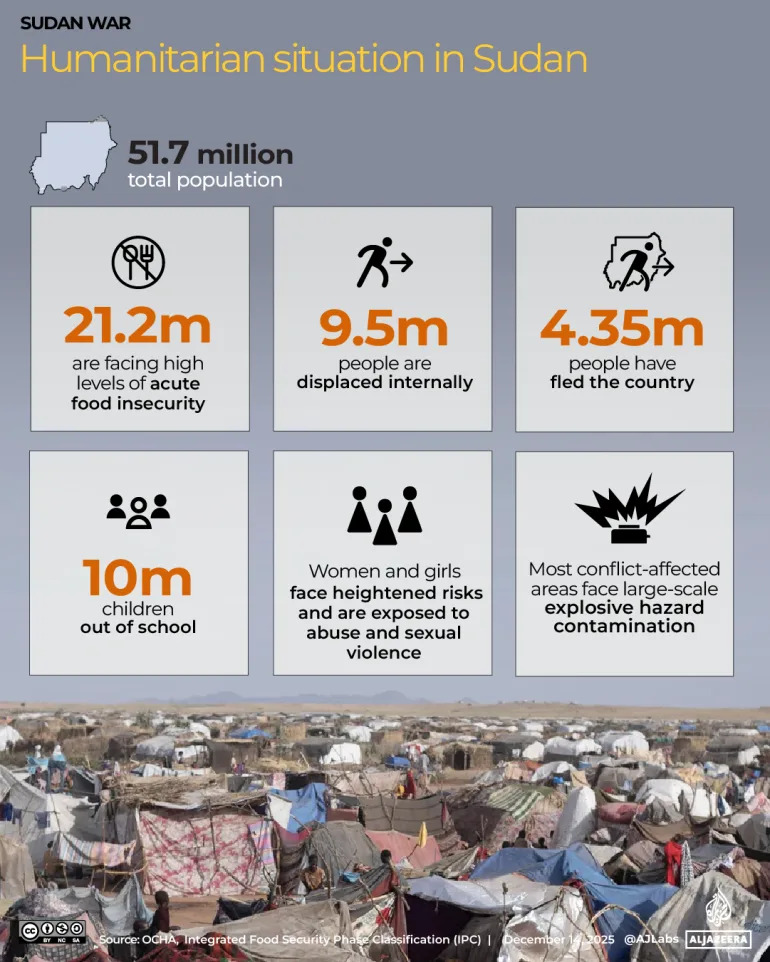
Since fighting began between the Sudanese Armed Forces (SAF) and the RSF on April 15, 2023, the UN and humanitarian agencies say the conflict has produced one of the world’s largest current humanitarian crises: tens of thousands killed, more than 13 million displaced and roughly 30 million in need of urgent aid.
The HRL report underscores the need for independent investigations, protection of civilians and accountability for alleged atrocities. The documented patterns of body disposal also highlight the challenge of preserving forensic evidence in active conflict zones.
Sources: Yale School of Public Health Humanitarian Research Lab report, satellite and remote‑sensing analysis, local reporting and monitoring groups.
Help us improve.