President Trump said he will sign an executive order to block states from setting their own AI rules, a proposal that legal experts and state officials say may not be enforceable. The roundup also covers a lawsuit over the removal of the ICEBlock app, Nashville’s expansion of police-surveillance partnerships, concerns about Palantir’s culture, a rollback of chip-export limits to China, a new pro-Trump fundraising platform, DHS’s immigrant-targeting website, Epstein’s ties to controversial AI researchers, and a planned Pentagon-Google AI collaboration.
Trump Renewed Push To Block State AI Rules, Faces Legal and Political Pushback

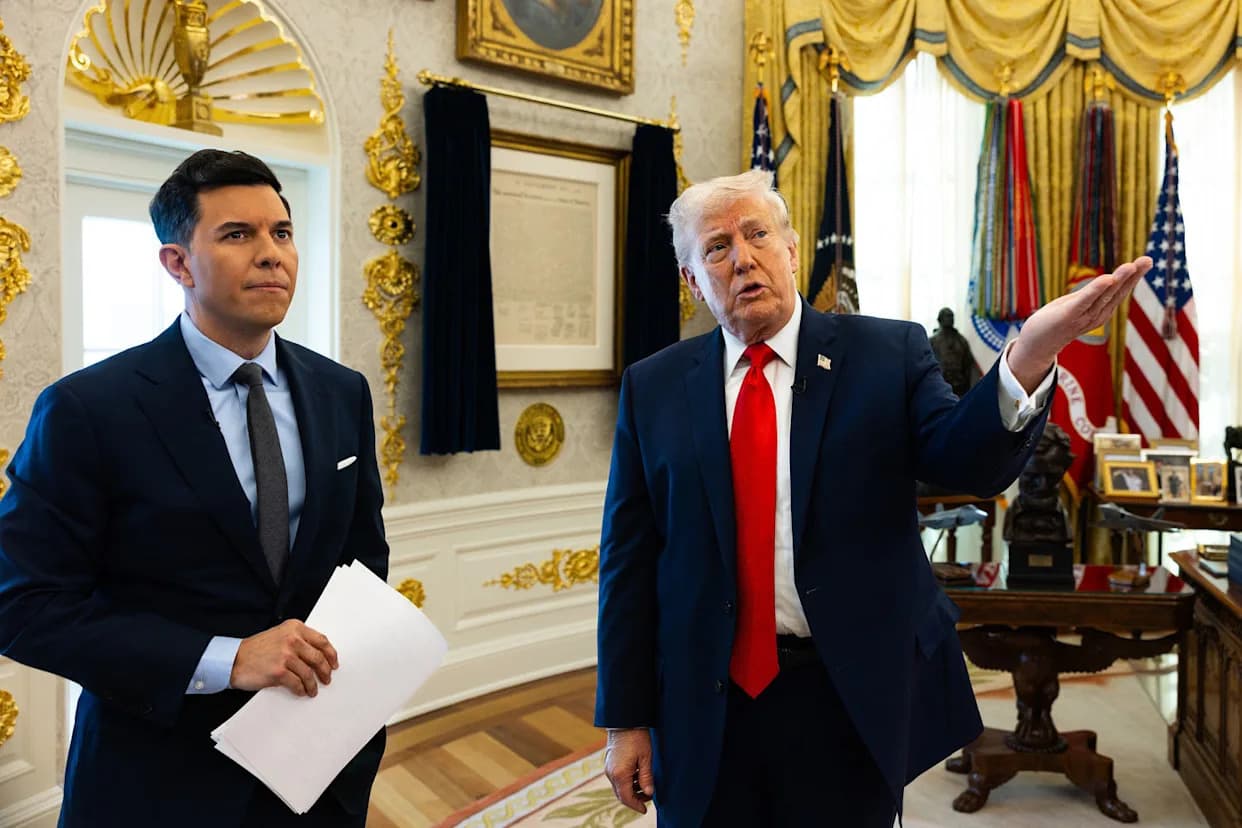
President Donald Trump announced plans to sign an executive order that would bar states from enacting their own regulations on artificial intelligence tools — the latest attempt to impose a nationwide restriction after two prior efforts, including an effort as recently as last week, failed to secure placement in federal legislation. Critics argue the move appears intended to shield large technology firms and could disproportionately benefit companies whose executives have been generous supporters of the administration.
Legal experts and state officials question whether a presidential order could lawfully prevent states from passing AI regulations. Florida Governor Ron DeSantis has publicly said a presidential directive would not stop states from enacting their own rules, and constitutional scholars note serious doubts about the order’s enforceability.
Read more: USA Today.
The developer of ICEBlock — an app designed to monitor U.S. Immigration and Customs Enforcement activity amid the administration’s aggressive immigration enforcement — has filed suit against the federal government after the Justice Department reportedly pressured Apple to remove the app from its store. A Department of Homeland Security spokesperson said such apps can endanger law enforcement, though officials have not publicly produced evidence to substantiate that claim.
Read more: NBC News.
A Truthout report warns that Nashville city officials are partnering with a local nonprofit to build expanded police-surveillance infrastructure, part of a broader trend in which municipalities rely on private and often controversial vendors to scale monitoring capabilities.
Read more: Truthout.
Separately, recent public incidents and reporting have cast light on a violent, hypermasculine culture among Palantir’s founders, raising concerns about the company’s role in supporting hard-line immigration policies promoted by the administration.
Read more: MS NOW.
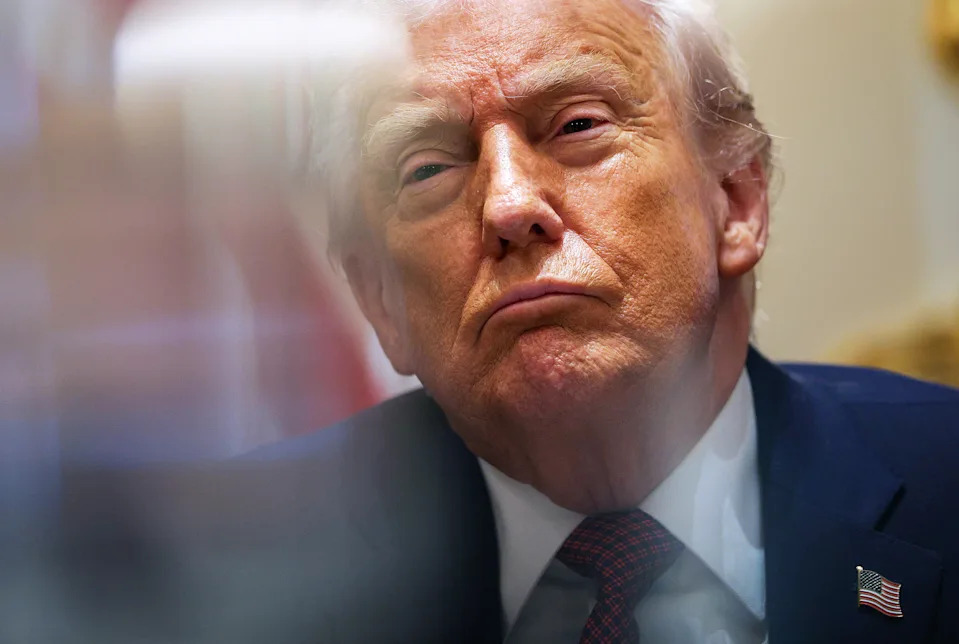
U.S. President Donald Trump on Dec. 08 in the Cabinet Room of the White House.(Getty Images)
On Monday the administration also announced it would roll back a Biden-era restriction on the export of advanced computer chips to China. The Biden policy limited sales of chips used to develop AI systems on national security grounds; Rush Doshi, a former National Security Council official under President Biden, warned the reversal could "increase the odds the world runs on Chinese AI."
Pro-Trump influencer Alex Bruesewitz is partnering with a pro-Trump online marketplace to launch a digital fundraising platform called Impact, positioned as a rival to WinRed, the established conservative fundraising site.
Read more: Axios.
The Department of Homeland Security launched a website aimed at highlighting the "worst of the worst" immigrants, in response to data indicating many people detained in recent enforcement actions had no criminal records at the time of arrest, prompting criticism from civil-rights advocates and local media.
Read more: WWL-TV (Louisiana).
Emails produced to the House Oversight Committee show that years after pleading guilty to procuring a minor for prostitution, the late financier Jeffrey Epstein exchanged disturbing ideas about society with AI researchers who have been linked to racist pseudoscience and eugenicist thought.
Read more: MS NOW.
Defense Secretary Pete Hegseth announced that the Department of Defense will collaborate with Google on a GenAI platform for internal use by Pentagon personnel. In a video posted Tuesday Hegseth said:
"At the click of a button, AI models on GenAI can be utilized to conduct deep research, format documents and even analyze video or imagery at unprecedented speed."
The announcement comes as the Pentagon and administration officials respond to allegations that recent U.S. strikes on vessels suspected of drug trafficking off the coast of South America may amount to war crimes, raising questions about oversight and the use of emergent technologies in military operations.
Note: This roundup synthesizes reporting from multiple outlets and highlights the intersection of technology, policy, and civil liberties amid rapidly evolving debates over AI, surveillance, and national security.
Help us improve.