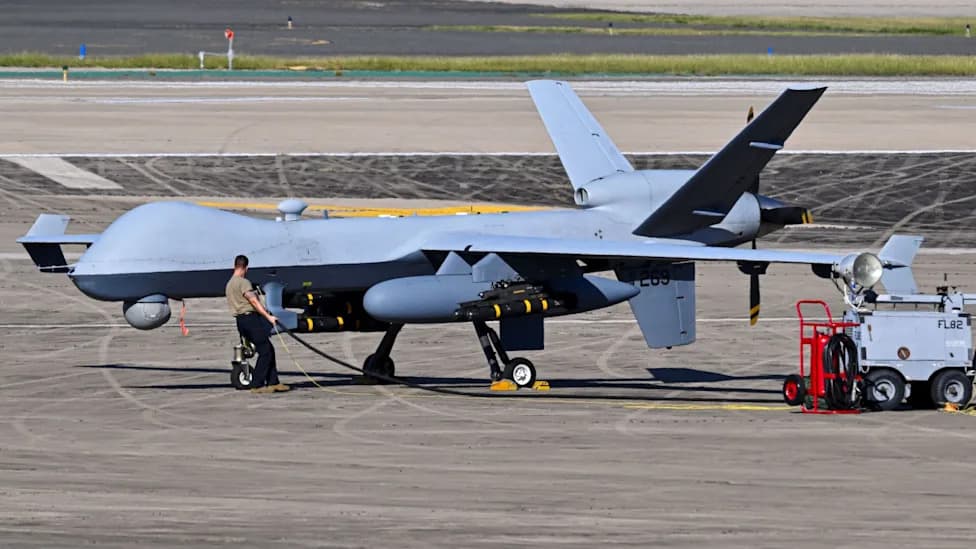
The U.S. Army activated Army Western Hemisphere Command, merging Forces Command, Army North and Army South into one headquarters at Fort Bragg to better coordinate homeland defense and regional operations. The new command will oversee border missions, disaster response and mobilizations in support of federal law enforcement. The move follows a Defense Secretary directive and the White House’s National Security Strategy calling for targeted deployments against cartels. Fort Bragg is slated to be fully operational by June 2026, after which Army North and Army South will close.
U.S. Army Activates Western Hemisphere Command to Prioritize Homeland Defense

U.S. Army Activates Army Western Hemisphere Command
The U.S. Army formally activated Army Western Hemisphere Command on Friday, consolidating U.S. Army Forces Command, U.S. Army North and U.S. Army South into a single headquarters at Fort Bragg, North Carolina. The reorganization signals a renewed emphasis on defending the homeland and coordinating Army operations across North, Central and South America.
Scope and Missions: The unified command will oversee operations that include southern border missions, disaster response, and Army mobilizations that support federal law enforcement across the United States. Army leaders say the change is intended to reduce duplication, lower overhead and place more soldiers into operational formations that directly contribute to readiness.
Gen. Joseph Ryan, commander of the new Western Hemisphere Command, said: “The Army is transforming because our adversaries increasingly aim to exploit vulnerabilities in the homeland and throughout North, Central, and Southern America. We have allowed this insidious activity to continue for too long, and we have not addressed it effectively.”
The consolidation follows a directive from Defense Secretary Pete Hegseth and was first announced to the force in May. The activation came hours after the White House released a new National Security Strategy that calls for a readjustment of U.S. military posture in the Western Hemisphere and advocates for "targeted deployments to secure the border and defeat cartels, including where necessary the use of lethal force to replace the failed law enforcement-only strategy of the last several decades."
Legal and Operational Context: Federal law generally prohibits the military from performing domestic law enforcement. Earlier this year, however, the military's role at the border expanded when the administration authorized additional troop deployments and established so-called "national defense areas," treated administratively as extensions of military installations that allow temporary detention of migrants before transfer to civilian authorities. National Guard units have also been mobilized at several locations to support federal law enforcement and Immigration and Customs Enforcement (ICE) personnel.
Timeline and Personnel Moves: Col. Mike Burns, a spokesperson for the new command, said the Fort Bragg headquarters is expected to be fully operational by June 2026. After that date, U.S. Army North and U.S. Army South will be formally closed. Both commands are currently headquartered at Joint Base San Antonio–Fort Sam Houston; most military and civilian personnel will relocate to Fort Bragg over the next two years, though some staff will remain in the San Antonio area for mission-specific duties, including work tied to Brooke Army Medical Center.
Implications: Army leaders describe the reform as driven by threat assessments and strategy, framing the homeland as a priority theater. The consolidation is likely to change how the Army organizes resources and responds to crises in the Western Hemisphere, while also raising legal and policy questions about the military’s role in domestic and border-related operations.
Help us improve.