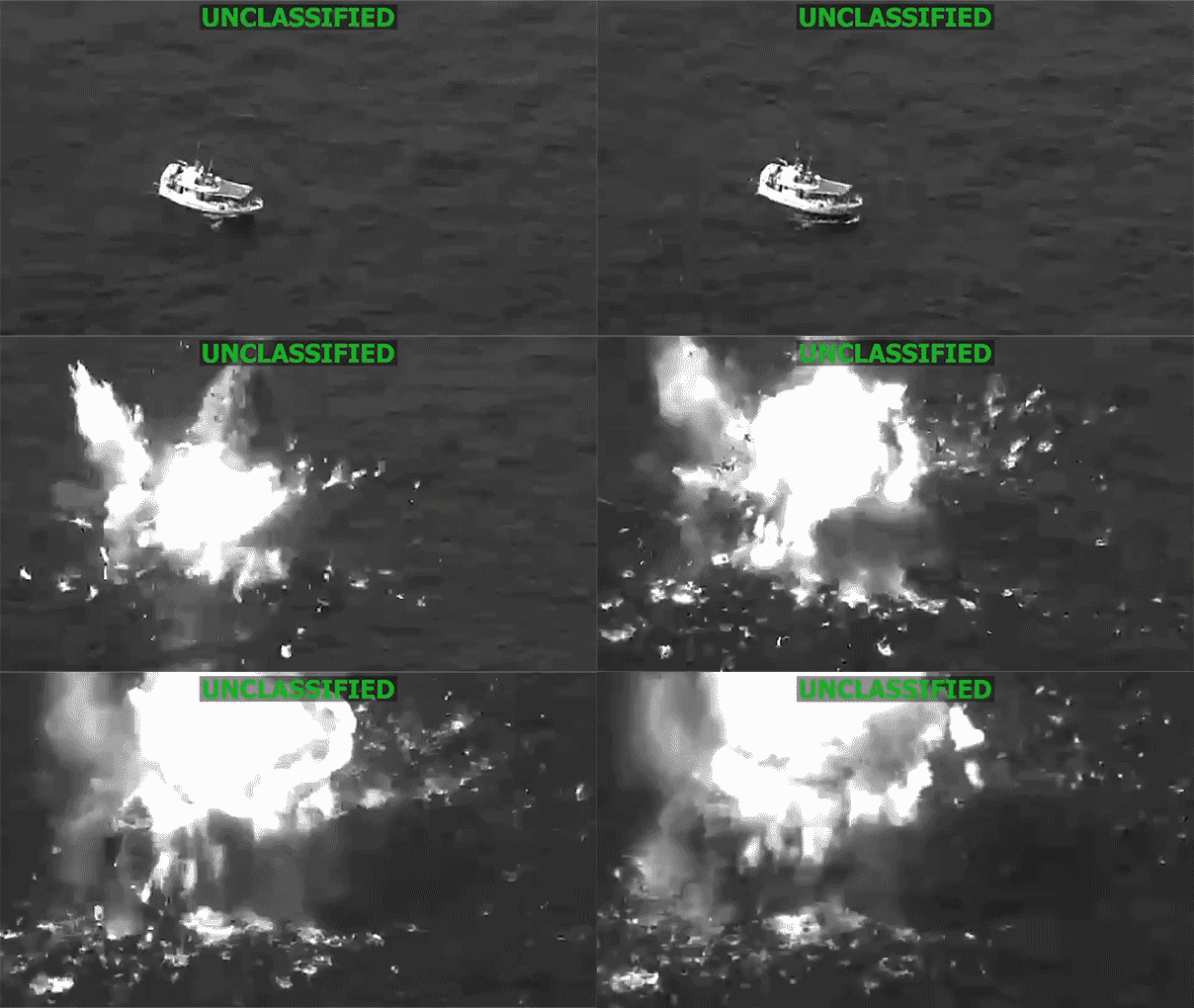
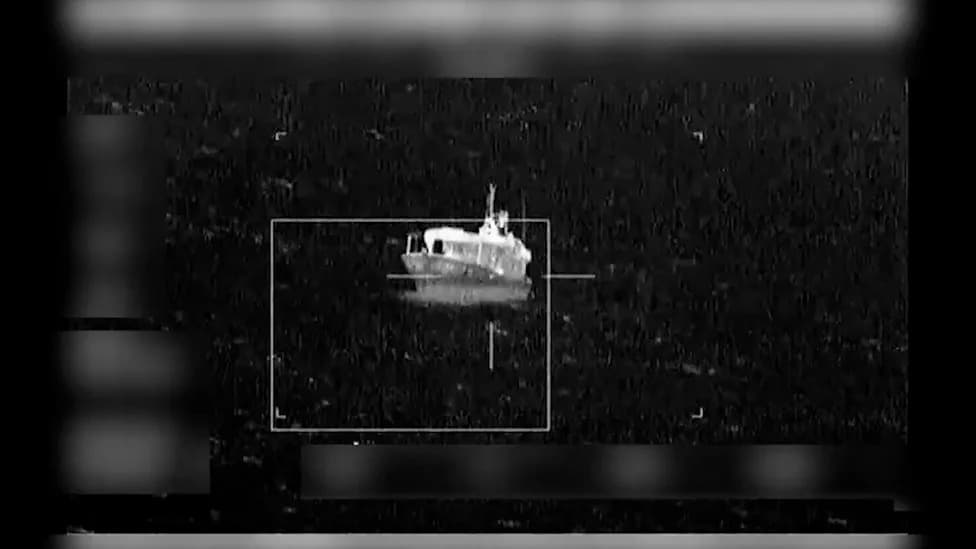
Two men survived a U.S. drone strike on a semi‑submersible on Oct. 16 and were evacuated by helicopter to a Navy ship. Jeison Obando Perez, 34, sustained a serious head injury and is expected to recover; Andres Fernando Tufiño Chila, 42, was uninjured and reportedly not charged. Tufiño Chila had previously pleaded guilty in 2020 after about 1,073 kg of cocaine was found on a separate vessel and served time before early release in Jan. 2024. The Oct. 16 rescue, unlike a Sept. 2 incident in which survivors were killed by a follow‑up strike, has prompted debate over rules and the use of lethal force at sea.
Survivors of U.S. Strike: How Two Men Lived After a Semi‑Submersible Was Hit

The Smuggler Who Survived a U.S. Strike
Two men were recovered after a U.S. drone strike hit a semi‑submersible vessel on Oct. 16. The response — a rescue helicopter that evacuated the survivors to a U.S. Navy ship — contrasted sharply with an earlier operation in which a follow‑up strike killed survivors. The differing approaches have raised questions about policy and the use of lethal force at sea.
What Happened on Oct. 16
U.S. forces struck a semi‑submersible suspected of carrying narcotics. Four crew members were aboard; two were killed and two survived. The survivors, Jeison Obando Perez, 34, and Andres Fernando Tufiño Chila, 42, were flown by helicopter to a Navy ship. Perez arrived at a hospital in Colombia intubated with a serious head injury but is reportedly expected to recover. Tufiño Chila was uninjured. According to reports, neither man was immediately charged following the incident.
Contrast With Earlier Strike
Earlier in the fall, a U.S. strike on Sept. 2 targeting a suspected drug vessel resulted in a follow‑up missile that killed survivors from that engagement. The Oct. 16 response — choosing rescue and medical evacuation rather than a second lethal strike — marked a notable departure from the earlier outcome and prompted debate over rules of engagement and legal norms.
Background: Tufiño Chila’s 2020 Interception
Authorities say Tufiño Chila had a prior conviction related to maritime drug trafficking. On Sept. 6, 2020, a U.S. Maritime Patrol Aircraft identified a high‑speed vessel labeled in court records as "Go Fast Vessel 1 (GFV 1)" about 380 miles east of Clipperton Island. The Coast Guard Cutter Steadfast intercepted GFV 1 with helicopter support and small‑boat boarding teams.
Boarding teams found a fresh fiberglass patch on the deck. When they drilled into the hull, the drill bit returned coated with a white substance that field‑tested positive for cocaine. After removing part of the deck, teams recovered approximately 1,073 kilograms (about 2,361 pounds) of packaged material.
Aircraft also tracked a second fast boat, GFV 2, which was intercepted roughly 11 nautical miles north of GFV 1 after disabling fire was used. The three men aboard GFV 2 claimed to be shark fishermen, but boarding teams found equipment consistent with retrieving contraband: chainsaws with fuel, spare blades, hatchets, pry bars, a fiberglass repair kit, and empty burlap sacks.
Tufiño Chila later pleaded guilty in U.S. federal court in San Diego to conspiracy to distribute cocaine. A pre‑sentencing report described his difficult upbringing in Ecuador, limited literacy, and economic pressures. He was sentenced to five years on Dec. 6, 2021, and was released early on Jan. 29, 2024.
Aftermath and Policy Questions
U.S. authorities contend Tufiño Chila was aboard another drug‑laden semi‑submersible on Oct. 16. After the strike, any cargo aboard the semi‑submersible may have been lost at sea. The decision to rescue the surviving crew rather than subject them to another strike has been characterized by some as an indication that officials sometimes prioritize legal and procedural norms for dealing with survivors, while others see it as inconsistent application of force.
Takeaway: The two incidents illustrate both the intensity of maritime counter‑narcotics operations and the unresolved questions about how U.S. forces should treat survivors of strikes at sea.
Help us improve.