Florida’s Republican-led House has launched a select committee on congressional redistricting as part of a broader GOP effort ahead of the 2026 midterms. Supporters say the state could gain 3–5 additional Republican seats, while Democrats need a net gain of three to win the U.S. House. The plan confronts intra-GOP divisions, a state constitutional ban on partisan intent, and likely legal and grassroots opposition.
Florida Opens Redistricting Fight as Republicans Eye 3–5 More House Seats for 2026

Florida’s Republican-controlled House convened the first meeting of a select committee on congressional redistricting as the state considers redrawing electoral maps ahead of the 2026 midterm elections. The move is part of a larger national push by Republican allies of former President Donald Trump who believe midcycle map changes could deliver several additional GOP seats.
High stakes for both parties
Allies of Trump say Florida could be redrawn to yield three to five additional Republican seats — a potentially decisive gain given that Democrats would need a net gain of just three seats to win control of the U.S. House. Florida currently has 28 congressional districts, split 20-8 in favor of Republicans.
Political friction and legal limits
The redistricting effort faces major obstacles inside Florida. Tensions between Gov. Ron DeSantis and leaders in the GOP-led Legislature have produced bitter infighting over strategy and timing. The Florida Constitution also contains an explicit prohibition on drawing maps with the intent to “favor or disfavor a political party or an incumbent,” which civil-rights and voting-rights groups say would render overtly partisan maps unconstitutional.
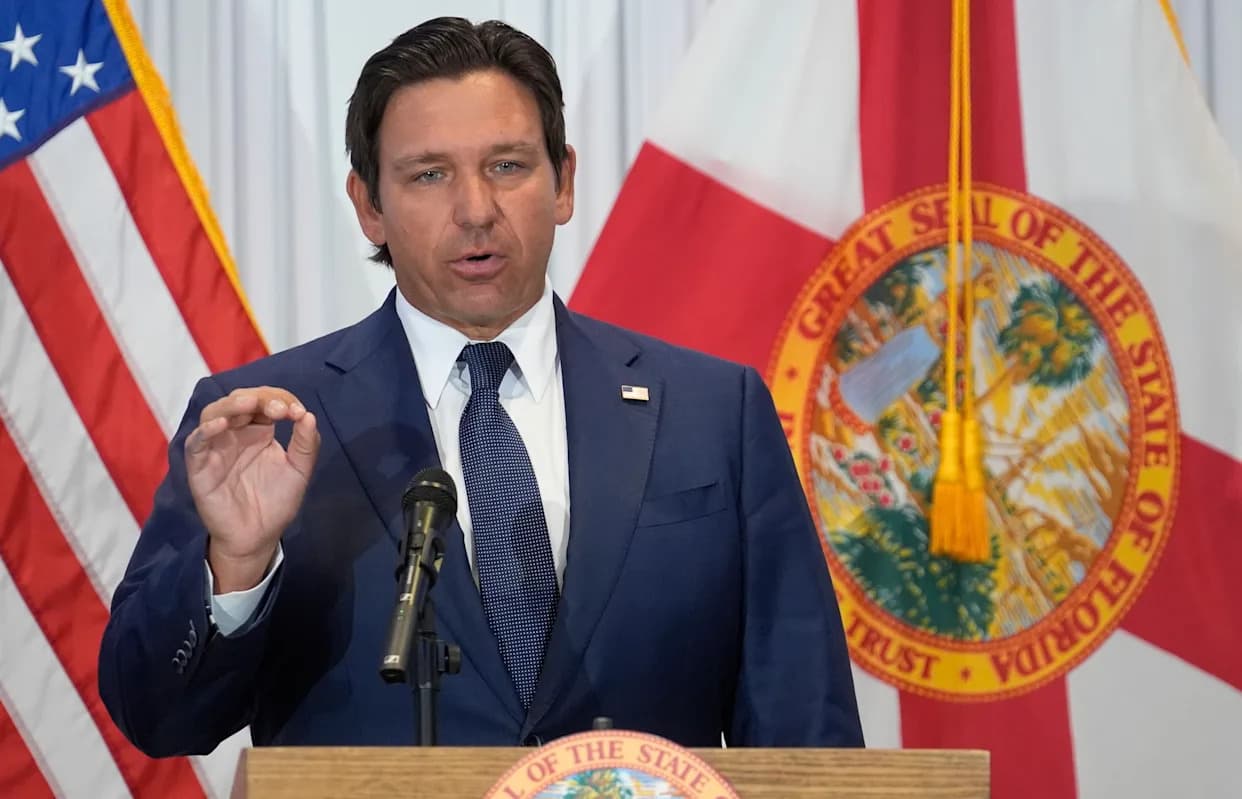
DeSantis has publicly supported revising the maps and even urged a redo of the 2020 U.S. census, arguing the state was undercounted and thus shortchanged in its congressional allocation. “We are going to press this issue,” DeSantis said in August. In a recent interview, he floated calling lawmakers back for a special session if redistricting is not completed during the regular session scheduled Jan. 13–March 13.
Senate stance and public opposition
The state Senate has largely stayed on the sidelines. Senate President Ben Albritton said there is “no ongoing work” on redistricting in his chamber and pointed to the governor’s timeline for spring consideration.
Civil liberties and voting-rights organizations have pledged to pack committee meetings and challenge any plan they view as designed for partisan advantage. “To redraw the lines for partisan reasons is illegal. Period, full stop,” said Genesis Robinson, executive director of the voter-engagement organization Equal Ground.
National context and uncertainty
Across the country, midcycle redistricting has produced seats that Republicans and Democrats respectively believe they can flip — nine seats Republicans consider winnable and six that Democrats eye — but many of those maps are already facing legal challenges. There is no guarantee that newly drawn lines will translate into the projected partisan gains.
What happens next
The House committee will hold additional meetings as public testimony and legal scrutiny intensify. Any proposals that move forward are likely to face court challenges and sustained public opposition, making the path to final maps uncertain and politically charged.
Help us improve.