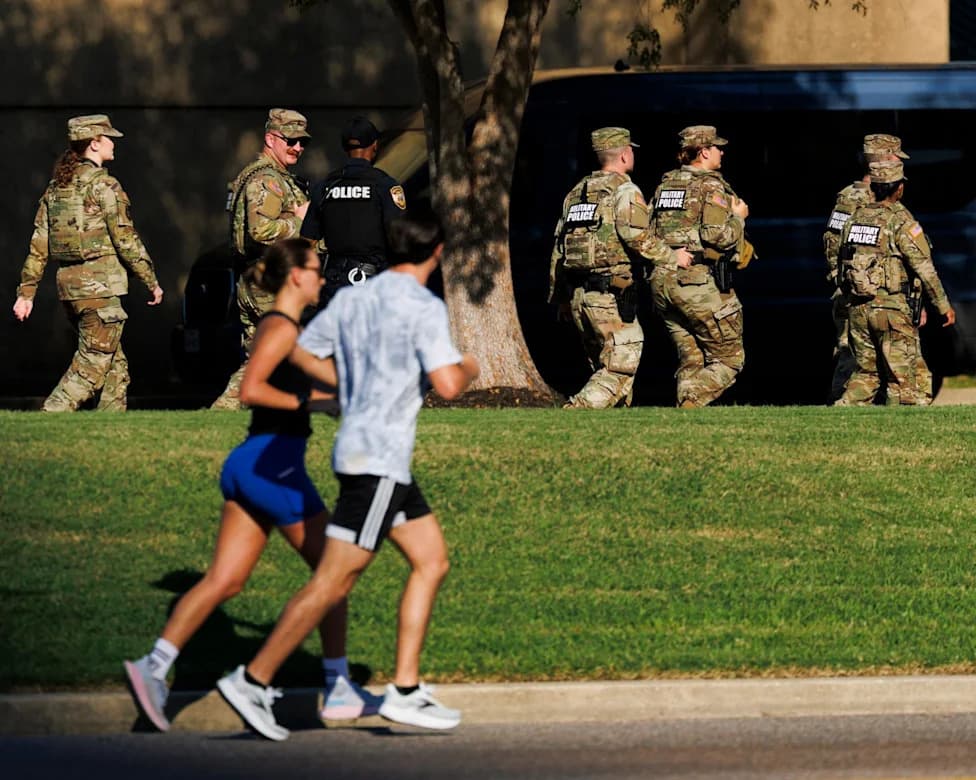
President Trump announced plans to send National Guard troops to New Orleans in the coming weeks to support public-safety efforts and to accompany a Border Patrol operation called the "Swamp Sweep." Gov. Jeff Landry, who requested up to 1,000 troops in September, expects forces to arrive before Christmas, though federal officials have not confirmed numbers or timing. Supporters cite crime and event-security concerns; critics point to falling violent-crime trends in New Orleans and warn of cultural disruption and civil-rights risks. The move echoes other recent federal efforts to deploy Guard units to U.S. cities.
National Guard to Deploy to New Orleans as Federal 'Swamp Sweep' Begins

President Donald Trump announced Tuesday that National Guard troops will be dispatched to New Orleans in the coming weeks, joining a separate federal immigration operation known as the "Swamp Sweep." The administration has not specified how many troops will be sent or the exact arrival date.
Republican Louisiana Gov. Jeff Landry, who requested up to 1,000 federally funded Guard members in September to bolster public-safety efforts, has said he expects the troops to arrive before Christmas. Speaking at a White House Cabinet meeting, the president praised Landry and said the Guard would be sent "in a couple of weeks."
"Gov. Landry — a great guy, a great governor — he’s asked for help in New Orleans. And we’re going to go there in a couple of weeks," the president said.
Why the deployment is proposed
Supporters of the deployment point to concerns about violent crime and shortages in local law enforcement. Gov. Landry has argued that additional federally funded Guard support would also help secure major events such as Mardi Gras and college football bowl games and assist cities that face repeated natural-disaster responses.
Local context and opposition
Opponents contend that a federal troop presence is unnecessary and could erode civil liberties or strain community–police relationships. New Orleans police data show substantial declines in shootings, carjackings and armed robberies in recent years. While there has been a recent spike in homicides, the city remains on pace for one of its lowest totals in nearly 50 years; as of early November the New Orleans Police Department reported 97 murders for the year.
New Orleans recorded 266 homicides in 2022 — about 70 per 100,000 residents — a peak that drew national attention. Local officials warn that a federal presence on city streets could disrupt cultural traditions such as brass-band second-line parades and hamper trust-building efforts between communities and police.
Regional implications
Landry has also suggested federally funded Guard deployments to Baton Rouge and Shreveport; he indicated troops could be sent to additional cities beyond New Orleans. Baton Rouge officials say extra forces could help amid police staffing shortages, while leaders in Shreveport say violent crime has fallen and would prefer state police support.
The announcement comes as the Border Patrol-led "Swamp Sweep" operation — described by officials as aiming to arrest roughly 5,000 people — begins in the region. Previous federal deployments to U.S. cities this year have prompted legal and political pushback in some jurisdictions.
A Louisiana National Guard spokesperson declined to comment. City leaders offered mixed responses: the mayor-elect has warned the deployment could risk civil-rights violations and rejected the plan, while the outgoing mayor said the city is open to cooperation with federal and state partners to improve public safety.
Earlier this year, approximately 100 Guard members were deployed to New Orleans after a New Year’s Day truck attack on Bourbon Street that killed 14 people and injured dozens. Any new deployment would follow that precedent, though officials have not confirmed the scope or timeline.
Help us improve.