The claim that Marbury v. Madison "invented" judicial review is misleading. Article III and founding-era statements by Oliver Ellsworth, Alexander Hamilton, Thomas Jefferson, and James Madison show that courts were expected to invalidate laws contrary to the Constitution. Marbury (1803) clarified and applied that long-understood principle at the national level rather than creating it out of whole cloth.
No — Marbury v. Madison Didn’t Invent Judicial Review

It’s a common claim across the political spectrum that the Supreme Court "invented" the power of judicial review in Marbury v. Madison (1803). That claim is misleading. While Marbury is the landmark case that clearly articulated and applied the power, the idea that courts could invalidate laws that conflict with the Constitution was widely understood by the framers and ratifiers long before 1803.
Constitutional text and contemporary understanding
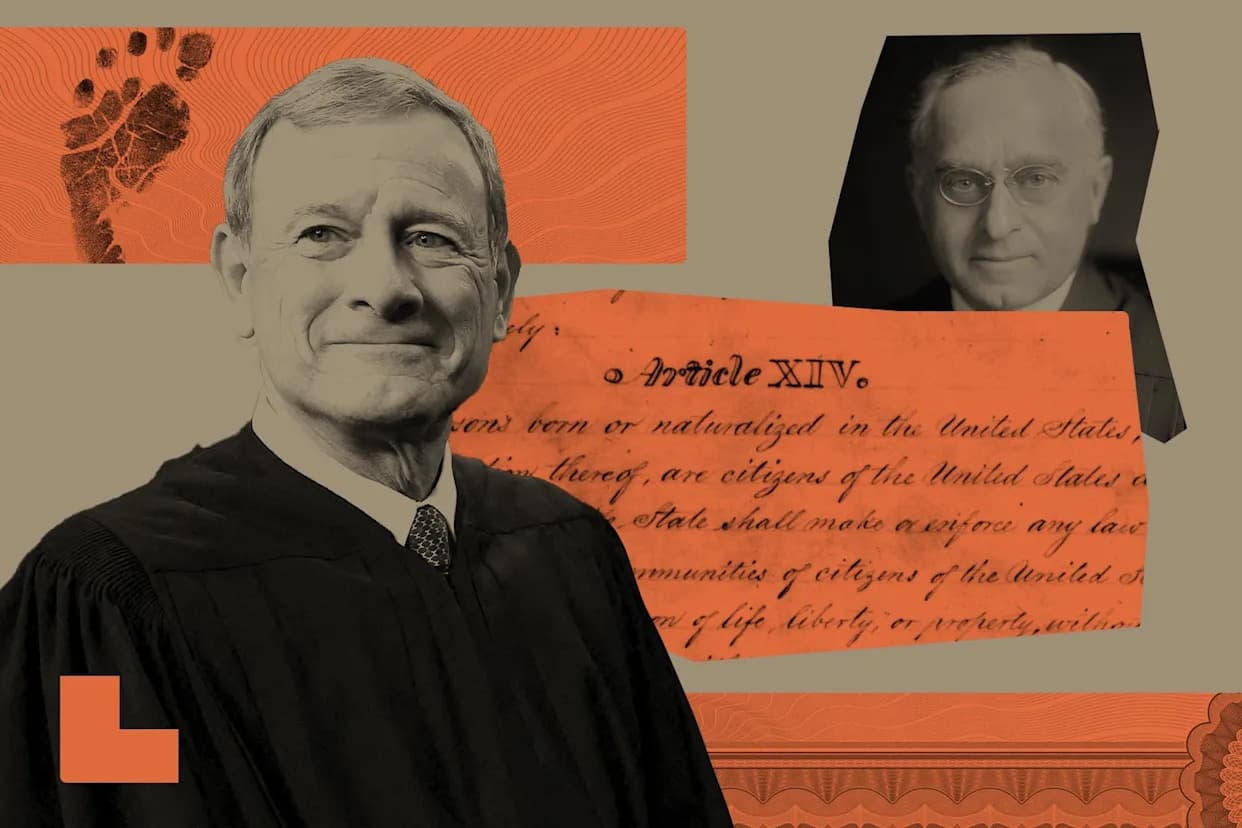
Article III vests "the judicial Power of the United States" in the Supreme Court and such inferior courts as Congress may establish. At the founding, many framers and participants in the ratification debates treated that phrase as encompassing the authority to declare legislative and executive acts void when they exceeded constitutional limits.
"If the United States go beyond their powers, if they make a law which the Constitution does not authorize, it is void; and the judicial power ... will declare it to be void." — Oliver Ellsworth, Connecticut Ratifying Convention, 1788
Alexander Hamilton made the point explicitly in Federalist No. 78: the judiciary’s duty is to "declare all acts contrary to the manifest tenor of the constitution void." Thomas Jefferson—who later criticized Federalist influence over the courts—also acknowledged in an 1789 letter to James Madison that a Bill of Rights would provide "the legal check which it puts into the hands of the judiciary." James Madison described the federal courts as "an impenetrable bulwark against every assumption of power in the legislative or executive." These statements show that judicial review was anticipated as a structural check within the new system.
What Marbury actually did
Marbury v. Madison did not create the idea of judicial review out of thin air. Instead, Chief Justice John Marshall used the case to articulate the constitutional logic and judicial procedures by which the Supreme Court could refuse to enforce statutes that conflicted with the Constitution. Marbury made that power concrete at the national level and set a durable precedent for how courts exercise it.
Why the misconception persists
Confusion often arises because the Constitution does not include the phrase "judicial review" and because early reliance on the judiciary’s prerogatives varied across states and periods. Political rhetoric sometimes treats Marbury as a sudden invention because doing so simplifies debates about the judiciary’s role. A closer look at founding-era writings and ratification debates shows that judicial oversight of unconstitutional acts was part of the original constitutional design.
Understanding this history matters: judicial review is not merely a judicial innovation but a mechanism the framers envisioned to preserve the Constitution’s limits on government power, with Marbury serving as the defining early application of that principle.
Help us improve.