November 2025 snapshot: The RSF strengthened its hold over West Darfur after seizing el-Fasher while the SAF retains much of eastern and central Sudan. Witnesses, aid agencies and satellite imagery point to mass killings, sexual violence and mass graves; famine has been confirmed in el-Fasher and Kadugli with about 20 other areas at high risk. Nearly 14 million people are displaced, and a Quad-led truce proposal — accepted by the RSF but rejected by the SAF — failed to stop fighting in November.
Sudan — November 2025: RSF Consolidates in Darfur as Famine, Mass Graves and Displacement Deepen

The humanitarian crisis in Sudan worsened in November 2025 as fighting between the Sudanese Armed Forces (SAF) and the paramilitary Rapid Support Forces (RSF) continued unabated. Both sides are led by generals who face accusations of war crimes and crimes against humanity, and international calls for a durable ceasefire have not produced a sustained halt to the violence.
Battlefield developments
The RSF consolidated control across much of West Darfur after seizing el-Fasher — the region’s last major army-held town — in late October. Multiple witness accounts and humanitarian organisations report that RSF fighters killed civilians during and after the takeover.
The SAF retains control of large parts of eastern and central Sudan, including Khartoum and sections of Kordofan, and in mid-November the army reported capturing Kazqil and Um Dam Haj Ahmed in North Kordofan. Despite those gains, RSF units and allied militias have been moving troops and equipment into central Kordofan, with commanders reportedly targeting strategic towns such as Babanusa and el-Obeid — locations that offer a route toward Khartoum and sit amid important agricultural, livestock and petroleum-producing areas.
Atrocities, mass graves and displacement
Witnesses, aid workers and satellite imagery point to widespread atrocities in and around el-Fasher following the RSF takeover. Reports compiled by humanitarian groups describe mass killings, systematic sexual violence against women and girls, hostage-taking for ransom, and the burning and burial of bodies in mass graves across multiple neighbourhoods. One Sudanese medical NGO described the pattern of violence as amounting to "genocide."
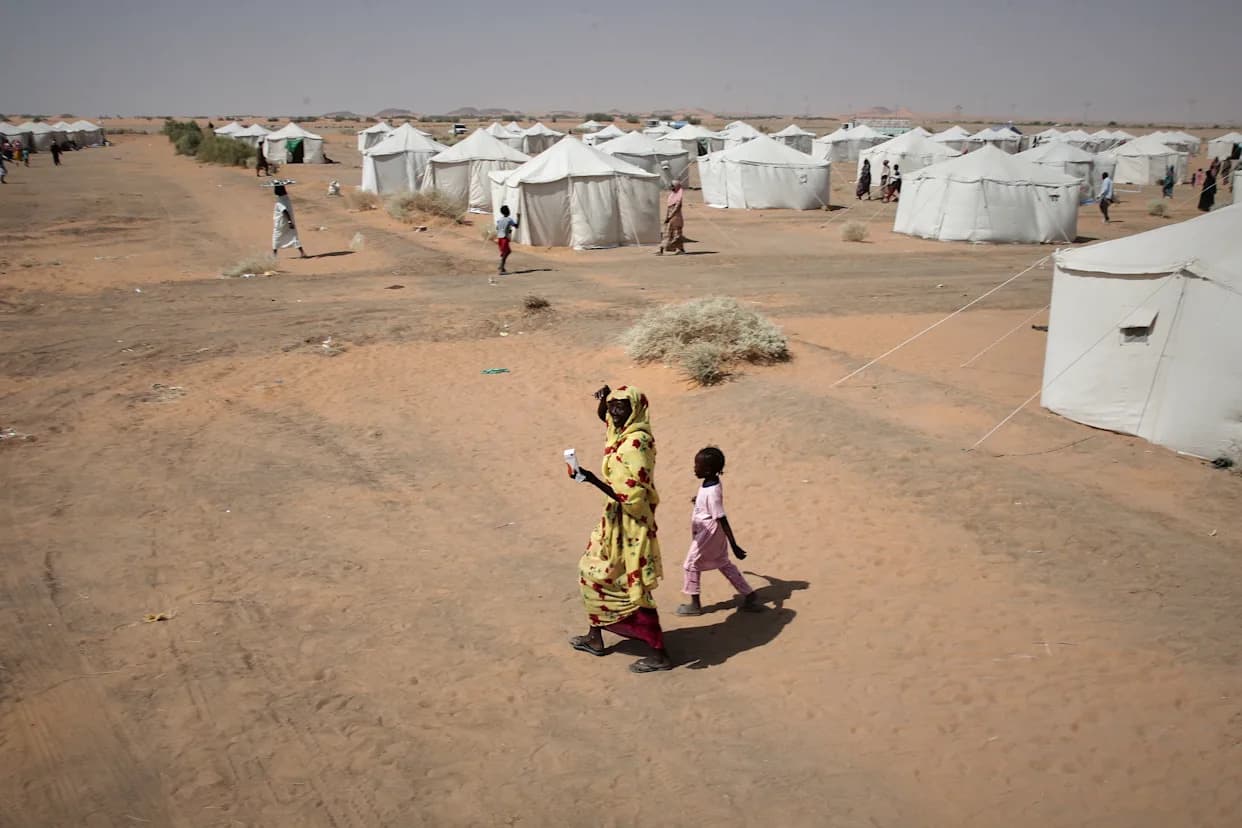
Thousands fled el-Fasher for nearby localities such as Tawila, and tens of thousands have crossed into neighbouring Chad, where humanitarian needs are already high and UN funding is strained. According to Amy Pope, director general of the International Organization for Migration, Sudan now hosts the world’s largest displacement crisis, with nearly 14 million people internally displaced or seeking refuge abroad — a crisis that disproportionately affects women and children.
Food security and famine risks
Early November findings from the Integrated Food Security Phase Classification (IPC) confirmed famine conditions in el-Fasher and in Kadugli, South Kordofan. The IPC warned that roughly 20 additional areas across Darfur and Kordofan face a serious risk of sliding into famine as humanitarian access remains severely restricted and aid supplies dwindle.
Diplomacy, truce efforts and political stakes
A diplomatic grouping known as the Quad — comprising the United States, Saudi Arabia, Egypt and the United Arab Emirates — proposed a truce and a roadmap toward transition to civilian rule. The RSF publicly said it accepted the proposal on November 6. On November 26 RSF commander Mohamed Hamdan Dagalo (Hemedti) released a video asserting that his force would implement a unilateral three-month "humanitarian truce," but attacks by RSF elements persisted throughout November.
The SAF, led by army chief Abdel Fattah al-Burhan, rejected the Quad proposal, arguing it would weaken the armed forces and leave the RSF in place. Al-Burhan singled out the UAE in criticism; the UAE denies allegations of supporting or arming the RSF while continuing to import Sudanese gold.
Following a White House visit by Saudi Crown Prince Mohammed bin Salman, US President Donald Trump pledged "cooperation and coordination" to help end the conflict. Trump’s senior adviser on Arab and African affairs, Massad Boulos, later joined Anwar Gargash, a diplomatic adviser to the UAE’s president, at a joint news conference in Abu Dhabi to promote the truce proposal.
What to watch next
- Whether the proposed Quad truce leads to verified, sustained reductions in violence or merely freezes lines while atrocities continue.
- Humanitarian access and funding: whether additional aid corridors can be opened before famine spreads to the 20 high-risk areas identified by the IPC.
- Population movements: continued displacement into Chad and other neighbours and the international response to the mounting refugee crisis.
The situation remains fluid and grave. Continued reporting, independent investigations into alleged atrocities, and urgent humanitarian assistance are critical to averting further mass suffering.
Help us improve.