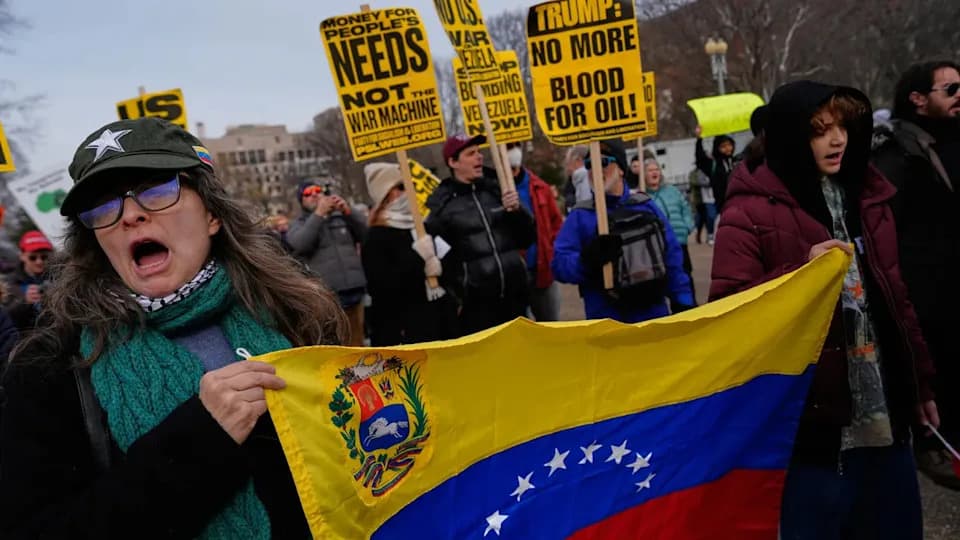
Katie Miller defended U.S. strikes on boats off Venezuela during a CNN panel, where Bakari Sellers and host Abby Phillip challenged the legality and evidence behind the campaign. The strikes, initiated in September, have been linked to more than 80 deaths and prompted allegations that innocent fishermen may have been killed. Critics cite the Constitution’s due process protections and call for clearer public evidence and accountability; the operations have also strained international intelligence cooperation.
CNN Confrontation: Bakari Sellers Challenges Katie Miller on Deadly Venezuelan Boat Strikes

Katie Miller, wife of senior Trump adviser Stephen Miller and host of a small podcast, appeared on CNN to defend the U.S. campaign of strikes on vessels off Venezuela’s coast—a defense that prompted sharp pushback from panelists who questioned the strikes’ legality and accuracy.
The maritime campaign, launched in September and described by administration officials as an effort to disrupt drug smuggling, has been linked to more than 80 deaths. Critics and some lawmakers say the strikes risk killing innocent fishermen and low-level suspects without any judicial process or clear public evidence that the targeted boats were carrying narcotics.
“It’s actually called the due process clause of the United States of America,” former Representative Bakari Sellers told Miller. “Can you point to one of those boats that actually had drugs on them? Do you know about the Trinidadians who were killed innocently, who were just fishermen? Can you actually kill those fishermen without due process?”
Families of two Trinidadian men say their relatives were killed in an October strike, though Trinidadian authorities said they have no evidence the men were aboard the targeted vessel. A family in Colombia is also seeking answers after a relative disappeared following a September strike.
Reporting has indicated that Defense Secretary Pete Hegseth acknowledged uncertainty about the precise identities of those targeted, and some lawmakers have warned the strikes are likely killing low-level operatives or, worse, innocent civilians. Even some administration figures have publicly acknowledged the danger to mariners: Vice President J.D. Vance quipped in September that he “wouldn’t go fishing right now in that area of the world.”
On air, Miller defended the strikes with a stark hypothetical, likening the people aboard the boats to “members of al-Qaeda or ISIS coming to our shores with enough drugs or ammunition to kill 100,000 Americans.” Sellers countered that there is no evidence tying any individual on the vessels to such a threat and reiterated the constitutional principle of due process.
“I believe that individuals deserve some modicum of due process. I think that that is something that’s enshrined in our constitution,” Sellers said.
Host Abby Phillip also pressed the administration for clarity, noting officials have not publicly specified which drugs were being transported and observing that fentanyl does not originate from Venezuela. Legal experts and critics framed the dispute as one about whether the operations have a lawful basis and whether appropriate safeguards are in place to prevent civilian harm.
The strikes have triggered diplomatic fallout as well: some international partners have curtailed intelligence-sharing with the United States. The debate intensified after a report on the initial kill order drew attention, and Defense Secretary Hegseth posted publicly, “We have only just begun to kill narco-terrorists,” a statement that further inflamed critics concerned about oversight and legality.
As scrutiny grows, lawmakers and advocates are calling for clearer evidence of wrongdoing, transparent legal justification for the strikes, and accountability for any wrongful deaths.
Help us improve.