Georgian police say Aleksandre Elisashvili, 47, was detained after allegedly breaking into the Tbilisi City Court at dawn, smashing a window, pouring gasoline and carrying a firearm. Authorities released video that appears to show a handgun, gasoline and broken glass, though the footage has not been independently verified. The arrest comes amid intensified pressure from the ruling Georgian Dream party — which has filed to ban major opposition blocs — and follows 365 days of daily protests after the government halted EU accession talks. Critics warn recent measures echo tactics used to stifle dissent elsewhere.
Georgian Opposition Leader Arrested After Alleged Arson Attempt at Tbilisi Court

Georgian authorities detained opposition figure Aleksandre Elisashvili on Saturday on suspicion of attempting to set fire to the Tbilisi City Court building, the Interior Ministry said. Officials allege Elisashvili smashed a window with a hammer at dawn, poured gasoline around the perimeter of the court chancellery and was carrying a firearm when arrested.
According to the ministry, the 47-year-old founder of the Citizens party and former opposition lawmaker injured a court official during his arrest. Authorities released video that appears to show a handgun, a bottle of gasoline, a lighter and shattered glass; that footage has not been independently verified.
The Citizens party is part of the Lelo–Strong Georgia coalition and is counted among the country's main opposition groups. The arrest comes amid a broader crackdown on opposition forces: the ruling Georgian Dream party has petitioned the Constitutional Court to ban three major opposition blocs — the United National Movement, Akhali/Coalition for Change and Lelo — while several opposition figures are jailed, in exile or facing criminal charges.
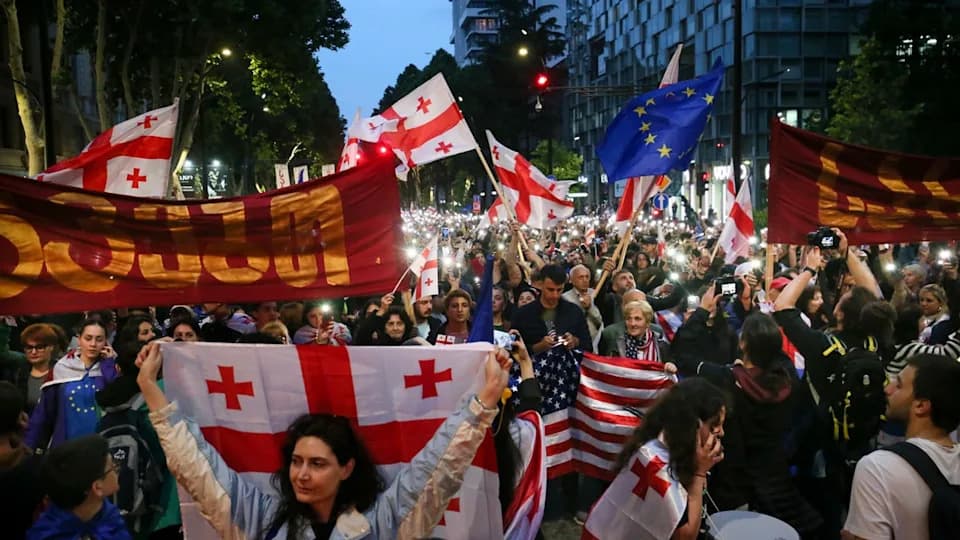
Elisashvili’s detention followed mass demonstrations in Tbilisi marking 365 consecutive days of daily protests that began on Nov. 28, 2024, after the government announced it would halt talks on European Union accession. Thousands marched along Rustaveli Avenue carrying drums, flags and placards; although turnout has declined from its peak, demonstrators have continued to gather every day.
The government has responded by tightening rules on public assembly and passing laws aimed at rights groups, non-governmental organizations and independent media. Critics say some measures resemble legislation used elsewhere to curb dissent, heightening concerns about democratic backsliding in the country.
Help us improve.