The authors warn that recent U.S. boat strikes in the Caribbean and Pacific risk killing civilians, including Americans, and recall the 2001 Air Bridge Denial incident in which Roni and infant Charity Bowers were mistakenly killed. They note that procedural failures uncovered by Senate and CIA reviews show how safeguards can fail, and they argue that current strikes lack transparency and a clear legal basis. With 21 reported strikes and 83 dead, the piece urges Congress to exercise oversight, clarify legal authority, and impose robust safeguards to prevent another tragic misidentification.
U.S. Maritime Strikes Risk Civilian Lives — Congress Must Prevent a Repeat of the Bowers Tragedy

Recent U.S. boat strikes in the Caribbean and the Pacific are more than a policy debate — they carry a real risk of killing civilians, including Americans. The prospect of unlawful orders and extrajudicial killings is not theoretical when lethal force is being used at sea with limited transparency and unclear legal authority.
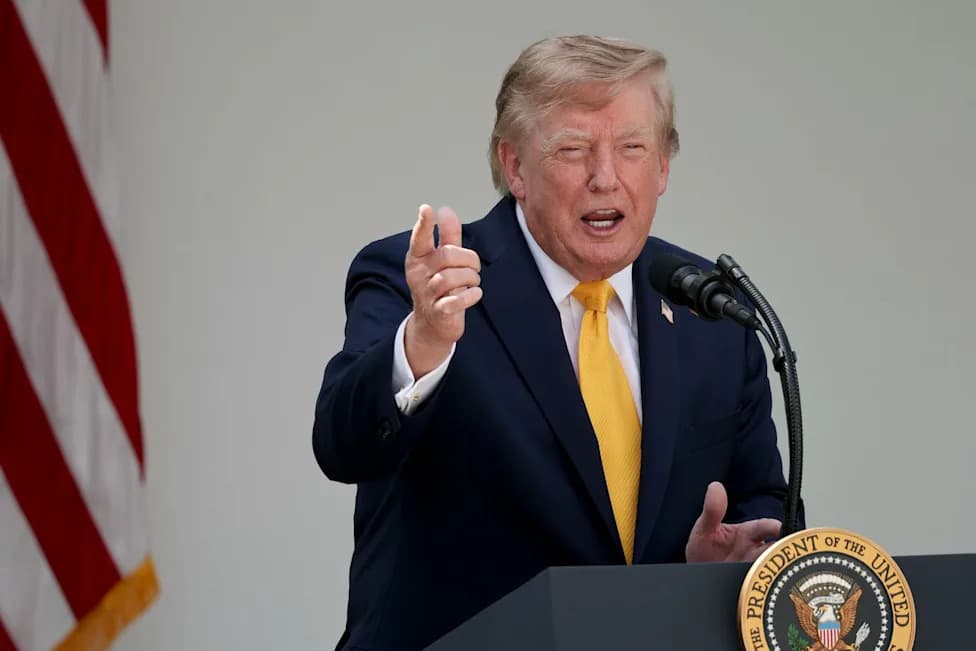
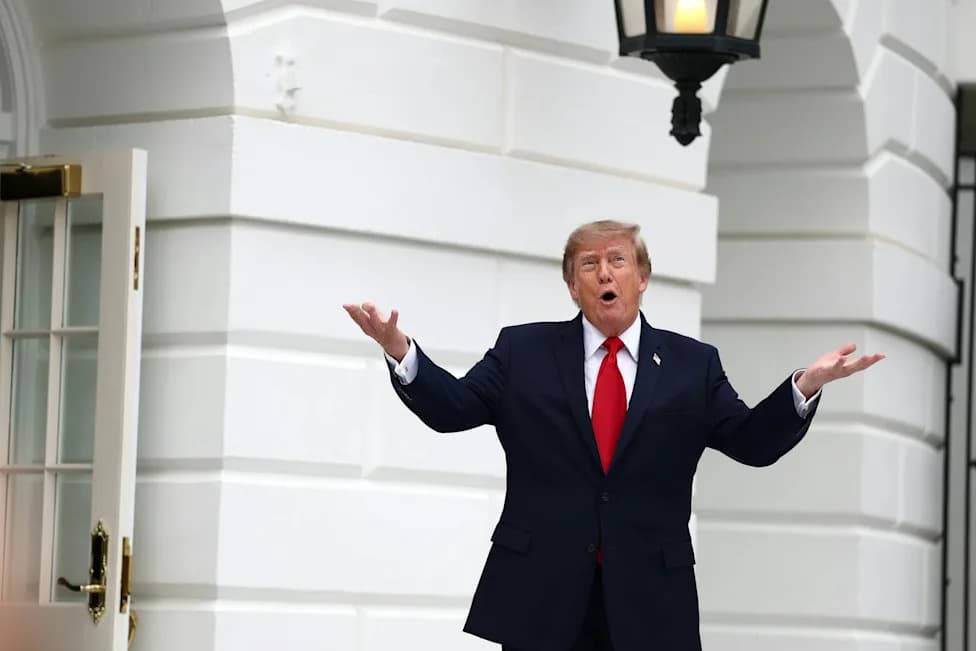
Last week, President Trump accused six Democratic lawmakers of sedition for reminding service members that they are not obliged to obey manifestly illegal orders. There is a long-standing duty to disobey orders that would require the commission of a crime. That legal principle matters now because history shows how quickly well-intentioned programs can result in tragedy.
Lessons from the Air Bridge Denial Program
The bipartisan Air Bridge Denial program, begun under President Bill Clinton and carried into the George W. Bush administration, was designed to sever the link between drug-producing regions and distribution networks. The United States supplied radar, aircraft and intelligence to assist the Peruvian Air Force in detecting and intercepting suspect aircraft.
Air Bridge Denial incorporated multiple safeguards. Peruvian forces were required to attempt exhaustive identification, establish repeated radio contact, obtain visual confirmation, verify aircraft registration, and even fire warning shots before deploying lethal force. Despite those precautions, in April 2001 a small plane carrying missionary Roni Bowers and her infant Charity was shot down after being misidentified as a drug aircraft.
A 2001 Senate Intelligence Committee review and a 2008 CIA Inspector General report documented systemic procedural failures and negligence that violated U.S. law and the presidential authorizations that permitted U.S. involvement. The CIA found breakdowns in procedure in all 15 shootdown incidents from 1995 to 2001 in which it assisted. Those findings demonstrate that even programs with safeguards can fail catastrophically.
Why Today’s Strikes Raise New Concerns
Contemporary reports suggest a markedly different posture: rapid, lethal engagement with limited public information about targets or legal justification. To date, U.S. forces have carried out 21 strikes on boats in the Caribbean and the Pacific, reportedly killing 83 people; two survivors were repatriated to Colombia and Ecuador. President Trump has issued blunt warnings to traffickers, and remains quoted as saying he intends to treat some traffickers with extreme force.
Unidentified bodies with severe burn injuries and missing limbs have washed ashore, underscoring the human cost of imprecise strikes.
As a matter of domestic law enforcement, lethal force is permissible only as a last resort. In armed conflict, lethal force may be directed only at lawful combatants; intentionally targeting civilians is a war crime. Whether a situation qualifies as an armed conflict depends on an objective threshold of organized violence — naming a conflict, or labeling a person a combatant, does not make it so.
Drug trafficking has exacted a terrible toll in the United States. But harm caused in the U.S. does not automatically transform smugglers, manufacturers or distributors into lawful military targets. If it did, manufacturers of weapons, certain medical prescribers, or distributors of illicit drugs could be subject to summary lethal targeting — a result incompatible with the rule of law and the protections that U.S. and international law require.
What Congress and the Public Should Demand
Allowing maritime strikes to continue without firm legal and procedural guardrails risks repeating the worst outcomes of the past, including the accidental killing of civilians and U.S. citizens. Congress has a constitutional responsibility to provide oversight and to ensure that the executive adheres to the laws of war, domestic law, and basic safeguards for civilian life. Some lawmakers across party lines have already voiced concern and appetite for oversight.
As Pete Hoekstra, then a member of Congress and later U.S. ambassador to Canada, said after the Bowers deaths: it is up to Congress to make sure this never happens again.
Members of the military and civilian officials alike must remember that their duty is to uphold the Constitution and protect life at sea with the same care they claim to show at home. Congressional scrutiny, clearer legal authority, and rigorous operational safeguards are necessary now to prevent another tragic misidentification and loss of innocent life.
Chimène Keitner is the Homer G. Angelo and Ann Berryhill Professor of International Law at the University of California, Davis School of Law, director of the UC Davis Center for International Law and Policy, and a Public Voices Fellow of The Op-Ed Project. Duncan Hollis is the Laura H. Carnell Professor of Law at the Temple University Beasley School of Law. Both authors are former State Department lawyers.
Help us improve.