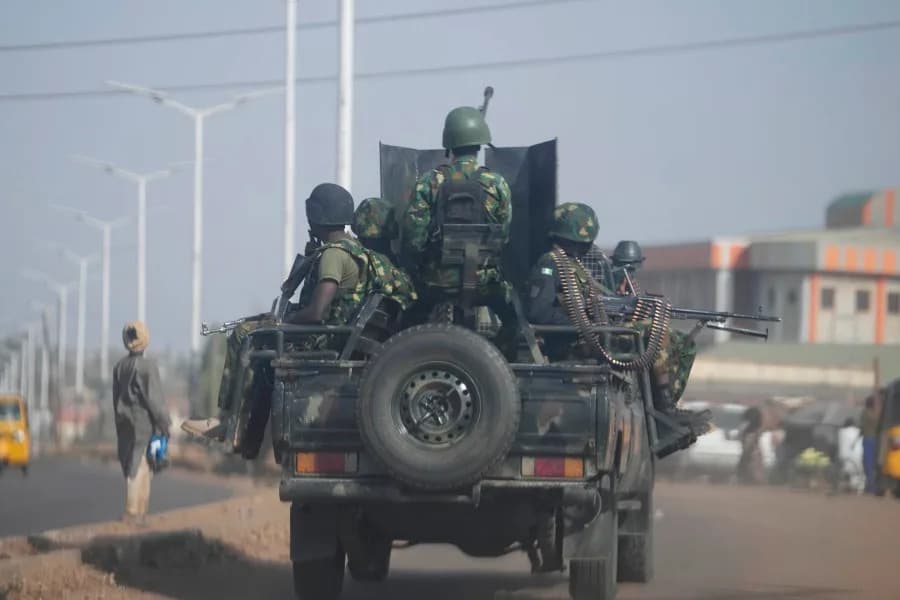
Nigerian President Bola Tinubu has declared a nationwide state of emergency after two mass school kidnappings and a surge in attacks on civilians. He announced a plan to recruit 20,000 additional police officers and to deploy forest guards to protect remote communities. Analysts caution that recruitment alone will not address root causes such as local grievances, troop welfare and government accountability. The crisis has drawn international attention, including public comments from U.S. political figure Donald Trump.
Tinubu Declares Nationwide Emergency, Orders 20,000 New Police After Mass School Kidnappings

Nigerian President Bola Tinubu on Wednesday declared a nationwide state of emergency after two large-scale school abductions and a rising wave of attacks on civilians. He announced a recruitment drive for 20,000 additional police officers, bringing the force to an estimated 50,000, and authorized the national intelligence agency to deploy forest guards to protect remote communities where armed groups operate.
"My fellow Nigerians, this is a national emergency, and we are responding by deploying more boots on the ground, especially in security-challenged areas," Tinubu said in a written statement. Under the constitution, the president can declare an emergency to coordinate a national response to crises.
The move follows recent attacks that have intensified pressure on the government: last week gunmen abducted 25 students in Kebbi state and more than 300 in Niger state. Authorities later rescued the students taken in Kebbi and reunited them with their families, while searches continue for those seized in Niger state.
The crisis has also attracted international attention, including public comments from U.S. political figure Donald Trump alleging persecution of Christians and warning of possible forceful intervention — remarks that have amplified global scrutiny of Nigeria's security challenges.
Tinubu urged stepped-up protection for schools, churches and mosques in remote areas to deter further attacks. However, some analysts warn that adding personnel alone may not reverse the tide of insecurity.
"I don’t think it goes far enough. The ruling elites are yet to awaken to the reality that the issue has gone beyond throwing bodies at the problem," said Confidence McHarry, a senior security analyst at SBM Intelligence, a Lagos-based geopolitical consultancy. He cautioned that the hiring initiative will likely struggle unless deeper causes — such as government accountability, local grievances and the welfare of security personnel — are addressed.
Multiple armed groups operate across Nigeria, including Boko Haram and its splinter faction Islamic State West Africa Province (ISWAP), alongside criminal gangs that frequently attack or kidnap for ransom. The last national emergency declared over insecurity was in 2013 for the northeast region to confront emerging terrorist threats.
What happens next: The government will begin recruitment and deploy forest guards to insecure rural areas, while authorities continue searches for missing students and work with local communities to improve protection measures.
Contributed to this report: Ope Adetayo.
Help us improve.