European leaders are considering using roughly $225 billion in frozen Russian assets held at Euroclear as collateral to finance Ukraine’s 2026–27 needs. An early U.S. draft proposed a U.S.-run reconstruction fund using $100 billion of those assets, a move that alarmed many in Europe and was later dropped. The European Commission favors a plan combining joint EU borrowing and national grants, but Belgium has raised retaliation concerns. EU leaders will discuss the matter at a Dec. 18 summit.
Frozen Russian Assets Become Key Leverage in EU Debate Over Funding Ukraine

Brussels has turned its attention to billions in frozen Russian funds as a central — and highly contentious — option to finance Ukraine’s defense and reconstruction. The most talked-about pool of assets, roughly $225 billion held at the Euroclear clearinghouse in Belgium, could be used as collateral for EU borrowing to cover an estimated $153 billion shortfall in Ukraine’s 2026–27 budget and military needs.
The idea drew fresh controversy after an early draft of a 28-point peace proposal from U.S. President Donald Trump reportedly suggested using $100 billion of those frozen assets alongside $100 billion from the EU for a U.S.-run reconstruction vehicle, with half of any profits returned to Washington. European leaders and analysts said the proposal risked forcing European taxpayers to shoulder the burden while the United States profited.
Why the frozen assets matter
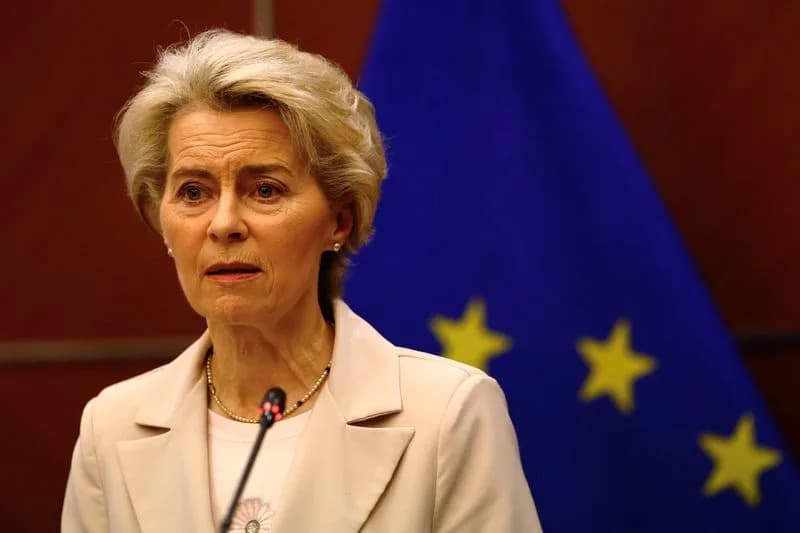
European Commission President Ursula von der Leyen has pushed for tapping the frozen assets to sustain pressure on Moscow and provide predictable financing for Kyiv as security concerns — including drone incursions and sabotage in Europe — persist. The Commission’s plan would combine joint EU borrowing and national grants, using the Euroclear funds as the primary collateral for a large financing package.
Support for the idea is broad across the bloc, but not unanimous. Belgian Prime Minister Bart De Wever has been a key holdout, warning that allowing the assets to be used as collateral could invite Russian retaliation against Belgian interests. De Wever also cited domestic political considerations tied to federal debt. After a recent domestic agreement that eased Belgium’s internal impasse, other EU capitals signaled hope that he might lift his objections.
“I cannot see any scenario in which the European taxpayers alone will pay the bill,”
von der Leyen said in Strasbourg, adding that a Europe-wide solution is needed to avoid overburdening individual countries.
Geopolitics and negotiations
Analysts warned that if Washington moved quickly to claim the frozen assets first, it could reshape bargaining dynamics and weaken Brussels’ negotiating power. Agathe Demarais of the European Council on Foreign Relations said a rapid EU move to take ownership of central bank assets could blunt any attempt by the U.S. to extract a lopsided deal. Fabian Zuleeg of the European Policy Centre called the U.S. takeover proposal “outrageous,” while acknowledging that some might accept it if it brought a comprehensive, acceptable peace settlement.
After intensive consultations between the U.S., Germany, France, the U.K. and European Commission representatives, the investment vehicle was removed from the latest draft of the peace plan. Russia has already rejected the new draft in full.
Sweden’s Foreign Minister Maria Malmer Stenergard warned that “the clock is ticking,” calling seizure of the assets the most realistic way to make a significant difference and the fairest option for European taxpayers. EU foreign policy chief Kaja Kallas said there is now broad support within the bloc for Belgium to agree to the measure.
EU leaders will discuss the possible use of the frozen assets at a summit in Brussels on Dec. 18, where the decision could determine whether the bloc seizes a powerful financial lever in its support for Ukraine.
Reporting: Geir Moulson and Kirsten Grieshaber.
Help us improve.