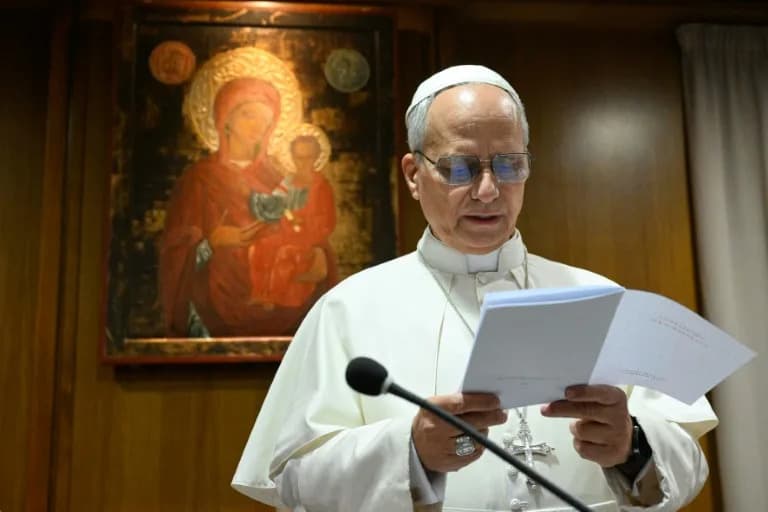
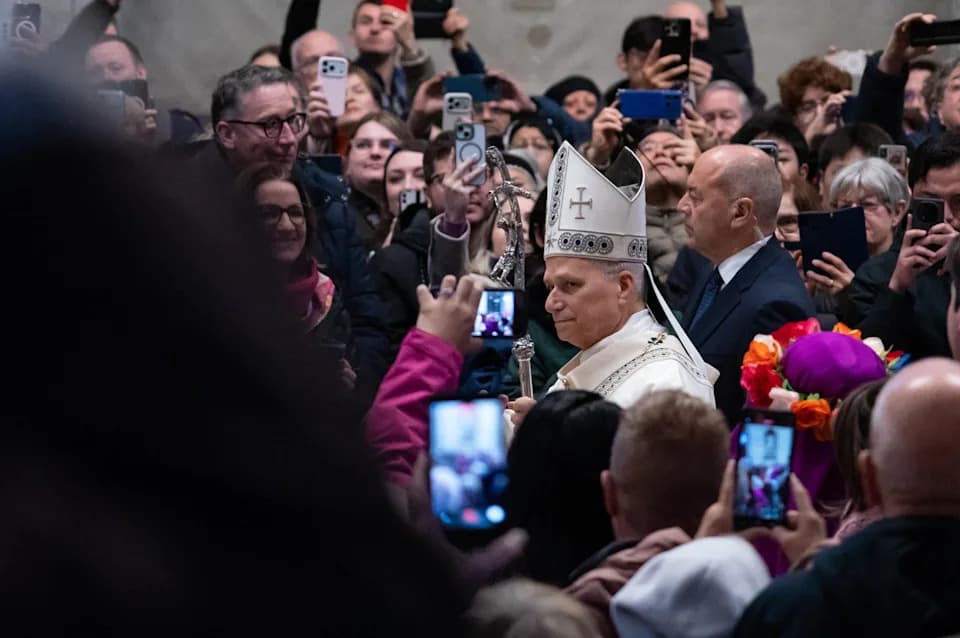
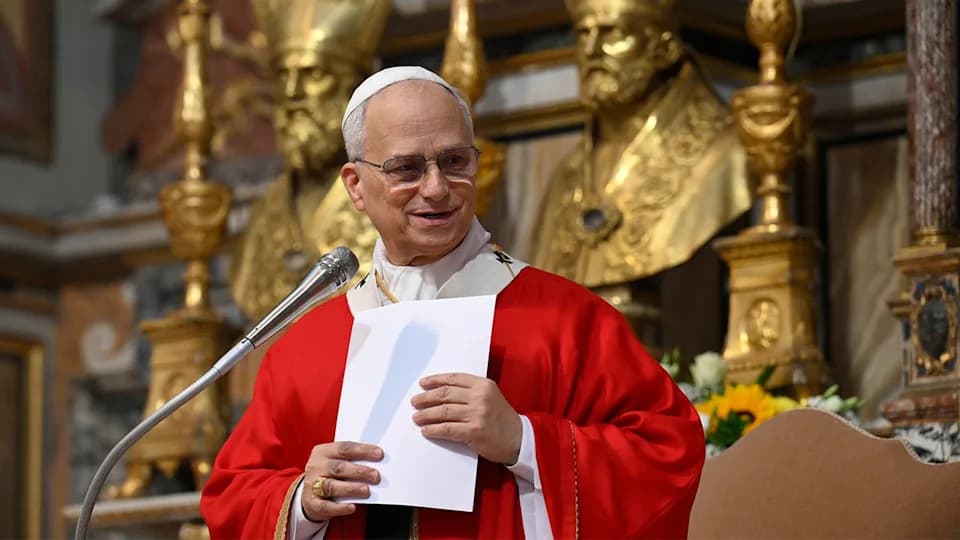
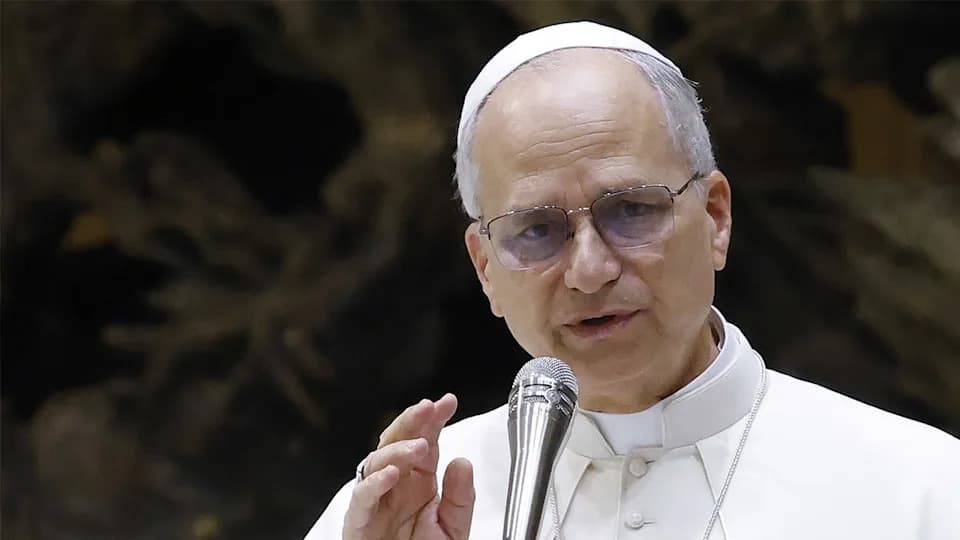
Pope Leo XIV, the first American pope, is speaking directly in English about U.S. concerns — especially immigration and artificial intelligence — and his remarks are resonating in American media. Michael Sean Winters explains that Leo’s native language and habit of taking unscripted questions make his words harder to dismiss and more influential. The pope’s emphasis on human dignity, migrant protection, and the dignity of work echoes longstanding Catholic social teaching and raises tensions with conservative Catholics. Leo treats AI as both a technological opportunity and an anthropological challenge that could reshape creative labor.
Why Pope Leo XIV’s American Voice Is Reshaping the Church’s Message on Immigration and AI

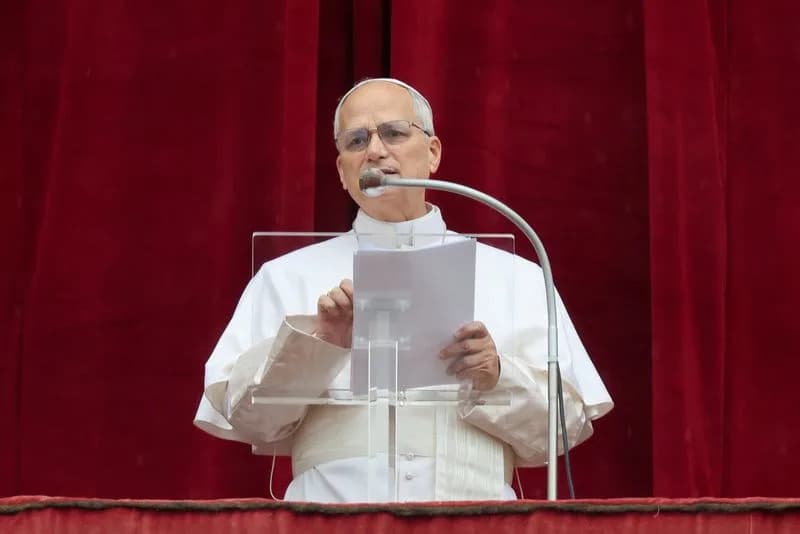
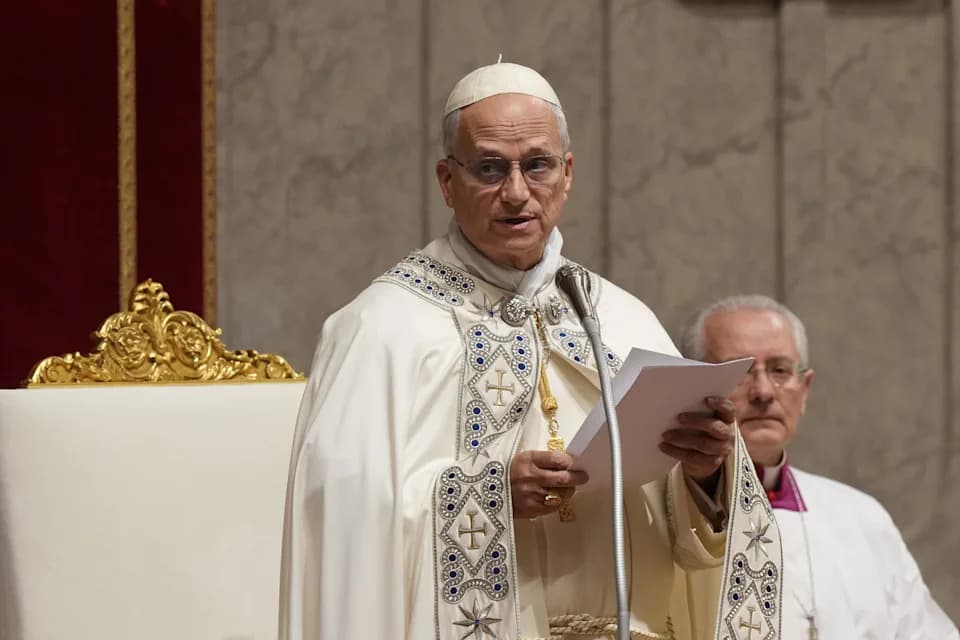
For the first time, a U.S.-born pontiff from Chicago is speaking to the world in a distinctly American English — and his voice is landing differently in the United States. Pope Leo XIV has weighed in on polarizing topics such as immigration policy and the role of artificial intelligence in creative industries, and he has developed a habit of answering unscripted questions in English that amplifies his reach in American media and politics.
Why his English and accessibility matter
Michael Sean Winters, a longtime columnist who covers the Vatican and American Catholics, says the difference is partly linguistic and partly practical. Previous popes' remarks in Spanish or Italian often reached U.S. audiences through interpreters or translations. Leo’s direct use of English — often with a Midwestern cadence — removes that filter and makes his tone and emphasis harder to dismiss as foreign or misunderstood. Equally significant, he routinely fields a few questions after his weekly day off at Castel Gandolfo, creating repeated moments when his unscripted comments enter the news cycle.
Not a partisan pastor, but a papal voice with political consequences
Winters argues that a pope’s role is not to take partisan sides, but to apply Catholic moral principles to public life. Catholic social teaching — rooted in the dignity of the human person, solidarity, care for the vulnerable, and the right to decent work — often produces positions that intersect with political debates. When measured against the platform and rhetoric associated with the MAGA movement, Winters says, many of those positions diverge: "By that standard, every pope is going to be anti‑MAGA — in the same way every pope will oppose war when it contradicts Church teaching."
Immigration: continuity, not novelty
When Leo said, "Someone who says 'I am against abortion but I am in agreement with the inhuman treatment of immigrants who are in the United States,' I don’t know if that’s pro‑life," he was echoing a long-established line in Catholic teaching. Modern papal engagement with migration goes back decades; the Church’s approach starts from the conviction that every human being is made in the image of God and therefore deserves dignity and humane treatment.
Winters notes that political and media framings matter: some outlets routinely label migrants as "criminal" in a way that obscures the reality that many border crossers are not criminal offenders in the legal sense. Overstaying a visa, he suggests, is more analogous to a civil infraction than a felony — and should be treated proportionally.
Leo endorsed a U.S. bishops’ statement warning against a climate of fear and the "vilification of immigrants," and explicitly criticized the idea of "indiscriminate mass deportation." Winters considers that language a direct critique of certain immigration policies, even when church statements avoid naming the president or administration explicitly — a practice the bishops have followed selectively in recent years.
Tensions with conservative Catholics
Some conservative bishops and Catholic activists who hoped for a more conservative turn in Rome are now confronting the reality of an American pontificate that largely represents continuity with recent popes. Winters recounts how a faction of U.S. bishops once treated Pope Francis as a temporary phase; the election of Cardinal Prevost (now Leo XIV) changed expectations and left critics recalibrating. The friction is less a frontal clash between the Vatican and U.S. Catholics than an intra‑church negotiation about priorities and tone.
AI, cinema and the dignity of work
Leo’s interest in film and technology has drawn attention for being unusually focused for a pope. He chose the name Leo in part as a reference to Leo XIII, who addressed the social dislocations of the Industrial Revolution. Today, the pope sees an informational and technological revolution unfolding — one that raises anthropological questions about what it means to be human and what kinds of labor society preserves.
He is not categorically opposed to artificial intelligence, but he worries about two linked issues: the ethical use of powerful tools and the way AI reshapes human self‑understanding and creative labor. When Leo highlights "below‑the‑line" film workers — makeup artists, carpenters, grips, costume designers — he is drawing attention to people whose livelihoods may be threatened by automation or digital substitution. That concern resonates with Catholic social teaching, especially the insistence that economies and technologies must respect human dignity and provide just conditions for workers.
What this means for U.S. politics and Catholic life
Leo’s English‑language interventions cut across typical media and political fault lines. They complicate efforts to portray papal statements as solely foreign or irrelevant to American debates, and they force Catholic leaders and laypeople alike to reconcile their political allegiances with enduring moral claims about migrants, human dignity, and labor. As Winters puts it, the Church is not a political party; its teachings will sometimes align with, and sometimes challenge, the prevailing platforms in any country.
Bottom line: Pope Leo XIV’s American background and communicative style make his pronouncements unusually resonant in U.S. public life. His focus on migrants and workers — and his caution about AI’s impact on human creativity and livelihoods — reflect long‑standing Catholic concerns recast in language that many Americans hear as direct and immediate.
Source: conversation with Michael Sean Winters, columnist and Vatican observer.
Help us improve.