Excavations at Tell Abraq in the UAE uncovered Building B-III, a 2,000-year-old sanctuary where traveling merchants likely offered prayers before and after voyages across the Persian Gulf. The site shows continuous occupation from about 2500 B.C.E. and two major periods of long-distance exchange in the Late Bronze Age and a pre-Islamic phase (c. 300 B.C.E.–300 C.E.). Finds include Hellenistic- and Aramaic-influenced figurines, Roman-style coin imitations, and an Iron Age structure (B-I) implicated in controlling imported goods. Later declines in imports and site activity suggest conflict or disruption curtailed trade.
2,000-Year-Old Sanctuary at Tell Abraq Sheds Light on Ancient Merchant Pilgrimages and Gulf Trade

Archaeologists working at Tell Abraq, in what is now the United Arab Emirates, have uncovered a 2,000-year-old sanctuary likely used by traveling merchants to worship before and after voyages across the Persian Gulf. Continued excavations by the Italian Archaeological Mission in Umm al-Quwain also confirm that Tell Abraq was occupied for roughly 3,000 years, with settlement activity beginning around 2500 B.C.E.
Two major trade phases
Researchers identified two principal intervals when Tell Abraq was strongly integrated into long-distance exchange networks: one in the Late Bronze Age and another during a pre-Islamic period (approximately 300 B.C.E. to 300 C.E.). These phases brought significant inflows of exotic goods and cultural influences from Iran, Mesopotamia, India and the Roman world, reshaping local material culture and social connections.
The sanctuary: Building B-III
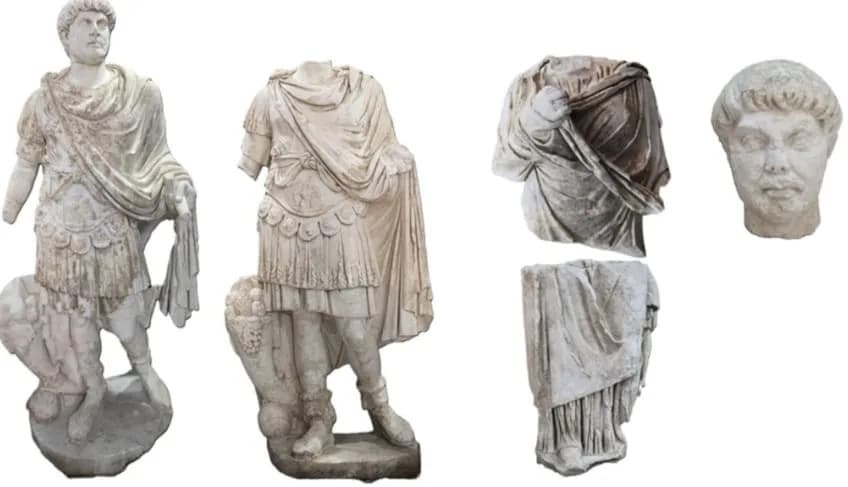
In the later pre-Islamic phase, the team documented a small sanctified structure labeled Building B-III, which contains an open-air altar. Finds from B-III include clay and bronze figurines, bronze coins, local imitations of Roman gold coins, and stone statuettes showing Hellenistic and Aramaic stylistic influences. The researchers interpret B-III as a waypoint where merchants paused to offer thanks or pray for safe passage before resuming journeys across the Gulf.
Commerce, storage and control: Building B-I
From the later Iron Age the excavation revealed a substantial stone structure, Building B-I, constructed using a hard mortar that was unusual for the region and period. Inside B-I archaeologists recovered vessels originating in southeastern Iran — including dense, sandy-clay jars — and seals bearing motifs associated with Mesopotamian and Iranian traditions. The prominence and contents of B-I suggest it served more than simple storage functions and may have played a role in the control and redistribution of imported goods.
Decline and disruption
Evidence from the later Iron Age shows a marked decline in external connections: kilns were sometimes repurposed as rubbish pits, imported artifacts become scarce, and overall activity drops in many areas of the site. The authors of the study published in Antiquity argue that this pattern is consistent with periods of conflict or disruption that diminished long-distance trade.
Why it matters: Tell Abraq provides a rare, long-term record of how maritime and overland exchange shaped communities in southeast Arabia. The discovery of a merchant sanctuary complements material evidence of trade and administrative activity, offering insights into both the spiritual lives and commercial strategies of ancient Gulf voyagers.
Together, the finds at Tell Abraq enrich our understanding of ancient maritime routes, cross-cultural encounters, and how local societies adapted to fluctuations in trade over millennia.
Help us improve.