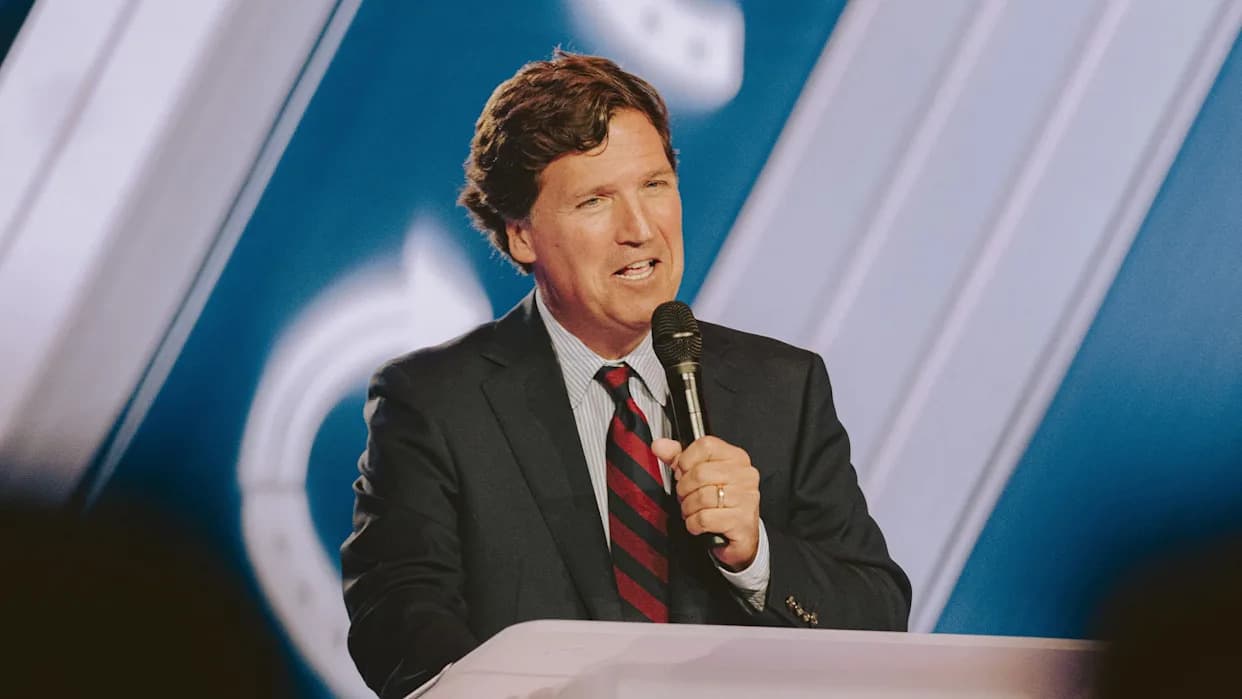
Tucker Carlson told Shawn Ryan on a lengthy podcast that he may oppose the Republican Party, calling many of its leaders betrayers of ordinary voters. He blamed developers for degrading neighborhoods, criticized local officials for failing to protect children, and defended his outreach to Nick Fuentes as rooted in establishment betrayal. Carlson framed the intra‑party fight as a choice between serving citizens or serving donors and foreign interests, and said he hopes the America‑First faction prevails.
Tucker Carlson: “I Hate Them Too Much” — A Scathing Rebuke of the Republican Party and Call for an America‑First Reset
Tucker Carlson appeared on Shawn Ryan’s podcast for a roughly three‑hour conversation that ranged from spiritual themes to his controversial interview with Nick Fuentes. Near the end of the program, Carlson launched a blistering critique of the Republican Party, saying he may be forced to oppose it because he “hate[s] them too much.”
Strip malls, development and community character
The conversation briefly turned to architecture and community design — a recurring interest for Carlson — as the hosts discussed the proliferation of strip malls and discount stores. Carlson blamed developers for changing neighborhood character and argued that short‑term commercial gain often harms broader civic life.
“Is there anyone who makes your life worse than a developer? For a smaller benefit to a tinier group of people… Who actually benefits from more Dollar Stores?”
Ryan answered that the primary beneficiaries are the companies and investors behind the developments. Carlson added that poorly designed commercial projects “wreck our landscape,” “make everything ugly” and “desecrate God’s creation,” lamenting that few people seem willing or able to stop them.
A party under fire
Turning to electoral politics, Carlson called the Republican Party “almost to the point where it’s just useless,” accusing many party leaders, allied nonprofits and media outlets of betraying ordinary conservative voters. He said his opposition is driven by deep personal disgust with establishment figures but acknowledged the GOP’s significant power and influence.
“On the Republican Party… I’m going to have to oppose it because I hate them too much, but because they’re such betrayers.”
Carlson described the current intra‑party fight as a contest over purpose: should the Republican Party serve its voters and citizens, or serve donors, foreign interests and a self‑interested conservative establishment? He traced that argument to Donald Trump’s 2015 campaign and framed it as an America‑first principle: leaders should prioritize their citizens above other countries and donor interests.
Local officials, child protection and cultural concerns
Carlson also criticized local officials, saying some accept tax dollars without adequately protecting children or preserving community values. He expressed frustration with what he described as hypocrisy and corruption among county commissioners and other officials who approve developments they do not personally live with.
He objected to cultural trends he sees as harmful to families and communities — including platforms such as OnlyFans — arguing that local leaders should do more to protect children and community standards.
On Nick Fuentes and establishment betrayal
Addressing his controversial interview with Nick Fuentes, Carlson said Fuentes’s anger stems from feeling betrayed by the conservative establishment — from personalities like Ben Shapiro to some Republican senators — who promise support but ultimately do not act on voters’ interests. Carlson drew on his long experience in political media to assert that many establishment figures are corrupt or insufficiently committed to ordinary voters.
“They tell people ‘we’re on your side,’ but they’re not. That is the debate underway.”
Carlson denied that the debate is about antisemitism, insisting instead that it is a dispute about who the country’s leaders serve. He said he hopes the America‑First faction ultimately prevails and reiterated his view that putting citizens first is the core duty of national leadership.
Conclusion
The podcast featured extended, often heated criticism of political and cultural elites and a forceful restatement of an America‑first argument. Carlson framed the struggle as one of loyalty — whether the Republican Party will return to serving the voters and communities it claims to represent or continue to prioritize other interests.
Help us improve.