Thousands celebrated at Copacabana after the Supreme Court ordered former president Jair Bolsonaro jailed preemptively, with many chanting and carrying a giant rainbow flag. The march coincided with the 30th anniversary of Rio’s first Pride, a year that organizers say highlights the shift from fear to visibility. Activists warned violence persists — at least 291 LGBTQ+ Brazilians were killed in 2024 — and urged continued political action against efforts to reduce sentences for those tied to the attempted coup.
Rio Pride Erupts as Thousands Celebrate Bolsonaro’s Preemptive Jailing on 30th Anniversary March

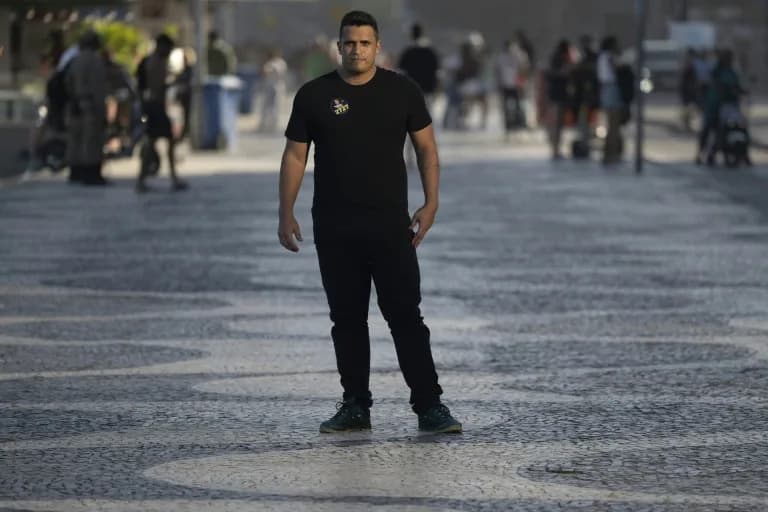
Thousands of revelers poured onto Copacabana’s boardwalk in Rio de Janeiro for the city’s annual Pride parade, many openly celebrating a Supreme Court order the previous day that placed former president Jair Bolsonaro in pretrial custody. Speakers on flatbed trucks led chants of “He’s in prison!” and “Out with Bolsonaro!” as rainbow-clad marchers cheered and carried a massive rainbow flag along the route.
The 70-year-old Bolsonaro, who has a long record of anti-LGBTQ+ remarks, was sentenced in September to 27 years in prison for attempting a coup following his 2022 election defeat. He had been under house arrest until Supreme Court Justice Alexandre de Moraes ordered his preemptive jailing, citing concerns that he was a flight risk. Bolsonaro later acknowledged tampering with his ankle monitor using a soldering iron, saying the behavior stemmed from a nervous breakdown and hallucinations.
Celebration, reclamation and warnings
At the parade, participants waved signs and wore stickers reading “No amnesty!” — a reference to a bill promoted by some of Bolsonaro’s allies that would reduce sentences for those convicted in the attempted coup. Many marchers wore Brazil’s yellow and green as an act of reclaiming national colors associated with Bolsonaro supporters.
“It’s very gratifying,” said Emy Mateus Santos, 25, an arts, theater and dance professor. “It shows that fighting hate is worth it and that the future is possible for people like us.”
Organizers marked the 30th anniversary of Rio’s original Pride march, which began as Brazil’s first Pride. This year’s theme — “30 years making history: from the first struggles for the right to exist to building sustainable futures” — contrasted early fears with today’s more visible activism.
“Thirty years ago we had to make 1,000 papier-mâché masks for people who didn’t want to be recognized for fear of losing their jobs or being kicked out of their families,” said Cláudio Nascimento, a veteran organizer. “Now we use masks to bring joy and to celebrate our existence.”
Persisting violence and calls for action
Despite advances in visibility and rights, activists warned that violence against LGBTQ+ people in Brazil remains acute. The Gay Group from Bahia reported at least 291 violent deaths of LGBTQ+ Brazilians in 2024, 34 more than the year before — a statistic marchers said underscores the continuing necessity of Pride.
“As long as these statistics remain a reality, Pride marches will still be necessary,” said Flávio Salgueiro, 34, a lawyer from São Paulo who attended the Rio march. “It’s really important to show that a united community exists in a society that has a project to erase us.”
Many activists linked Bolsonaro’s rhetoric and policy rollbacks to increased hostility toward LGBTQ+ people. Dani Balbi, the first trans woman elected to Rio’s state assembly, said that Bolsonaro’s tenure cut public policies intended to protect and promote diversity.
“Seeing Bolsonaro jailed and then immediately having LGBT trucks out on the street is a celebration — a hope that politicians like him never return,” Balbi said.
The Pride procession in Rio blended celebration with political protest: vibrant floats and music alongside clear demands for continued protection, accountability and an end to impunity for violence against LGBTQ+ communities.
Help us improve.