Former Attorney General Eric Holder will sharply criticize the Supreme Court in a Saturday speech as justices prepare to rule on major redistricting cases. Holder, now chair of the National Democratic Redistricting Committee, warns the Court's recent rulings reflect "outcome-driven ideology" and threaten Section 2 of the Voting Rights Act. He says decisions in Louisiana and Texas could jeopardize majority-minority districts and shift as many as 19 House seats, weakening voter protections.
Eric Holder to Criticize Supreme Court Over Redistricting as Landmark Cases Loom
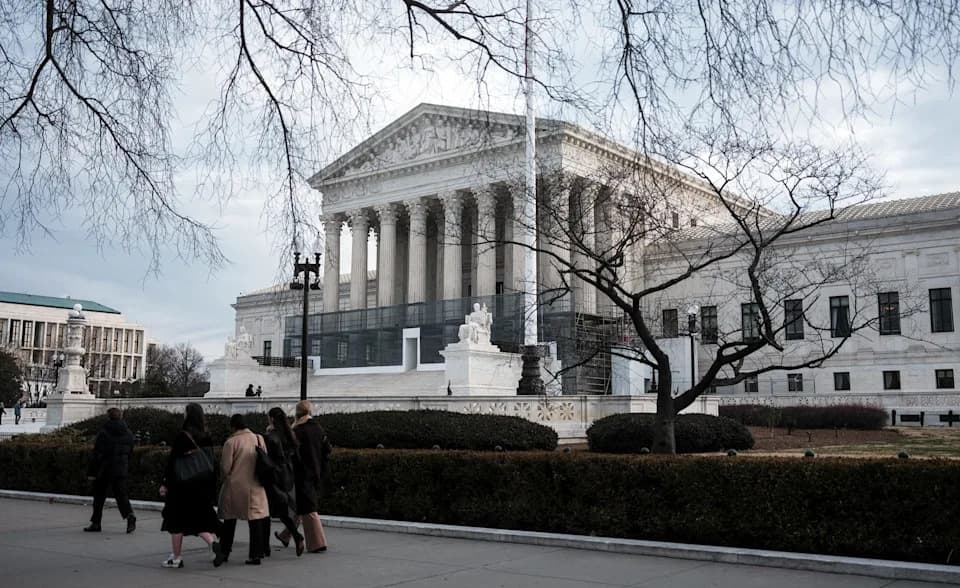
Former U.S. Attorney General Eric Holder will sharply criticize the Supreme Court in a keynote speech Saturday as the justices prepare to decide several high-stakes redistricting cases that could reshape the balance of power in Congress.
Holder, who led the Department of Justice for six years under President Barack Obama and now chairs the National Democratic Redistricting Committee, says the Court's recent decisions reflect "outcome-driven ideology" rather than neutral jurisprudence. He will deliver the remarks at the Minnesota Association of Black Lawyers Foundation Gala.
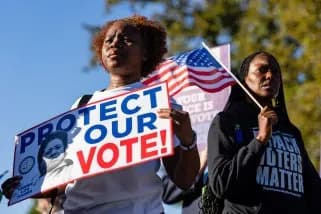
"We have watched as campaign finance safeguards were dismantled and anti-corruption laws cast aside," Holder writes in prepared remarks. "We have seen the evisceration of the Voting Rights Act and the Court's refusal to restrain abusive partisan gerrymandering. Now, even what remains of the Voting Rights Act, Section 2, is hanging by a thread — threatened in ways that could legalize racial gerrymandering and shift the partisan makeup of as many as nineteen congressional seats through judicial fiat."
The Supreme Court has been at the center of a national debate over redistricting since the 2020 census. In August, Louisiana asked the Court to prohibit the use of race in redistricting — a move critics say could reduce representation for Black, Latino and other minority voters. A decision in that case is expected by June 2026 and could put majority-minority districts at risk.
"It's the issue of race that exposes perhaps the deepest hypocrisy and most shocking incoherence," Holder is expected to say. "After all, the very same Court that has barred even indirect consideration of race in college admissions ... then endorsed the use of race and racial profiling in violent ICE raids, detentions, and deportations without due process."
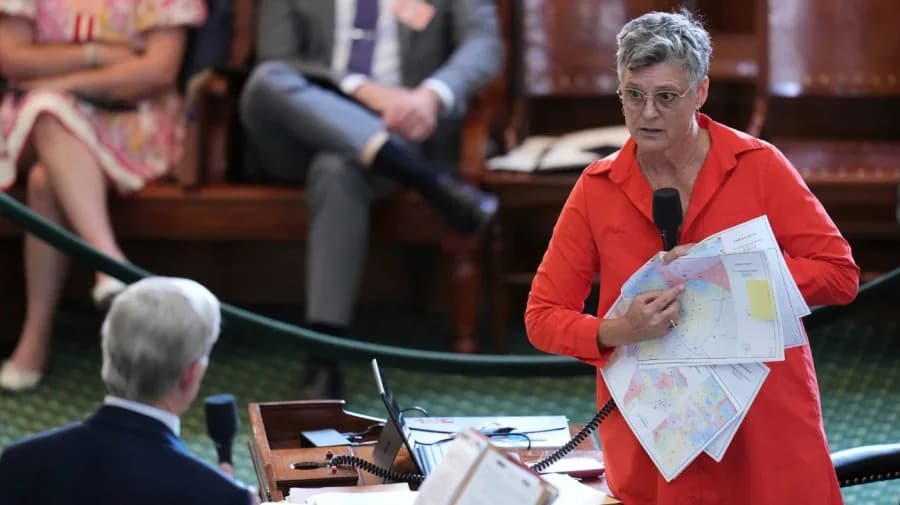
Another pending case could have more immediate political consequences. A lower court recently struck down a new Republican-drawn congressional map in Texas as a likely racial gerrymander. With weeks remaining before filing deadlines, the Supreme Court faces a tight timetable to decide whether to reinstate the GOP-backed map. Justice Samuel Alito has temporarily allowed the contested districts to take effect while the justices consider the matter.
Holder will also criticize the Court's application of a color-blindness doctrine he describes as inconsistent, arguing recent rulings weaken democratic protections and concentrate power among wealthy interests.
"The consequences are profound," Holder warns. "The practical impact of such rulings is to weaken democracy and embolden would‑be authoritarians, concentrating power in the hands of corporations and billionaires while stripping essential protections from voters, workers, consumers, communities, and the environment."
Andrew Howard contributed to this report.
Help us improve.