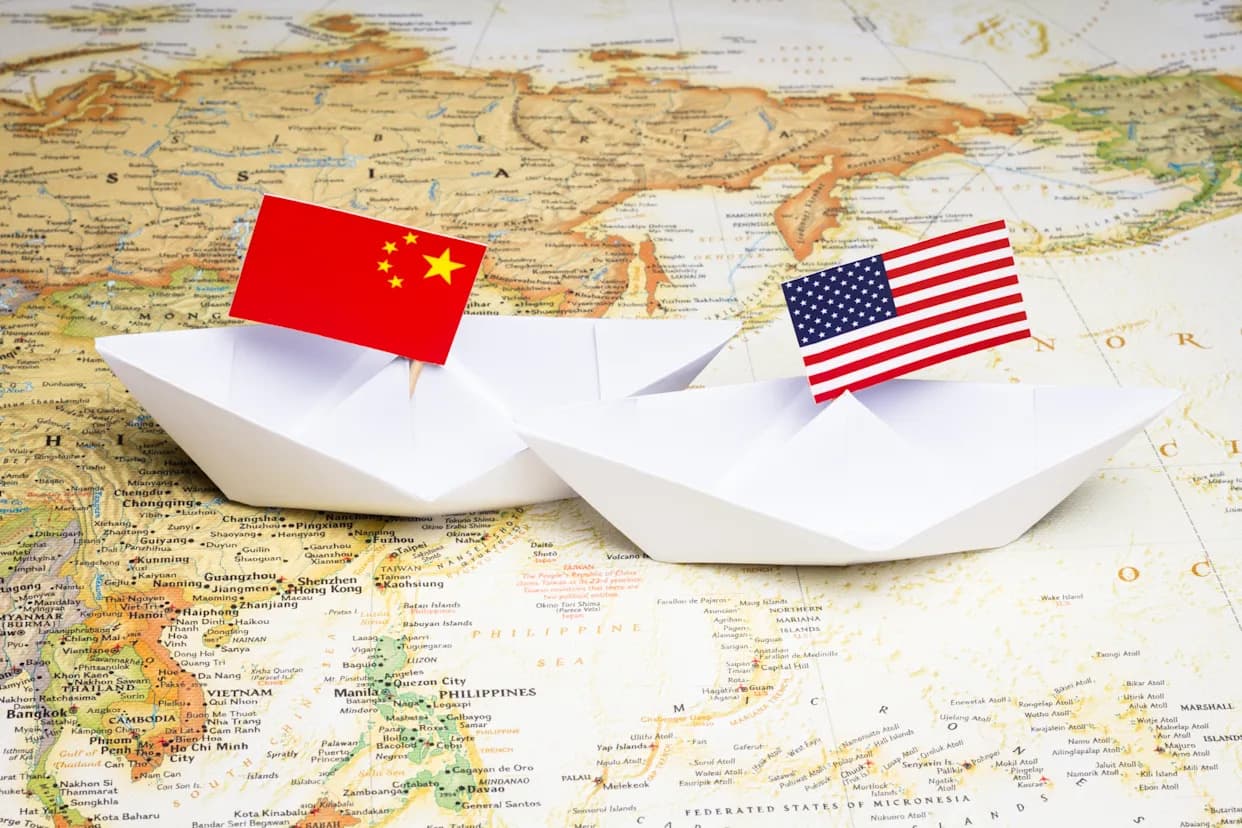
The MAGA coalition is fragmenting and China could be the next major fault line. A new poll from the Institute for Global Affairs finds 83% of Trump supporters view China as a moderate or severe threat, and 53% oppose allowing Chinese students to study in the U.S. Policy moves — including 600,000 H-1B visas, eased tariffs and potential export-control exemptions — have provoked backlash from both hardliners and business interests. Trump retains a net +16 approval on China among his voters, but the debate over decoupling versus engagement threatens to deepen internal divisions.
China Could Be the Next Major Rift in the MAGA Movement

When Tucker Carlson aired his interview with Nick Fuentes, it reignited factional fights inside the MAGA movement. That clash over U.S. policy toward Israel showed how fragile the coalition backing Donald Trump can be. Now, a new set of divisions is emerging — this time over China.
Polling, Perceptions and Political Pressure
A recent public-opinion poll by the Institute for Global Affairs finds that more Trump voters disapprove of the president’s handling of China than any other foreign-policy issue. A large majority (83%) view China as a moderate or severe threat; 29% say China intends to destroy the U.S., and 33% believe China aims to supplant the current world order. Those attitudes are driving intense pressure on Trump around immigration, export controls and tariffs.
Key Flashpoints: Students, Technology and Tariffs
In August, the administration announced it would grant 600,000 H-1B visas to Chinese students over the next two years — a reversal from earlier hard-line measures. Trump framed the policy as economically pragmatic, highlighting international students’ tuition contributions and economic value. But the move prompted immediate backlash from conservative allies including Rep. Marjorie Taylor Greene, Laura Loomer, Laura Ingraham and Steve Bannon, and media outlets across the spectrum criticized it. Our poll found 53% of Trump supporters oppose allowing Chinese students to study in the U.S.
Technology controls are another major flashpoint. Many conservative hawks backed Biden-era restrictions that combined tariffs with limits on high-tech transfers. Yet the current administration has signaled openness to easing some export controls and permitting certain semiconductor and advanced-technology sales to China. Critics warn this would raise U.S. costs while potentially empowering Chinese military suppliers — with former Deputy National Security Advisor Matt Pottinger calling such a move “unilaterally deindustrializing America.” As one former National Security Council China director put it: “We’re playing 2-D chess while Beijing is playing 4-D chess.”
Tariff policy has also shifted. After threats around so-called “Liberation Day” tariffs and public pushback from figures like Joe Rogan, Elon Musk, Ben Shapiro and Bill Ackman, the administration negotiated a one-year pause to the trade war and lowered existing tariffs on Chinese goods by 10%. Trade ranks as one of the weakest issues for Trump among his base in our polling.
Business Interests vs. National-Security Hawks
Proponents of limited engagement, including many business leaders, argue some technology linkages serve U.S. economic interests — Nvidia CEO Jensen Huang has said American technology underpinning Chinese AI development benefits the U.S. economy. By contrast, hardliners such as Peter Navarro and Steve Bannon push for economic decoupling, reshoring manufacturing and high tariffs to blunt China’s leverage and reduce vulnerability.
Where the Movement Stands and What’s Next
Despite the tensions, Trump’s standing with his voters on China remains net positive: nearly twice as many Trump supporters say he is improving the situation as say he is making it worse, a net +16. Moreover, when asked about threats to their personal safety, competition with China ranks low (5%) compared with concerns such as climate change and cybersecurity (both 11%).
Still, the mix of economic pain from tariffs, worries over technology transfer, and cultural concerns about foreign students creates fertile ground for intra-movement conflict. Trump may be able to manage these disputes by defining the boundaries of his America First agenda, but the debate over decoupling versus selective engagement could produce the next major cleavage inside MAGA.
Ransom Miller is a research associate with the Institute for Global Affairs.
Help us improve.