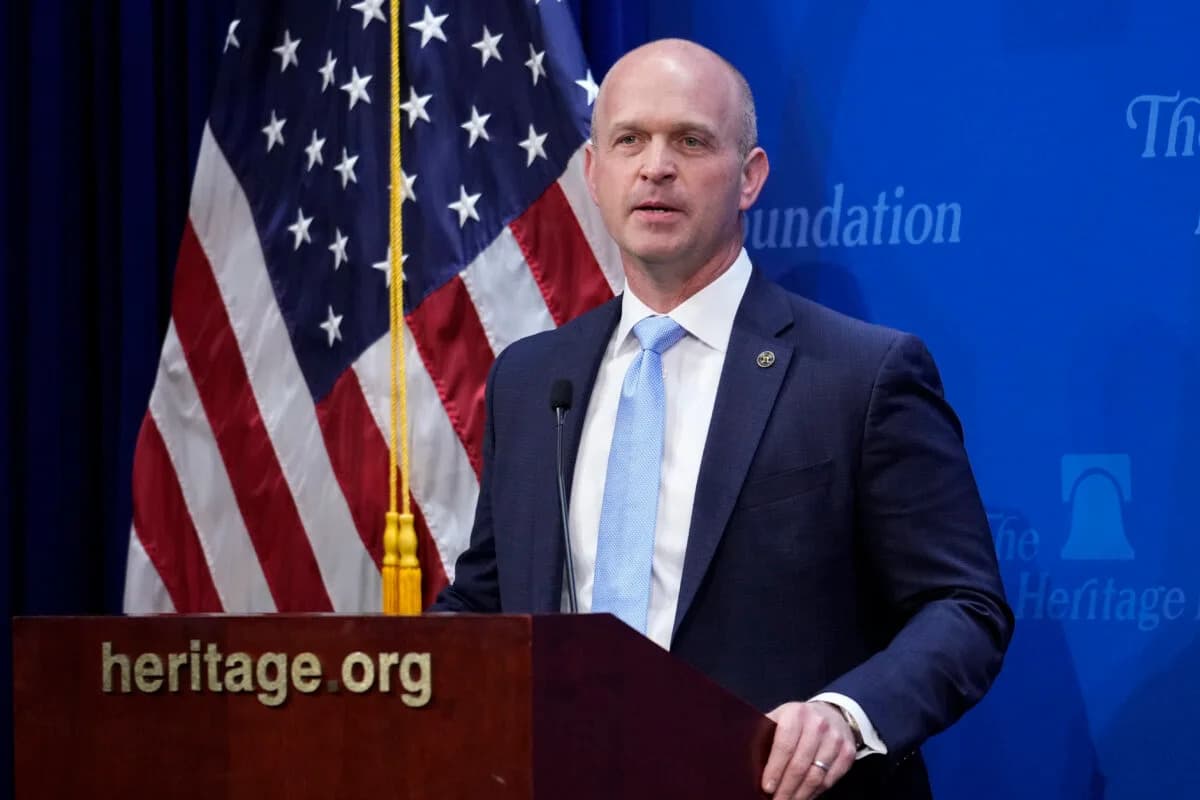
On October 30, Heritage Foundation president Kevin Roberts posted a roughly two-and-a-half-minute video defending Tucker Carlson after the former Fox host faced widespread condemnation for hosting Nick Fuentes, an antisemitic online influencer, for a two-hour interview. Roberts characterized Carlson's critics as a "venomous coalition" of "bad actors who serve someone else's agenda" and declared that Carlson "remains and, as I have said, always will be a friend of the Heritage Foundation." The public defense touched off fierce internal dissent at Heritage.
Immediate fallout at Heritage
Roberts' statement prompted multiple research fellows and members of an internal antisemitism task force to depart the think tank. Princeton professor Robert P. George resigned from Heritage's board of trustees, writing that he "could not remain without a full retraction" of Roberts' video. Other staff expressed alarm about donor withdrawals and damage to the Heritage brand.
"Who would want to be associated with us at this point? People regret giving us money. The Heritage brand is now toxic." — senior staffer (speaking on condition of anonymity)
Context: Carlson's trajectory and prior connections
Carlson's move away from mainstream conservatism predates the Fuentes interview. While at Fox he cultivated a reputation for provocative and heterodox commentary—questioning U.S. priorities abroad, downplaying aspects of the Capitol riot, and later producing videos that praised life under Vladimir Putin. After his departure from Fox, Carlson continued to platform fringe figures, including an amateur historian with apparent Nazi sympathies and, most recently, Fuentes.
Roberts had already given Carlson prominent support: Carlson was the keynote speaker at Heritage's 50th anniversary gala, where Roberts publicly praised him and later tweeted that Carlson was a "fearless American" challenging the Washington establishment. That prior embrace made the defense of Carlson in October particularly consequential for Heritage's internal cohesion and public standing.
Similar tensions at ISI
The Intercollegiate Studies Institute (ISI) has seen parallel turmoil. Two former trustees—one a former ISI president and one a former chair—resigned after board members voted against removing ISI's president and CEO, Johnny Burtka. In an open letter, they warned that ISI was celebrating "odious and un-American ideas" associated with figures such as Carlson and Curtis Yarvin and expressed concern about the rise of white supremacy, antisemitism, eugenics, and bigotry within some right-wing currents.
Internal materials indicate ISI placed one of its media fellows with Carlson's program at a reported cost of $75,000, and a recent ISI digital initiative featured Yarvin, a controversial thinker linked to the so-called neoreactionary movement. Some guests associated with these platforms have advocated ideas that reject democracy, minimize the harms of racial nationalism, or otherwise depart sharply from classical-conservative commitments to individual liberty and rule of law.
What is "no enemies to the right" (NETTR)?
Part of the explanation for these alignments is an emergent strategy often called "no enemies to the right" (NETTR). Proponents prioritize defeating the political left above almost all other goals; critics say that approach discourages internal critique and effectively tolerates bigotry if calling it out would fracture a united conservative front. Versions of this thinking have circulated in online conservative circles and some intellectual forums, feeding a grievance-driven posture among younger, very-online conservatives.
"The only present real-life goal of the Right which matters is total, permanent defeat of the Left." — formulation associated with NETTR proponents
Consequences for institutions and conservatism
Leaders who court Carlson and similar figures often say they are trying to reach younger, disaffected conservatives who find the mainstream right unresponsive. But once institutions align with polarizing personalities to capture attention, they risk alienating donors, staff, and longstanding supporters committed to limited government, free enterprise, and individual liberty.
Conservative commentators and former staffers have warned that platforming racists, antisemites, or authoritarian-leaning thinkers is antithetical to classical conservative principles. The result has been high turnover at some organizations, public resignations, and intense debate about whether and how venerable conservative institutions should define their intellectual boundaries.
Why it matters
This dispute is not merely a personnel conflict; it is a clash over principles and strategy that will shape the public influence of conservative institutions. The choices of leaders at Heritage, ISI, and similar organizations—whether to defend, distance from, or discipline controversial figures—will determine whether those institutions retain credibility with traditional conservatives, attract new constituencies, or risk being marginalized.
For those committed to a conservatism grounded in constitutional government, market freedom, and individual rights, the current debates are a test of institutional courage: whether organizations will uphold core principles or sacrifice them for short-term visibility.