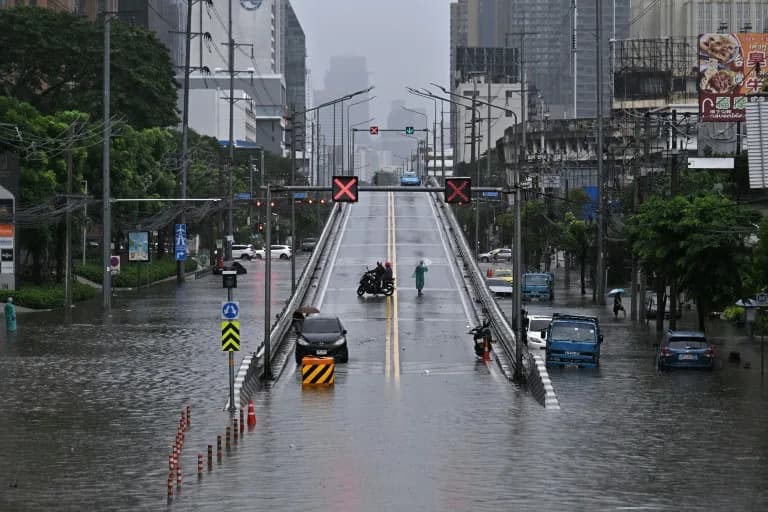
At least 41 people have died and nine are missing after severe rains and flooding submerged large parts of central Vietnam, with up to five feet of rain reported in three days. More than 52,000 homes were flooded, about 500,000 households lost power and tens of thousands were evacuated. Floodwaters in some locations exceeded 17 feet, and Dak Lak province declared a state of emergency after landslides damaged key roads. Authorities warned up to 8 more inches of rain could fall, compounding damage from a year of costly typhoons.
Heavy Rains, Devastating Floods in Central Vietnam Kill at Least 41; Hundreds Evacuated as More Rain Looms

At least 41 people have died and nine remain missing after heavy rains and severe flooding inundated large parts of central Vietnam over the past weekend. Authorities say as much as five feet of rain fell in some areas over three days, forcing tens of thousands of residents to evacuate and leaving whole neighborhoods submerged.
Officials report that more than 52,000 homes were flooded and roughly 500,000 households lost power as municipal services struggled to respond to emergency conditions. In several locations floodwaters topped 17 feet — the highest levels recorded in more than three decades — causing widespread damage to homes, roads and local infrastructure.
Hardest-hit areas: Coastal cities such as Hoi An and Nha Trang and parts of the central highlands were among the worst affected. Dak Lak province declared a state of emergency after landslides and floodwaters damaged highways and isolated communities, complicating rescue and relief operations.
The Vietnamese National Center for Hydro-Meteorological Forecasting warned that up to another 8 inches of rain could fall over the coming weekend across already saturated areas, including Dak Lak, Gia Lai, Lam Dong and Khanh Hoa. Meteorologists cautioned that additional downpours are likely to raise rivers that are already running high, increasing the risk of further inundation in low-lying towns and farmland.
Wider context and economic impact
This latest disaster comes after a year of extreme weather that the government says has cost the economy about $2 billion in the first ten months. Back-to-back typhoons in late September and early October — Typhoon Bualoi and Typhoon Matmo — were reported as among the costliest storms to hit Vietnam, causing major damage to infrastructure, agriculture and homes and resulting in dozens of fatalities and hundreds of injuries.
Two weeks earlier, Typhoon Kalmaegi struck Dak Lak on Nov. 6 with winds near 90 mph, uprooting trees, tearing roofs off houses and flooding communities; Vietnamese officials reported at least six deaths linked to Kalmaegi. The storm had earlier crossed the Philippines, where authorities reported heavy casualties and widespread destruction in the central islands, including significant losses in Cebu.
Authorities continue search-and-rescue operations, deliver emergency supplies and assess damage. Residents in flood-prone areas have been urged to move to higher ground and follow official evacuation orders.
What to watch: Emergency teams are monitoring river levels and weather forecasts closely. Recovery and reconstruction efforts will hinge on clearing roads, restoring power and delivering shelter and medical aid to displaced families.
Help us improve.