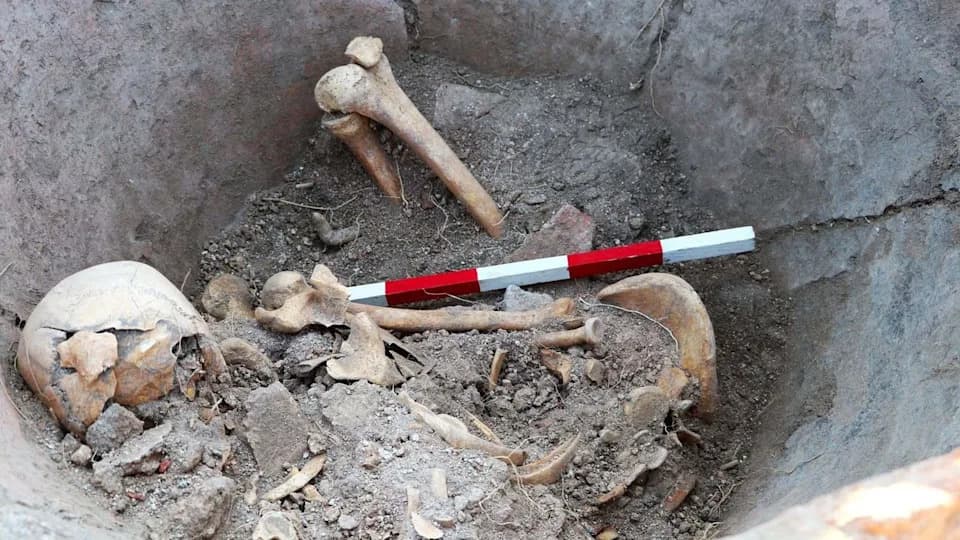
A sealed limestone sarcophagus dating to about 1,700 years ago was unearthed in Óbuda, Budapest, revealing the intact skeleton of a young woman and dozens of grave goods, including two glass vessels, bronze figures and 140 coins. The coffin had been fastened with metal clamps and molten lead and appears to have been made specifically for the deceased. Anthropologists will analyze her remains and the 4 cm of sediment from the coffin for further clues about her age, health and origins.
Sealed 1,700-Year-Old Roman Sarcophagus Unearthed Beneath Budapest Reveals Young Woman’s Tomb

A remarkably well-preserved Roman sarcophagus dating to roughly 1,700 years ago has been uncovered beneath Óbuda, a historic district of Budapest that once formed part of the Roman settlement Aquincum. The limestone coffin was found sealed with metal clamps and molten lead; when archaeologists lifted the lid they discovered a complete skeleton surrounded by numerous grave goods.
The excavation was led by the Budapest History Museum. The sarcophagus lay amid the ruins of houses in a quarter of Aquincum that appears to have been vacated in the 3rd century and later used as a burial area. Nearby discoveries include a section of a Roman aqueduct and eight simpler graves, but none matched the sealed tomb's richness or pristine condition.
"The peculiarity of the finding is that it was a hermetically sealed sarcophagus. It was not disturbed previously, so it was intact," said Gabriella Fényes, the excavation's lead archaeologist.
Inside the coffin, investigators found two intact glass vessels, several small bronze figures, a hoard of 140 coins, a bone hairpin, a piece of amber jewelry and fragments of gold-threaded fabric. The assemblage, together with the skeleton's size and preserved features, points to the burial of a young woman.
What the finds suggest
Such a carefully furnished, purpose-made sarcophagus—rarely left unused in the fourth century when reuse was common—suggests the deceased likely belonged to a family of means or higher social standing. "The sarcophagus and its contents definitely make it stand out," said Gergely Kostyál, a Roman-period specialist and co-leader of the project. "It is quite clear that this sarcophagus was made specifically for the deceased."
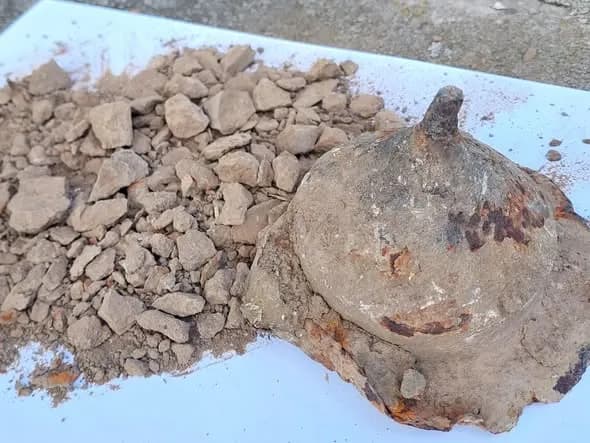
Excavators also removed a thin layer of mud, about 4 centimeters (1.5 inches) deep, from inside the coffin. The team is carefully sieving that material in hopes of recovering small personal items such as earrings or additional jewelry that may have been overlooked during the initial lifting.
Next steps in the investigation
Anthropologists will carry out a suite of analyses on the skeleton to determine age at death, health, diet and geographic origins. These may include osteological examination, isotopic testing and other laboratory studies that can shed light on where she grew up and how she lived.
Beyond scientific insight, the discovery resonated emotionally with the excavation team. "I was very touched by the care and expression of love that we were able to get a glimpse of," Fényes said. "Even now, I shudder to think how painful it must have been for the people at that time to bury this young lady."
During the Roman period much of modern-day Hungary made up the province of Pannonia; Aquincum lay along the Danube frontier and was home to military installations and a civilian settlement that supported them. The newly discovered tomb adds a vivid, personal dimension to our understanding of life and death on the empire's northern edge.
Help us improve.