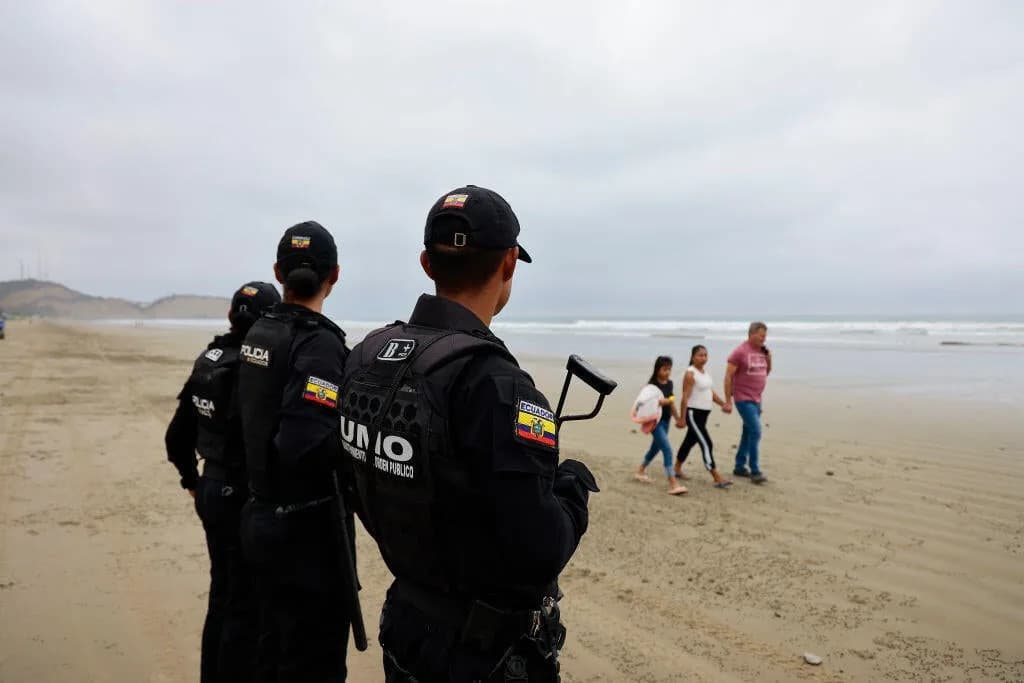
Ecuadorans will vote on four referendum questions including whether to allow foreign military bases (banned since 2008) and whether to elect a body to draft a new constitution. The measures would affect security policy against drug cartels and political and economic reforms that could strengthen President Daniel Noboa. The vote follows a surge in violence — 4,619 murders in the first half of the year — and public opinion is divided between those seeking tougher measures and critics worried about rights and cuts to social spending.
Ecuador Votes on Foreign Military Bases and a Constitutional Rewrite Amid Surge in Violence

Ecuadorans Head to the Polls on Security, Constitution and Economic Reform
Nearly 14 million eligible voters in Ecuador will cast ballots on Sunday in a high-stakes referendum that could reshape the country's security strategy, political financing and the structure of the state. The vote asks four national questions: whether to allow foreign military bases, end public funding for political parties, reduce the number of lawmakers, and elect a body to draft a new constitution.
What’s on the ballot
- Foreign military bases: Foreign bases have been banned since 2008. A "Yes" vote would reopen the possibility of foreign — including potential U.S. — military presence at sites such as the former Manta airbase on the Pacific coast.
- Public party financing: Voters will decide whether to end state funding for political parties.
- Reduction of lawmakers: A proposal to reduce the number of members in the national legislature.
- Constitutional assembly: Whether to elect a commission to draft a replacement constitution that could shift powers across branches of government.
Why it matters
The referendum arrives amid an unprecedented spike in lethal violence: Ecuador's Organized Crime Observatory reports 4,619 homicides in the first half of the year — a recent high that has intensified public demand for tougher security measures. President Daniel Noboa, in office since November 2023, has campaigned on a hardline approach against drug cartels, deploying troops to streets and prisons, ordering large-scale raids and repeatedly declaring states of emergency. His approval rating hovers near 56 percent, and analysts say a constitutional rewrite would likely be guided by his allies.
Debate and concerns
Supporters argue the changes are needed to restore order and modernize Ecuador's political and economic model. Polls such as Cedatos show roughly 61% support reopening the possibility of foreign bases. Backers say foreign cooperation and stronger institutions are necessary to confront transnational crime.
Opponents warn that an elected constitutional body steered by the president’s allies could concentrate power, weaken judicial checks, and erode fundamental rights. Critics also complain the government has prioritized security at the expense of social spending. Voices from the campaign include Juan Carlos Azogue, a security guard who plans to vote "Yes" because he sees judges releasing criminals too quickly, and Jhonny Tamayo, a university professor campaigning "No," who says the government is scapegoating the constitution for its failures. Student Luz Quisi has criticized cuts to social programs made in the name of security.
Geopolitical context
The vote takes place against a backdrop of increasing U.S.-Ecuador cooperation under the Trump administration. President Noboa has publicly solicited U.S. help against cartels and has toured potential base sites with visiting U.S. figures, including Republican politician Kristi Noem. While some Latin American governments have voiced unease about expanded U.S. military activity in the region, Ecuador has positioned itself as a willing partner in security operations.
What to watch
If voters approve the constitutional commission, its composition and mandate will determine how sweeping any rewrite would be and which rights or institutional checks might be changed. The outcome could reshape Ecuador’s approach to crime, trade and the role of the private sector in the economy for years to come.
Key figures: ~14 million voters eligible; ~56% approval for President Noboa; 4,619 homicides in H1 of the year; ~61% support (poll) for reopening the possibility of foreign bases.
Help us improve.