Peru's interim president, Jose Jeri, has launched a highly publicized, hardline campaign against crime, participating in night raids and imposing measures such as restricted prison visits and a mobile-phone blackout. Sworn in on October 10 after Dina Boluarte's impeachment, Jeri has declared a 30-day state of emergency in Lima and Callao and authorized army patrols. Public opinion is split, and critics and rights groups warn the approach may be populist and risk civil liberties without clear, published results. Experts stress that long-term success will require transparent data and policies addressing poverty and gang growth; the prosecutor's office says 56 bus drivers have been killed this year.
Peru's Interim President Declares a 'War' on Crime — Night Raids, Phone Blackouts and Rights Concerns

Peru's interim president courts the spotlight in a high-stakes campaign against crime
Like a film protagonist, Jose Jeri has made himself the most visible face of Peru's latest push against crime, taking part in nighttime prison raids and street operations while ensuring cameras record his actions.
Jeri, 39, who is barred by a constitutional one-term limit from running in next year's election, was sworn in on October 10 after the impeachment of his predecessor, Dina Boluarte. His short administration — which runs until July — has centered on a hardline response to what many Peruvians see as the country's biggest problem: criminal gangs and extortion.
Jeri says he is 'in the streets, on the ground' and insists the government is 'addressing the problem directly.'
Hardline measures and public response
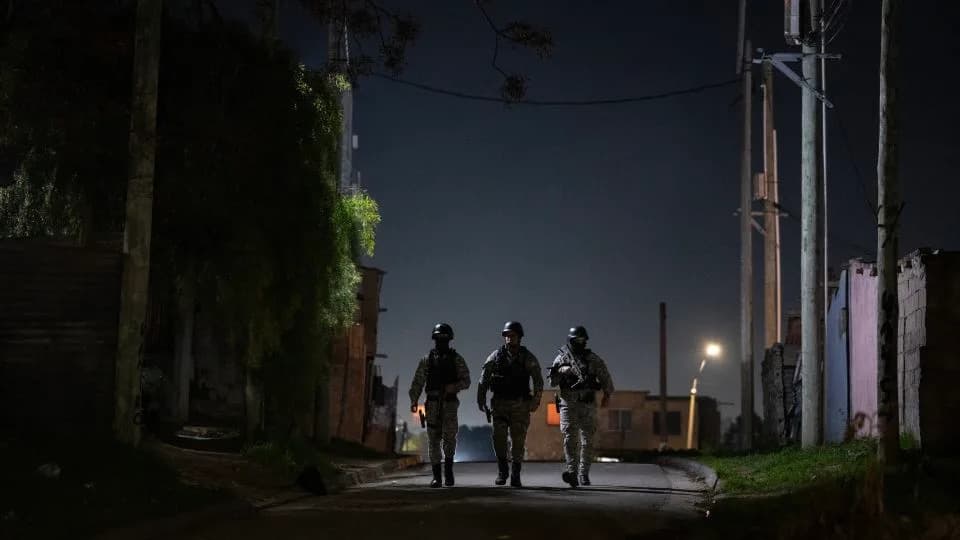
Among the measures Jeri has introduced are restricted family visits for inmates deemed dangerous and a mobile-phone blackout intended to stop prisoners from using phones to coordinate extortion. Just over a week after taking office he declared a 30-day state of emergency in Lima and neighboring Callao, authorizing the army to patrol streets and conduct arrests without warrants.
He rejects comparisons to El Salvador's Nayib Bukele, saying he has his own style. Still, the resemblance has been widely noted: both leaders have emphasized visible, muscular responses to crime even as rights groups warn about civil liberties risks.
Mixed public opinion and unclear results
Public reaction is divided. An Ipsos survey found 45 percent of Peruvians support Jeri's measures while 42 percent oppose them. A February Datum poll showed 55 percent approval for Bukele's tough tactics in El Salvador, underlining regional appetite for strong action on crime.
However, Jeri has not published comprehensive crime statistics tied to his initiatives. Critics call some moves populist and point to ongoing extortion and murder cases as evidence that the measures may not yet be effective.
Root causes and the human toll
Experts link the extortion wave to high post-pandemic poverty and unemployment, political instability after the 2022 ouster of Pedro Castillo, and the domestic expansion of gangs such as Venezuela's Tren de Aragua. The public prosecutor's office reports that 56 bus drivers have been killed since the start of the year — several after Jeri assumed office — a grim indicator of the violence prompting tough government responses.
Human rights advocates warn that short-term security gains can come at the cost of liberties and long-term effectiveness if measures are not accompanied by transparent data, judicial oversight and social policies that address root causes.
Ricardo Valdes, director of the NGO Capital Humano y Social Alternativo, warned that Jeri's approach 'may deliver short-term results but risks creating unsustainable expectations unless it is paired with effective, transparent institutions.'
Bottom line
Jose Jeri's high-profile, hardline campaign on crime has reassured some Peruvians and alarmed others. Without clear, published metrics and complementary social and institutional reforms, critics say the strategy risks being more spectacle than sustainable solution.
Help us improve.