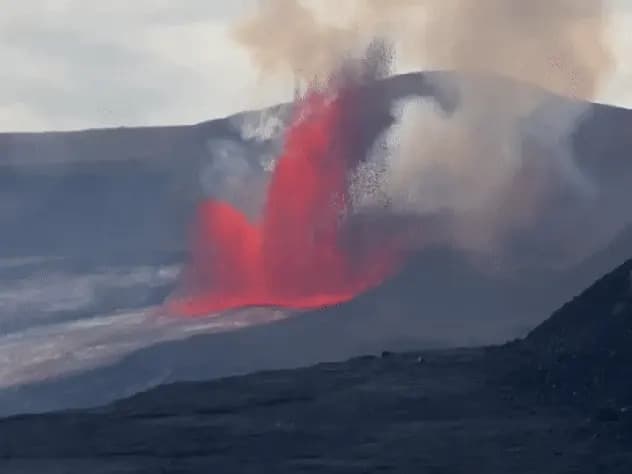
USGS warns Kīlauea is likely to enter a high lava-fountaining phase (episode 36) within days. Persistent vent glow, lava spattering and repeated overflows at the summit point to imminent activity, with models suggesting onset between Friday and Tuesday. Episode 35 produced fountains up to 1,500 ft and about 13 million cubic yards of lava. A volcano watch (code orange) is in effect; expect hazardous volcanic gases and falling tephra and Pele's hair downwind.
Kīlauea Poised for Spectacular High Lava Fountains — USGS Says Episode 36 Could Begin Within Days

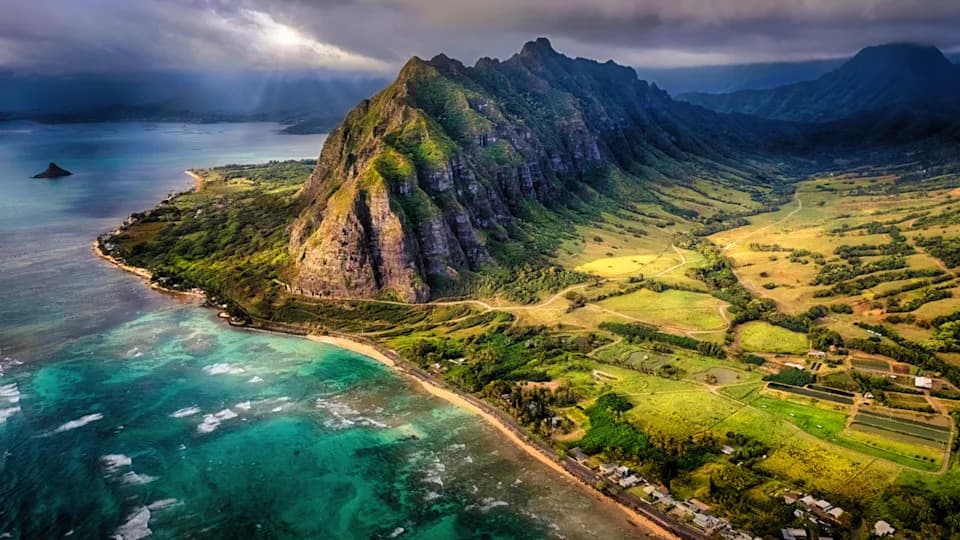
One of the world's most active volcanoes appears set for a dramatic display. The U.S. Geological Survey's Hawaiian Volcano Observatory (HVO) says a high-fountaining phase at Kīlauea's summit on Hawaii's Big Island is imminent based on current summit conditions.
What the USGS reports
HVO scientists report a persistent glow at the vent, ongoing lava spattering and repeated overflows from summit vents — signals that the start of episode 36 is close. Numerical models indicate intense fountain activity could begin any time between Friday and Tuesday.
Recent crater activity and overflows
Earlier this week, degassed lava overflowed from the south vent; those overflows paused early Thursday morning. However, repeated overflows from both the north and south vents reinforce the assessment that episode 36 is near.
Recap of episode 35
Episode 35 began on the night of Oct. 17 and ended early the next morning. During that episode lava fountains from the south vent reached about 1,500 feet, and fountains from the north vent rose to roughly 1,100 feet. That single episode produced an estimated 13 million cubic yards of lava at a combined average eruption rate near 500 cubic yards per second, covering nearly two-thirds of the Halemaʻumaʻu crater floor.
Seismic and gas signals
Tremor patterns at the summit have alternated between low-tremor periods — interpreted as magma ponds filling — and short tremor spikes associated with magma drainback. That tremor pattern shifted around 1 a.m. Thursday. Persistent gas plumes continue to issue from both vents.
Hazards and public safety
The USGS has placed Kīlauea on a volcano watch (code orange), meaning an eruption is likely or occurring with little to no ash expected. Elevated volcanic gas concentrations (including sulfur dioxide) pose an airborne health hazard that can affect air quality far downwind. Pele's hair — fine strands of volcanic glass produced during fountaining — can travel more than 10 miles from the vent. Coarser tephra (hot glassy fragments, ash, pumice, scoria and reticulite) can fall within about 1–3 miles of eruptive vents and have previously been documented as far as Highway 11 west of Hawaiʻi Volcanoes National Park.
Where activity is confined
The eruptive activity has remained within a closed portion of Hawaiʻi Volcanoes National Park, confined to the Halemaʻumaʻu crater and the southwest side of Kaluapele (Kīlauea's summit caldera). Park closures and safety zones remain in effect; the public should follow official guidance from the National Park Service and HVO.
What to expect next
If episode 36 begins, observers can expect renewed high lava fountaining similar to the episodic fountains seen during the 1983–86 Puʻuʻōʻō sequence. The exact timing and intensity can change rapidly; HVO will continue to update forecasts as conditions evolve.
Source: U.S. Geological Survey, Hawaiian Volcano Observatory.
Help us improve.