The implosion of a caustic chemical tank at Nippon Dynawave Packaging in Longview killed 11 workers and rocked a community long tied to mills and logging. The disaster briefly united neighbors even as it intersected with a competitive House race: Republican John Braun and incumbent Democrat Marie Gluesenkamp Perez advanced from the primary, with Braun narrowly leading. Perez’s support for restoring $14 million to the federal Chemical Safety Board after the accident earned local notice. Polling shows a razor-tight general election, and analysts say the political impact will hinge on whether campaigns can channel local grief and concerns into votes.
Longview’s Tragedy and a Tight House Race: How a Deadly Mill Explosion Reshaped Local Politics

Community members hold photographs of loved ones during a vigil following the fatal chemical storage tank failure in Longview, Washington, on 26 May.Photograph: Mathieu Lewis-Rolland/Getty Images
On a misty morning in May in southwest Washington, a routine hospital shift was shattered by an unusual overhead announcement. Laura Oltmann, a 41-year-old dietitian, remembers staff speculating about a major crash or derailment before learning the truth: an explosion had occurred at a nearby paper mill and patients were likely on the way.
Explosion and Immediate Aftermath
At roughly 7:18 a.m., during a shift change at Nippon Dynawave Packaging in Longview, a tank holding "white liquor" — a caustic chemical used in the paper-making process — imploded. The blast killed 11 workers and marked one of Washington state's deadliest industrial accidents in nearly a century. For hours officials had few answers, and thousands of workers, family members and neighbors waited anxiously for information.
Impact on a Mill Town
Longview, a port city of about 38,000 people, has long been economically tied to paper, logging and shipping. Generations relied on the mills for steady pay and upward mobility; the implosion struck at that sense of permanence. Memorials, funerals and community vigils followed as the city grieved, and local leaders scrambled to coordinate response and relief.
"They went to work together. And then they died together," said state senator and port commissioner Jeff Wilson, referring to brothers Tyler and Brad Covington, two of the victims. Wilson, who previously worked more than two decades cleaning tanks at the same mill, praised Congresswoman Marie Gluesenkamp Perez for being "present and accountable" during the response.
Political Aftershocks
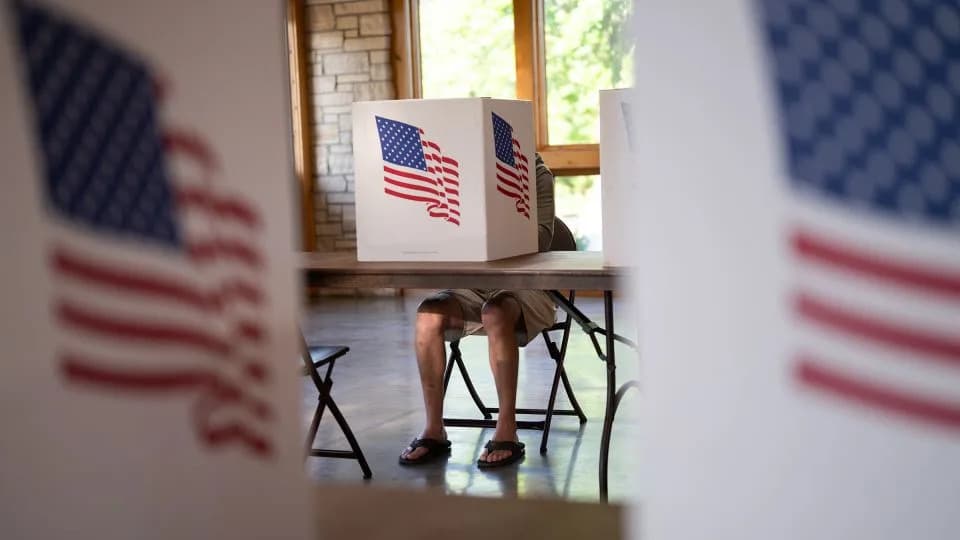
The disaster intersected with an already competitive political landscape. On August 4, Republican state senator John Braun and Democratic incumbent Marie Gluesenkamp Perez advanced from a nine-candidate primary to face off in November, with Braun winning roughly 39.7% of the vote to Gluesenkamp Perez’s 36.4%. Progressive Democrat Brent Hennrich received about 16.7%, underscoring the tension between the congresswoman and the district’s left flank.
Progressives fault Gluesenkamp Perez for several votes — including positions on immigration enforcement funding, the Safeguard American Voter Eligibility (SAVE) Act, and other national-security measures — and some local Democratic groups withheld their endorsement. Her campaign, however, cast her independence as an asset for a district that blends coastal timber towns, inland farms and growing suburbs near Portland.
Policy Response and Local Perception
Following the explosion, Gluesenkamp Perez supported an amendment to restore $14 million to the U.S. Chemical Safety and Hazard Investigation Board (CSB), the independent federal agency investigating the tank failure. That vote was cited by some voters as a concrete example of her delivering for the district — a move that resonated with residents directly affected by the disaster.
Political analysts caution that communal unity in the wake of tragedy is difficult to convert into partisan advantage unless a campaign can direct that sentiment toward specific political claims. A DHM Research poll for Oregon Public Broadcasting reflected the closeness of the race: when leaning voters were surveyed, Braun led 48% to Gluesenkamp Perez’s 47%, with 5% undecided.
The Stakes Ahead
The 3rd Congressional District spans a wide geographic and economic range, forcing candidates to balance competing priorities: support for trades and working-class industries, concerns about public safety and regulatory oversight, and national debates that split the electorate. For many residents, immediate economic worries — job security, small business survival, and opportunities for children — loom as large as any national policy question.
As the campaign heads into November, neither side has made the Longview explosion the centerpiece of its messaging. Still, the tragedy has shaped the context of the contest: it has highlighted the importance of federal oversight agencies, tested the ability of leaders to respond in crisis, and underscored how local concerns can influence a tightly contested House race.
Help us improve.