The EEOC has sued Harvard to enforce a subpoena seeking hundreds of documents in a probe alleging discriminatory faculty hiring tied to DEI goals. Harvard counters that the subpoena is overly broad—more than 700 requests affecting hundreds of people—and says it already provided 9,000+ pages and 68 meet-and-confer dates. The EEOC says the records will show whether Harvard's DEI efforts since 2018 amounted to unlawful disparate treatment; the case is part of a broader EEOC review of DEI practices at major employers.
EEOC Sues Harvard to Enforce Subpoena in Broad DEI Investigation
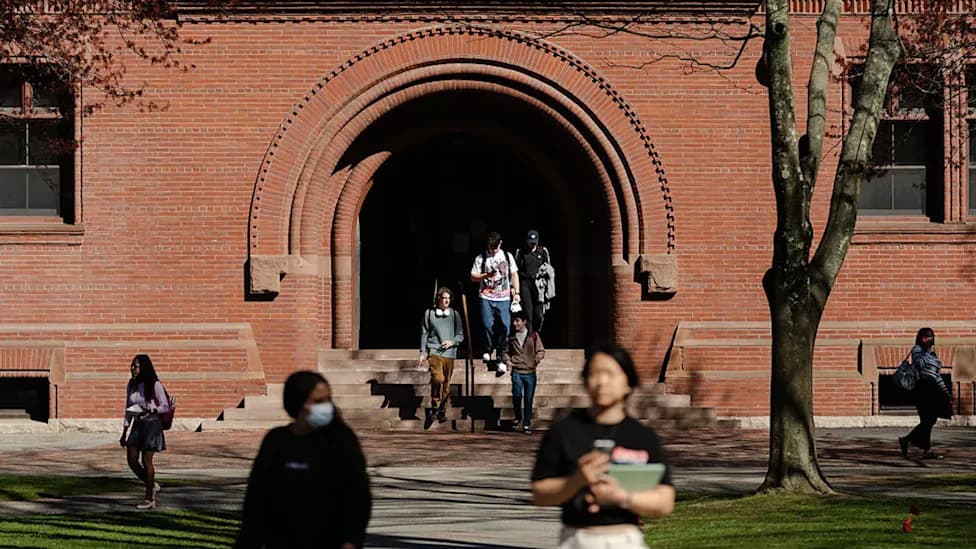
People cross the Harvard Yard at Harvard University on April 17, 2025, in Cambridge, Mass.
The U.S. Equal Employment Opportunity Commission has escalated its inquiry into a charge that Harvard University pursued what the complaint describes as a "comprehensive plan to discriminate" against certain racial and gender groups in faculty-related positions. The EEOC filed suit in federal court seeking to compel Harvard to produce hundreds of documents it says are essential to the probe.
What the EEOC Says
In the complaint, titled EEOC v. Harvard University, the agency says it has made "good faith attempts to engage" Harvard but that the university "continues to withhold information." The EEOC asserts it is seeking records necessary to determine whether Harvard violated Title VII of the Civil Rights Act of 1964 and alleges the requested documents "cast light" on patterns that could show a pattern or practice of unlawful discrimination tied to Diversity, Equity, and Inclusion (DEI) objectives.
Harvard's Response
Harvard has challenged the subpoena in a June petition, arguing it is overly broad and unduly burdensome. The university says the subpoena contains more than 700 separate requests affecting hundreds of individuals and would impose substantial cost and operational burden across its 13 colleges. Harvard contends the requests "outweigh the minimal relevance of information sought," particularly given the lack of a named aggrieved individual and what it calls the vague nature of the charge.
Harvard also says it has already produced more than 9,000 pages of responsive material and provided a list of 68 days — "totalling hundreds of hours" — when it could meet and confer about the document demands. The university characterized the EEOC's demands as a "virtually boundless and impermissible fishing expedition" and asked the court to revoke or narrow the subpoena. Harvard further alleges the action is intended to ramp up pressure on the university "to get it to cave to the Administration's ideological demands."
Scope of the Subpoena
According to the EEOC's supporting memorandum, Chair Andrea Lucas alleged in April 2025 that Harvard may have engaged in disparate treatment since 2018 to achieve, in the university's words, "demographic diversification of the faculty." The charge claims Harvard pursued this objective through recruiting, development and promotion practices "expressly directed at employees of 'underrepresented and diverse backgrounds' to the exclusion of all others." The EEOC further alleges those practices extended to Harvard Medical School, affiliated hospitals, and included student employees and trainees.
The subpoena requests materials such as hiring-committee guidance issued since 2018; minutes and agendas from diversity offices and related groups; documents concerning the creation of a "Diversity and Inclusion Fellow Program"; internal and external discrimination complaints from specified groups; and detailed information about faculty and tenure applicants and the hiring officials implicated in implementing diversity goals.
Related EEOC Actions
The agency's enforcement action against Harvard is part of a wider review of DEI practices at major institutions. In recent months the EEOC has pursued similar inquiries involving Nike, the City and County of San Francisco, and The New York Times. For example, the EEOC sought enforcement of a subpoena in a San Francisco matter that began after a trainer was accused of making derogatory remarks about White people and White women; San Francisco produced some documents but withheld others. In another matter, a judge dismissed a case seeking to force Nike to comply with a subpoena after Nike provided the requested information, according to the EEOC.
What's Next
The court will now consider Harvard's challenge to the subpoena and the EEOC's request to enforce it. If the judge upholds the subpoena, Harvard may be compelled to produce the contested records, which the EEOC says are necessary to determine whether unlawful discrimination occurred. If the judge grants Harvard's motion, the scope of the EEOC's discovery could be limited.
Bottom line: The dispute centers on whether the EEOC's broad subpoenas are justified in a probe of DEI-driven hiring and promotion practices and how far federal enforcement can reach into institutional diversity policies.
Help us improve.