Republicans face growing political fallout from a "full expensing" tax provision in last year's One Big, Beautiful Bill Act that accelerated deductions for business property and has benefited data center developers. Democrats have used the provision in attack ads and local campaigns as community opposition to data centers has surged. Analysts estimate billions in short-term tax savings for large tech firms, and lawmakers are proposing responses ranging from symbolic measures to excluding data centers from certain tax benefits. The debate has become a significant midterm issue in swing regions.
How a GOP 'Full Expensing' Tax Break Turned Data Centers Into a Major Political Liability
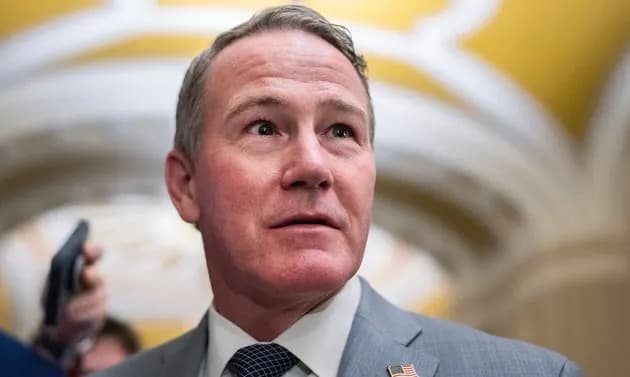
Sen. Jon Husted, R-Ohio, talks with reporters after the Senate luncheons in the U.S. Capitol on Tuesday, Sept. 29, 2026. Tom Williams via Getty Images
WASHINGTON — When Republicans enacted the One Big, Beautiful Bill Act last year, they expected Democrats to criticize tax cuts for wealthy Americans. What they did not anticipate was the intense political backlash over a provision labeled "Full expensing for certain business property." That provision — which allows businesses to immediately deduct the full cost of certain property instead of writing it off over years — has become a focal point in campaigns and community fights over new data centers.
Democrats have seized on the policy as one of several tax advantages they say disproportionately benefit data center developers and large tech firms. The party has used the provision in hard-hitting attack ads tying Republican lawmakers to industry money and claiming local harm — from subsidized construction to higher utility costs for neighbors.
Attack Ads, Local Backlash, And Political Pain
One widely circulated 30-second ad targeting Rep. Derrick Van Orden (R-Wis.) accuses him of accepting thousands from a major data center developer and then voting to give the industry "$70 billion in tax breaks." Similar spots — including a $2 million ad effort from the League of Conservation Voters — have focused on swing districts in Arizona, Iowa, Wisconsin, Minnesota and Virginia.
"He took thousands from one of the biggest data center developers in America. Days later, he voted to give them $70 billion in tax breaks," the ad narrator says, adding that Wisconsin families are then hit again by higher utility bills.
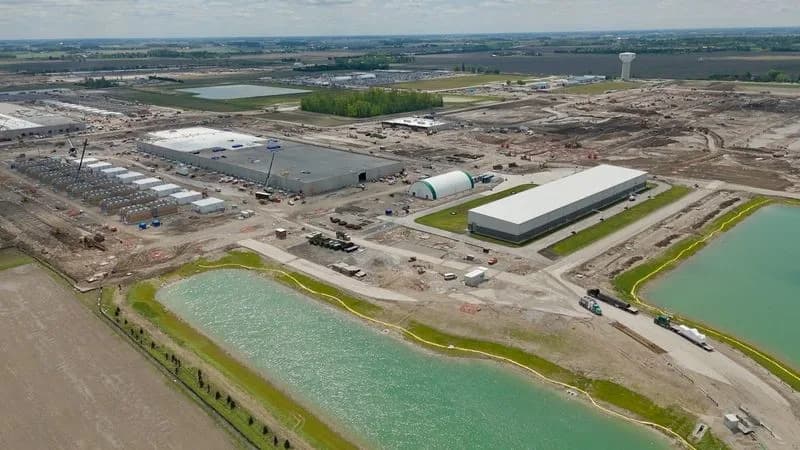
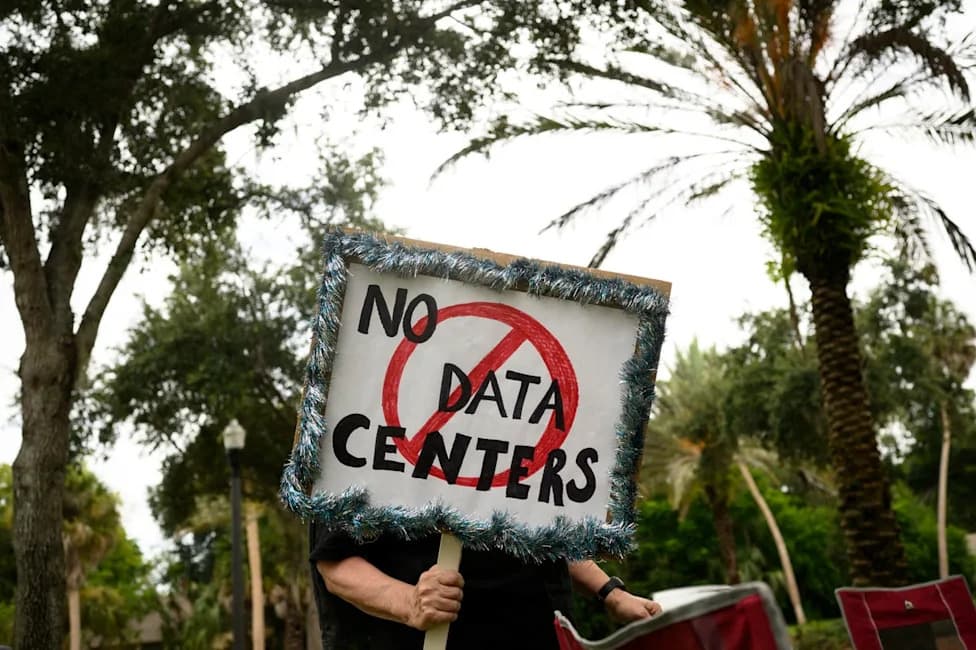
Local resistance has been intense. Protests erupted last summer in states such as Arizona and Wisconsin, and by fall candidates in state legislative races were campaigning against projects. Public surveys cited in reporting indicate that opposition can be widespread — with some polls finding as many as three in four Americans say they'd oppose a data center in their community. Developers have reportedly offered cash incentives (for example, $10,000 checks) and, in at least one West Virginia case, above-market buyouts to placate residents.
Lawmakers Respond — From Symbolic Bills To Exclusions
Republicans have scrambled to manage the political fallout. Some GOP officials remain unabashedly pro-data center, arguing the projects bring jobs and tax revenue; others, like Sen. Josh Hawley (R-Mo.), have pushed to narrow tax eligibility for certain provisions, calling some measures "corporate welfare."
Senate Republicans moved a measure called the Ratepayer Protection Act, which urges states to "consider" avoiding rate hikes to accommodate data centers. Critics called the bill largely symbolic; most Democrats voted to block it from advancing.
Meanwhile, several Democrats have proposed more concrete changes: disqualifying data centers from opportunity-zone benefits or from the full-expensing provision itself. The National Community Reinvestment Coalition estimates roughly 14% of existing data centers are in opportunity zones, and about 17% of planned projects are in such areas.
How Big Are The Tax Savings?
Analysts say the immediate-expensing change delivered meaningful short-term savings to major tech firms. The Institute on Taxation and Economic Policy (a liberal research group) estimated up-front depreciation saved AI companies nearly $27 billion in taxes last year, though not all of that total was necessarily tied directly to data center construction. The Tax Foundation (a conservative research group) estimates that excluding data centers from the break — as some Democrats have proposed — could save the federal government as much as $46 billion over a decade.
Industry observers warn the tax change can substantially accelerate cash flow for hyperscalers, encouraging further investment in compute infrastructure. Critics say those benefits come at the expense of local communities and ordinary taxpayers.
Political Consequences Ahead Of The Midterms
The debate has become a prominent midterm issue, particularly in the Midwest and other regions seeing a wave of data center construction. Candidates such as Sen. Jon Husted (R-Ohio) — who supported data center development while serving in state government — have been targeted by Democrats and outside groups. Defend The Vote recently launched a mult-million-dollar ad buy criticizing Husted's ties to developers.
Whatever the ultimate policy response, data centers and the tax provisions that helped spur their rapid growth have become a combustible political story — one that could shape races in battleground districts this cycle and prompt lawmakers on both sides to reconsider incentives for large-scale tech infrastructure.
Read the original reporting on HuffPost for full context and source details.
Help us improve.