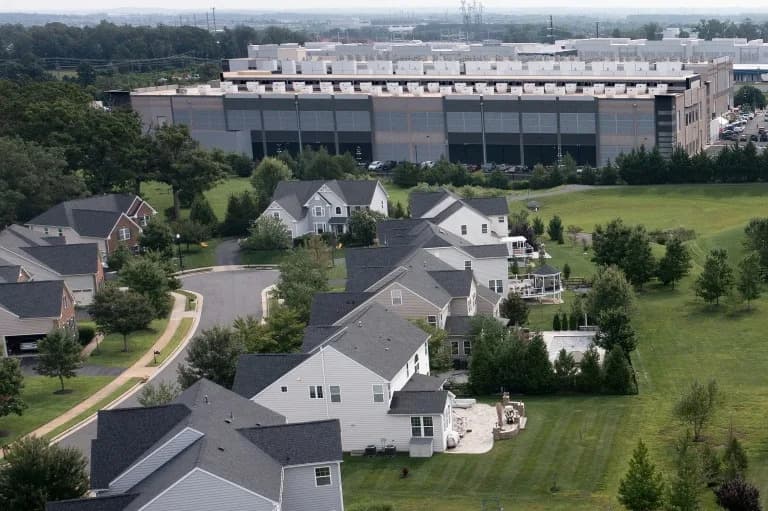
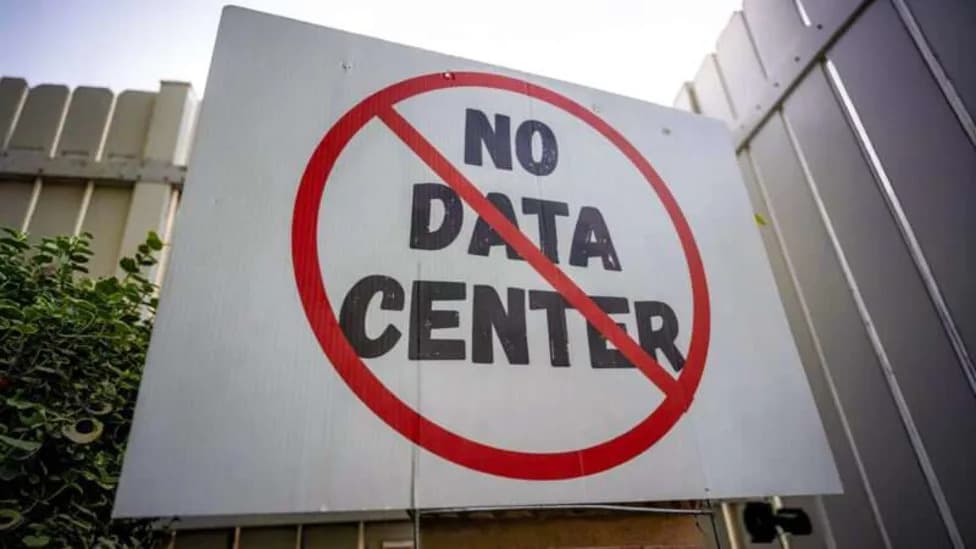
Democratic candidates in Ohio are leveraging growing local opposition to new data centers as an election-season issue. In Defiance, residents pushed a ballot measure and secured a six-month moratorium after learning tech firms had expressed interest. Revelations that Ohio waived over $2 billion in sales-tax revenue for data-center incentives and a poll showing 71% support for a temporary ban have amplified the controversy, shaping competitive House, Senate and gubernatorial races.
Data Centers Turn Into a Midterm Issue as Ohio Towns Push Back — Democrats Seize the Moment
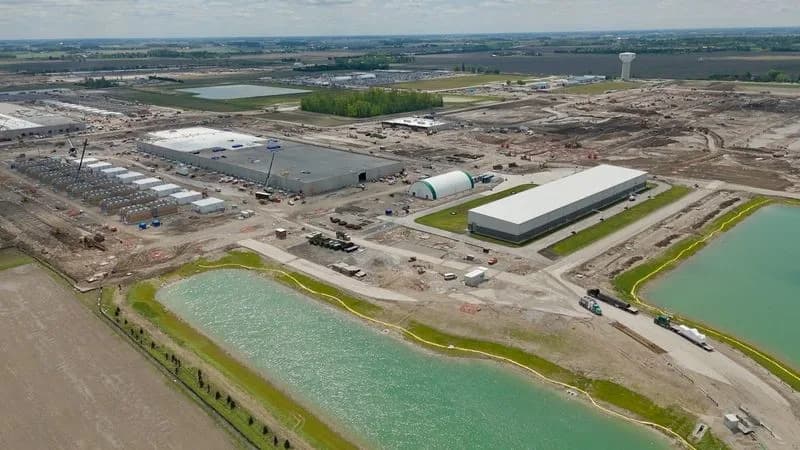
FILE PHOTO: A drone view shows construction underway on Meta's new data center in Middleton Township, Ohio, U.S., May 13, 2026. REUTERS/Eric Cox/File Photo
In Defiance, a farming city of roughly 17,000 in northwest Ohio, no technology firm has formally announced plans for a data center — yet local residents mobilized quickly after learning county economic development officials had fielded inquiries from tech companies.
Local Backlash
Citizens in Defiance spent months collecting signatures for a Nov. 3 ballot measure to ban all but the smallest data centers, and city leaders imposed a six-month moratorium on new project approvals. Many residents worry about the impacts of AI-related facilities on productive farmland, electricity demand and water supplies.
“Most people feel preyed upon by big business,” said Becca Rupp, founder of Citizens for Responsible Development — Defiance.
Those concerns intensified after state tax records showed Ohio waived more than $2 billion in sales-tax revenue through data-center incentives in 2024 and 2025 for companies including Amazon and Meta. An August 31 poll by Bowling Green State University found about 71% of Ohio adults would support a temporary ban on new data-center construction.

FILE PHOTO: U.S. Representative Marcy Kaptur (D-OH) arrives for the U.S. President Donald Trump's State of the Union address to a joint session of Congress in the House Chamber of the U.S. Capitol in Washington, D.C., U.S., February 24, 2026. REUTERS/Kevin Lamarque/File Photo
Political Stakes
The local backlash has quickly become a political issue affecting competitive House, Senate and gubernatorial races in Ohio — a state that could help determine control of Congress. Democratic Representative Marcy Kaptur, facing a tough reelection in a newly redrawn district that includes Defiance, has made data centers a focus of her campaign, accusing her Republican opponent Derek Merrin of supporting unpopular tax incentives.
Kaptur linked data-center growth to rising utility bills and corporate influence: "Politicians are letting these companies pass the costs of their enormous energy and utility demands onto Ohio ratepayers, then handing them billions in tax breaks to sweeten the deal," she said. Local utility FirstEnergy reported residential electricity bills in Defiance rose 10%–15% year-on-year in June.
The issue is also prominent in the U.S. Senate race. Democrat Sherrod Brown has criticized Republican Jon Husted for backing AI infrastructure and tax incentives, calling him "data centers' best friend." Husted's campaign says he has proposed requiring operators to pay for additional generation and transmission capacity.
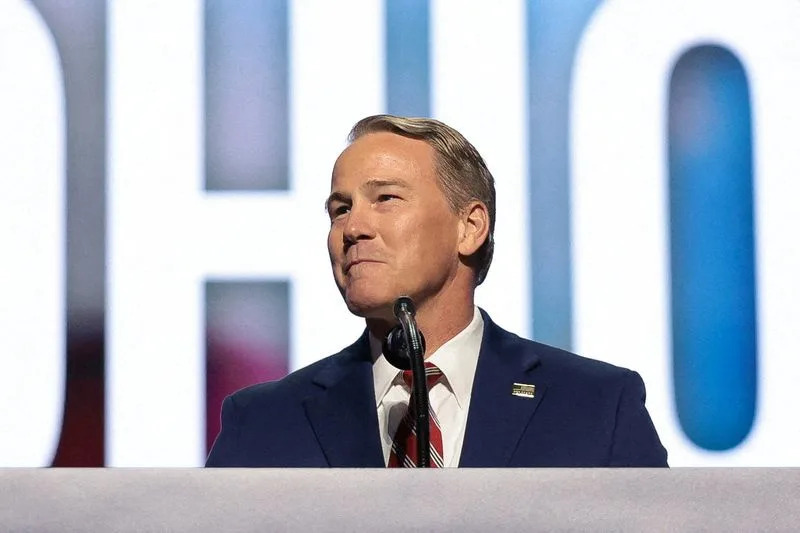
FILE PHOTO: U.S. Senator Jon Husted (R-OH) speaks during the Republican National Midterm Convention in Dallas, Texas, U.S., September 9, 2026. REUTERS/Jessica Koscielniak/File Photo
Policy Proposals and Activism
Governor Mike DeWine paused new applications for data-center tax exemptions while legislators consider reforms, but lawmakers did not address the issue before their summer recess. Candidates from both parties have unveiled competing proposals: Republican Vivek Ramaswamy proposed eliminating local property-tax abatements for data centers and redirecting revenue toward homeowner rebates, while Democrat Amy Acton has called for curbing incentives, requiring developers to fund power infrastructure and imposing union labor standards. Both have suggested limiting construction on productive farmland.
Conserve Ohio and other grassroots groups say the public disclosure of subsidy totals transformed scattered zoning fights into a statewide political controversy. Conserve Ohio is pursuing a state constitutional amendment to ban data centers that consume more than 25 megawatts and is backing local ballot measures across the state. Activists are also urging greater transparency about tax agreements between local governments and data-center operators.
Industry Response
Tech companies argue their projects bring investment and jobs. Amazon says it has invested nearly $40 billion in Ohio since 2015, while Meta reports about $2.3 billion in state investments since 2018. Both companies maintain their facilities produce tax revenue and economic activity for host communities.
For many residents, however, the debate is broader than one industry: it questions whether elected officials are protecting public interests from powerful corporate actors. "This is definitely a breakdown between what government was supposed to do for small America and what it has failed to do for small America," Rupp said. "I think data centers are at the forefront."
(Reporting by Valerie Volcovici in Washington, D.C.; Editing by Jesse Mesner-Hage, Timothy Gardner and Rod Nickel)
Help us improve.