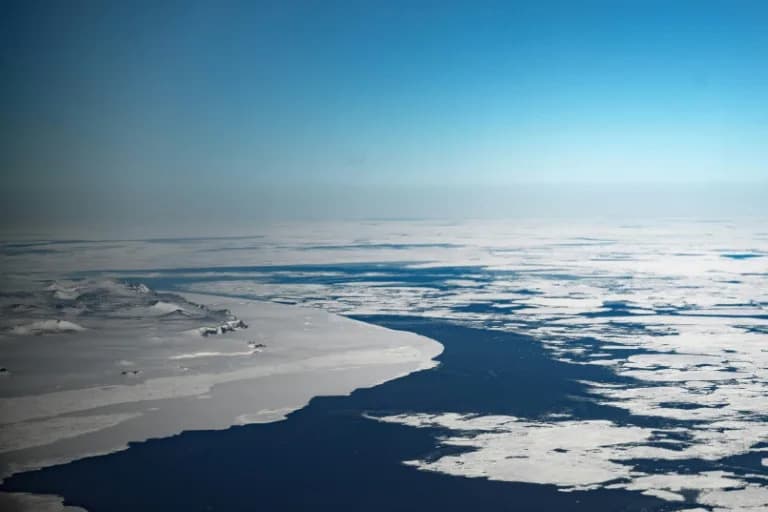
Provisional NSIDC data show Antarctic sea ice reached a winter maximum of 6.79 million sq mi (17.59 million sq km) on Sept. 14 — the third-lowest in the 48-year satellite record. Monthly readings for July and August were also among the lowest on record, and Arctic sea ice hit a summer low tied for the 10th-smallest extent. Researchers warn the figure is provisional, are tracking large regional shifts in ice distribution, and say more years of observations are needed to separate natural variability from longer-term warming. A key ice-thickness model, PIOMAS, has paused updates after a NOAA dataset was discontinued, complicating trend analyses.
Antarctic Sea Ice Falls to Third-Lowest Winter Peak in 48 Years, Scientists Alarmed
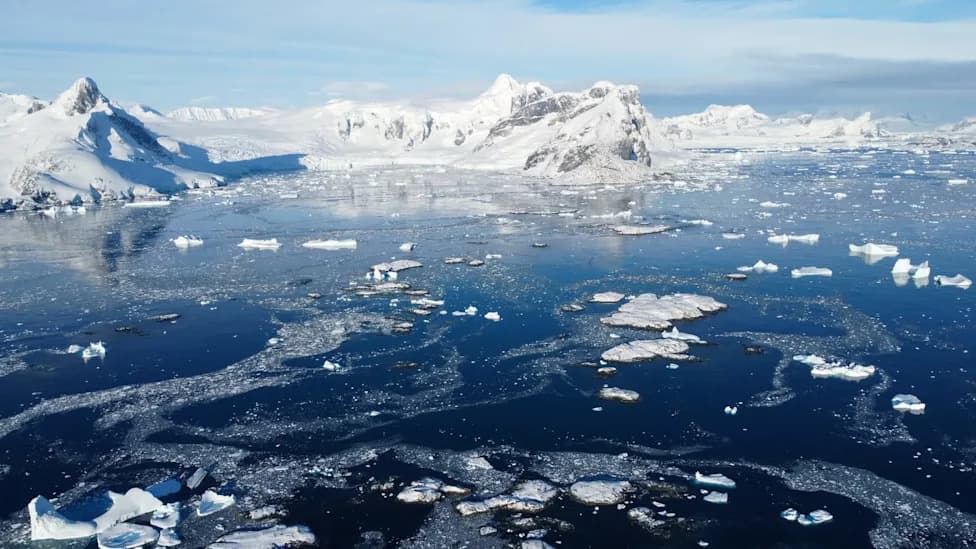
Photo Credit: iStock
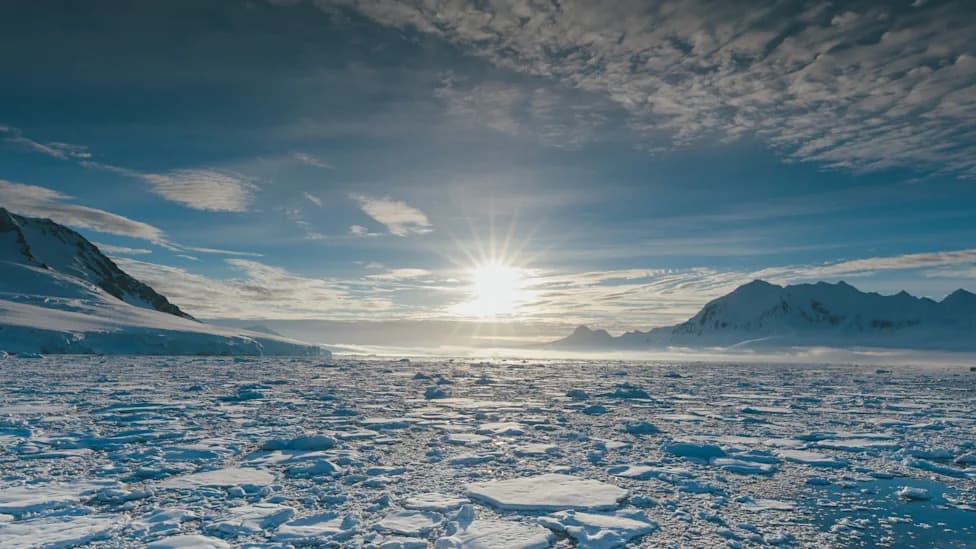
Antarctic sea ice failed to rebuild to a typical winter maximum in 2026, raising concern among polar researchers. Provisional data from the U.S. National Snow and Ice Data Center (NSIDC), reported by Carbon Brief, show the continent's winter maximum occurred on Sept. 14 at 6.79 million square miles (17.59 million sq km) — the third-smallest winter peak in the 48-year satellite record.
Provisional Record and Regional Shifts
The NSIDC cautioned the figure is provisional because Antarctic sea ice commonly fluctuates around the seasonal high. Still, the monthly readings through winter were unusually low: July recorded the fifth-lowest extent on record and August the fourth-lowest. In the Arctic, sea ice hit its 2026 summer minimum on Sept. 12 at 1.78 million square miles (4.60 million sq km), tying 2025, 2010 and 2008 for the 10th-smallest extent in the satellite era.
“Well below average for the season,” said Dr. Lettie Roach, a polar climate scientist at Germany's Alfred Wegener Institute, adding that after decades of stable or increasing winter Antarctic sea ice, it is worrying to see these persistently low values.
Dr. Clare Eayrs, a postdoctoral researcher at the Korea Polar Research Institute, highlighted dramatic regional changes over the growth season. In April the Bellingshausen Sea was “almost entirely ice-free” while the nearby Amundsen Sea held more ice than usual; by late August that pattern largely reversed, with deficits emerging in the Amundsen Sea and across large areas of East Antarctica.
Why This Matters
Sea ice plays multiple critical roles: it reflects sunlight back into space, shields coastlines and ice shelves from waves, and supports ecosystems adapted to cold, stable conditions. Changes in polar ice cover can influence weather patterns, ocean circulation and the pace of global climate disruption. The NSIDC also noted that every one of the 20 lowest Arctic summer minima in the satellite record has occurred since 2007, underlining rapid Arctic decline.
Data Gaps and Ongoing Monitoring
Analysts are working to determine how much of the Antarctic decline stems from natural variability versus longer-term warming. The ice-thickness reanalysis PIOMAS (Pan-Arctic Ice Ocean Modeling and Assimilation System) has paused updates after NOAA ended a global air-pressure dataset the model relied on; PIOMAS developers say identifying and integrating replacement data will take considerable time and effort.
“Compared with the Arctic, it's less clear how recent changes in Antarctic sea ice are attributable to human-caused warming vs natural variability,” Roach said. “We need more years of observations to better understand whether this is truly a structural shift.”
Scientists continue to monitor sea ice closely using satellites, field observations and climate models to determine whether Antarctica is entering a more sustained low-ice period and to assess potential consequences for the Southern Ocean and global climate systems.
Help us improve.