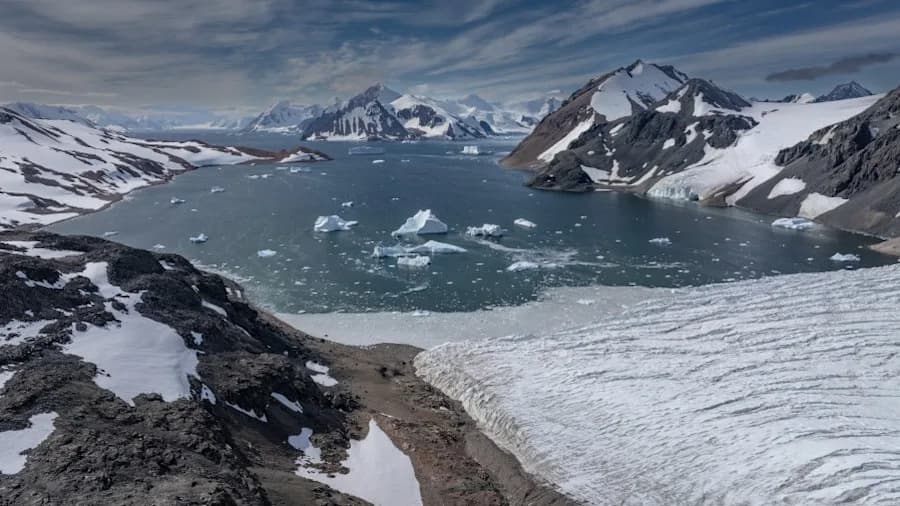
The Copernicus Ocean State Report warns that polar oceans are changing rapidly as warming melts sea ice and erodes habitats. Arctic temperatures rose 4.2°C between 1982 and 2024, while Arctic sea ice has declined by nearly 500,000 km² per decade, exposing coastlines to accelerated erosion. Antarctic ice loss has already driven a large emperor penguin breeding failure and prompted an IUCN upgrade to Endangered. The report highlights growing risks to ecosystems and coastal communities if trends persist.
Polar Oceans Transformed: Arctic Warming, Vanishing Sea Ice and Threatened Penguins — Copernicus Report
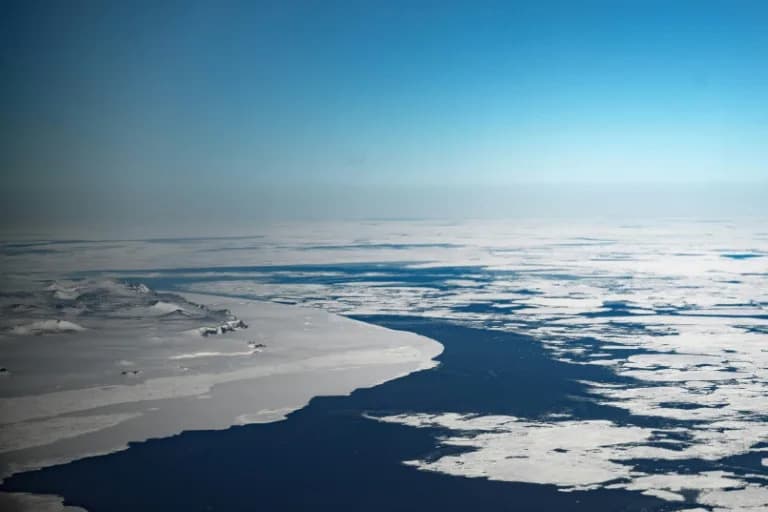
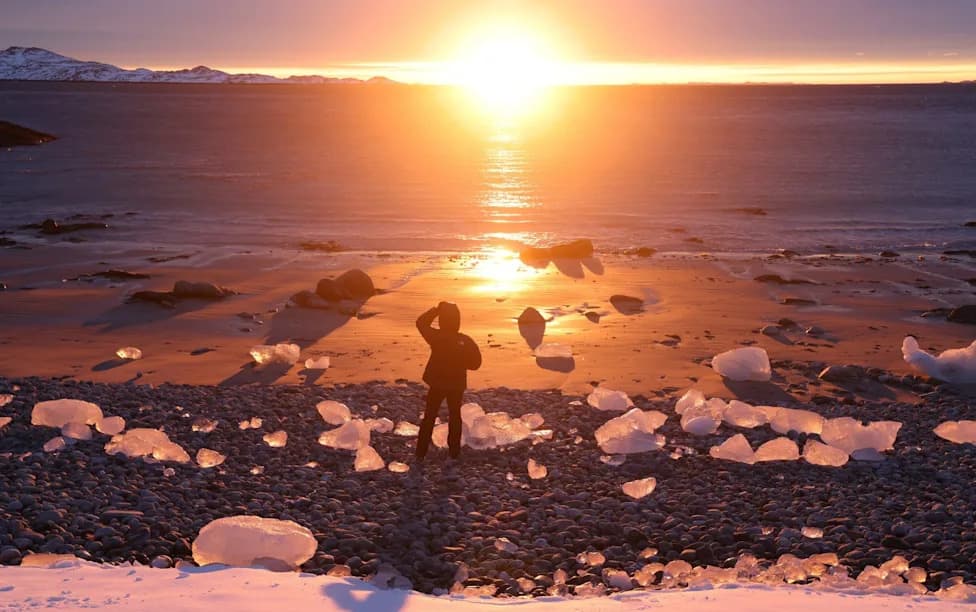
Some of the more dramatic effects from global warming are taking place in the poles, which occupy around 20 percent of the global ocean surface. (Olivier MORIN)
Climate change is rapidly reshaping the polar oceans, with the Arctic warming far faster than the global average, sea ice retreating, and wildlife losing critical habitat at both poles, the Copernicus Ocean State Report says.
Key Findings
The 10th annual report describes widespread ocean changes — from record heatwaves in the Mediterranean and Black Sea to shifting marine ecosystems and increasing acidification — and highlights particularly dramatic impacts in the polar regions, which together cover roughly 20% of the planet's ocean surface.
Arctic warming: The Arctic's combined sea-surface and sea-ice surface temperature rose by 4.2°C between 1982 and 2024 — about 1°C per decade — compared with a global sea-surface warming of roughly 0.12°C per decade. In the Kara Sea north of Siberia, temperatures have climbed by 6.7°C since 1982 (≈1.68°C per decade).
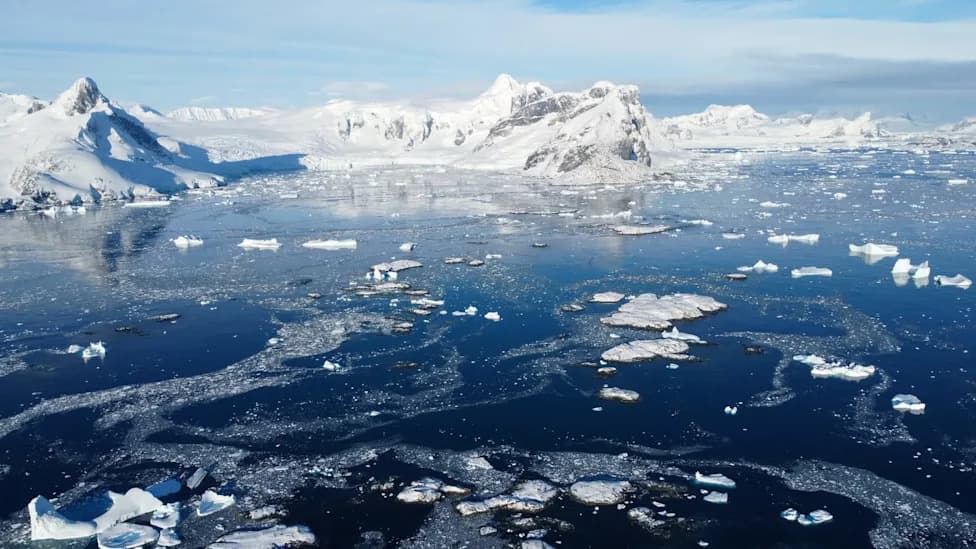
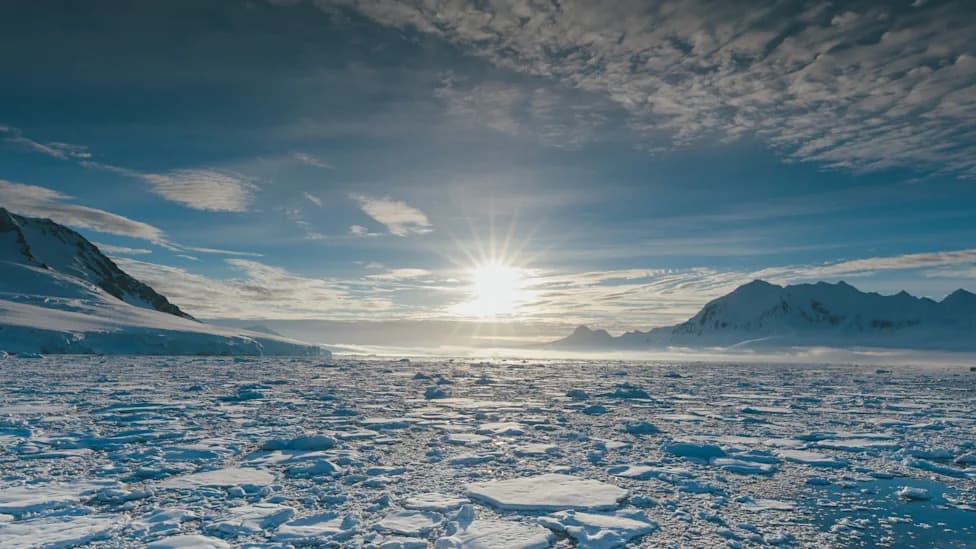
Sea ice loss and coastal risk: Since 1979, Arctic sea ice has declined by nearly 500,000 km² per decade — an area roughly the size of Spain every ten years. Retreating ice exposes coastlines to increased wave action, accelerating erosion and heightening risks to communities and infrastructure.
"The message is very clear. The ocean is changing rapidly," said Pierre Bahurel, director-general of Mercator Ocean International, which runs the EU's Copernicus Marine Service.
According to the report, the decline of Arctic sea ice has left an estimated 60% of coastal infrastructure in the region vulnerable to erosion and sea-level impacts.
Antarctic Impacts and Wildlife
Ice loss in Antarctica is already affecting wildlife. Record-low Antarctic sea ice in 2022 coincided with the first recorded large-scale breeding failure of emperor penguins. Emperor penguins depend on stable sea ice to feed and raise chicks; chicks that fall into freezing water before developing waterproof feathers can perish.
In April, the IUCN upgraded emperor penguins from "Near Threatened" to Endangered. The report warns that if current sea-ice decline continues, more than 90% of emperor penguin colonies could be near-extinct by 2100.
Broader Ocean Changes
The Copernicus report also highlights record marine heatwaves in the Mediterranean and Black Sea and increasing ocean acidification, both of which are shifting marine ecosystems and affecting fisheries, biodiversity, and coastal livelihoods.
"The Arctic sea ice has been declining since the early 80s, leaving around 60 percent of coastal infrastructure vulnerable to erosion and sea level rise," Karina von Schuckmann, director of the oceans report, said in a media briefing.
The report underscores mounting risks to ecosystems, food security and coastal communities worldwide if current warming and ice-loss trends continue.
Help us improve.