Emergency departments in Cincinnati are experiencing longer visit times and mounting strain. New CMS data show average ER stays were nearly three hours between Oct 2024 and Sep 2025, with UC Medical Center averaging more than four hours. Staffing shortages, reduced access to primary care and rising uninsured populations are pushing more people to use ERs as a safety net. Hospital leaders warn policy changes to Medicaid and funding shifts could make the problem worse.
ERs in Crisis: Cincinnati Emergency Waits Grow Longer as Staffing, Access and Costs Bite
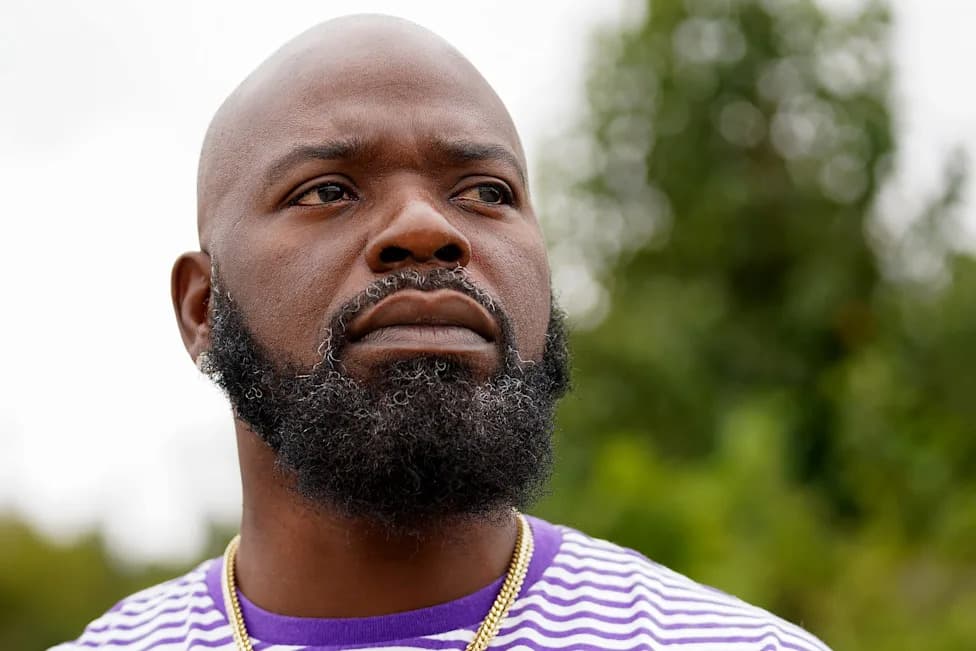
Ron Miller poses for a portrait outside of at Ebony J Media Learning Center, Tuesday, Sept. 22, 2026, in Liberty Township. Miller waited at UC Health's emergency room for 4 hours before leaving without care and having to return the next day to receive surgery for his back.
When 43-year-old Ron Miller began losing feeling in his legs in August, the surgeon who performed his 2025 spinal operation told him to go straight to UC Medical Center's emergency department. Miller arrived around 10:30 p.m., told intake staff that the surgeon had requested admission and that notes were in his file. After a nurse recorded his vitals, he was sent to the waiting room. At about 2 a.m. a clinician escorted him for a CT scan. After the scan he was returned to the waiting area and spent roughly four more hours there before leaving without treatment.
'We felt very ignored,' said Miller's partner, Ebony J. Wynn. 'We are in an emergency, and it felt like nobody was listening.'
Miller's experience is a vivid example of a broader trend. New Centers for Medicare and Medicaid Services data show the average time patients spent in Cincinnati emergency departments before leaving — between October 2024 and September 2025 — was nearly three hours. Across the city, average ER visit times ranged from about two hours to four and a half hours.
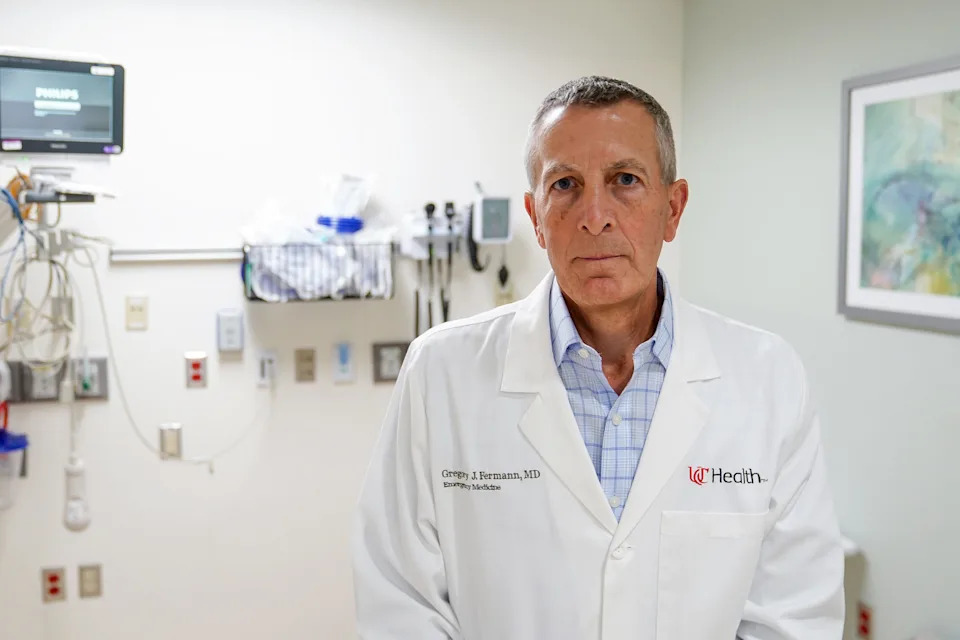
Dr. Greg Fermann poses for a portrait at the University of Cincinnati Medical Center Emergency Department, Tuesday, Sept. 29, 2026, in Cincinnati. Since 2020, Cincinnati's emergency room wait times have averaged around 2.5 hours with the Medical Center's emergency averaging over 4 hours.
Which Hospitals Are Faster — and Which Are Slower
According to CMS, several hospitals averaged under 2.5 hours per visit: St. Elizabeth Healthcare (Edgewood), Mercy Health West Hospital and The Jewish Hospital. Others — including St. Elizabeth Healthcare (Florence), Bethesda North, Good Samaritan and Mercy Health Anderson — averaged more than 2.5 hours. The Christ Hospital averaged about three hours, while UC Medical Center averaged well over four hours.
Why Visits Are Getting Longer
Local clinicians point to three main drivers: staffing shortages, worsening access to outpatient primary care, and rising health-care costs that leave patients uninsured or unable to afford treatment. ERs increasingly serve as a safety net for people who cannot reliably access or afford routine care, medications or follow-up appointments.
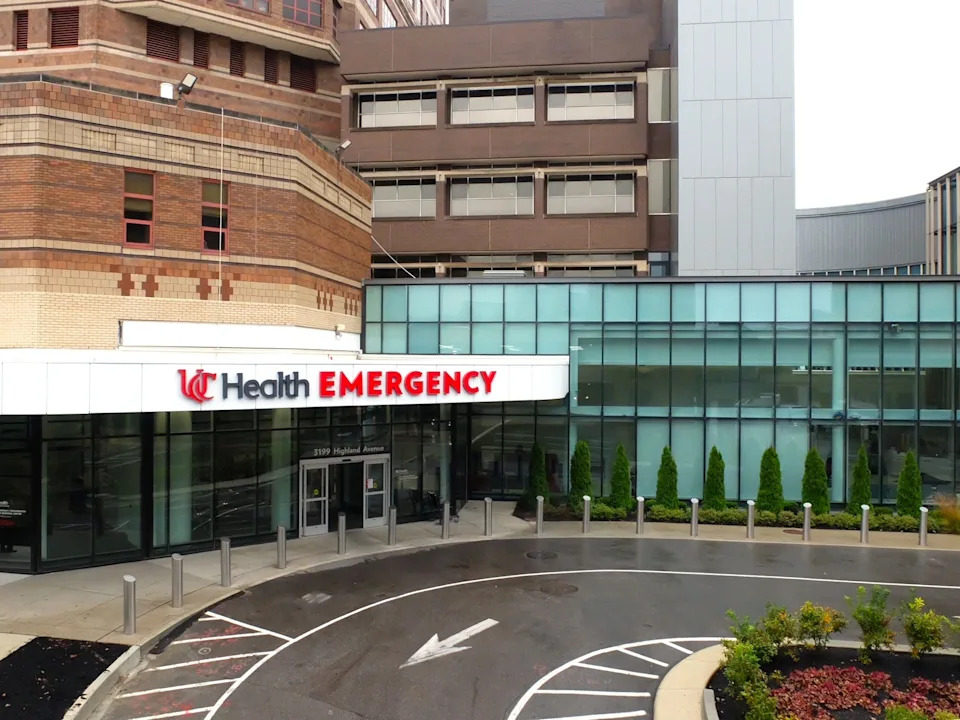
The UC Health Emergency Department has recently undergone a 77,000 square foot expansion.
Candice Elmore, dean of Galen College of Nursing's Cincinnati campus, said, 'It's no secret that people are choosing between medication and food, medication and electricity, medication and heat.' She and other leaders warn that changes to Medicaid eligibility and shifts in funding toward hospitals and providers may push more people to delay care until they need emergency treatment.
The Human Toll on Staff
Staffing shortages are stretching nurses and clinicians thin. Kylee Ham, president of the Registered Nurses Association at University of Cincinnati Medical Center, said many nurses feel they cannot provide the care patients deserve. Some have reported suicidal thoughts; others leave bedside care entirely. Although mandatory staffing ratios often limit ER nurses to four patients at a time, real-world pressures sometimes force nurses to manage six to eight patients simultaneously.

Ron Miller shows his stitches from a recent back surgery, Tuesday, Sept. 22, 2026, at Ebony J Media Learning Center in Liberty Township. Miller waited at UC Health's emergency room for 4 hours before leaving without care and having to return the next day to receive surgery for his back.
When inpatient units lack staff to accept admissions, hospital beds become unavailable and admitted patients are 'boarded' in the emergency department for hours or days. That reduces space for new arrivals and forces emergency nurses to care for admitted patients while also stabilizing incoming cases — a strain Galen likened to 'dominoes falling.'
Scale and Capacity Challenges at UC Medical Center
UC Medical Center's emergency department sees more than 70,000 patients annually, including roughly 7,000 transfers from regional hospitals. As the area's only level 1 trauma center and a comprehensive stroke center, UC receives many high-acuity cases. Even after expanding its ED, leaders say beds are filling faster than staff can treat patients, and a hiring slowdown has made it difficult to shorten visit times.
Triage, Tough Choices, and Patient Experience
Emergency departments triage patients by the severity of their condition, prioritizing life-threatening cases. Dr. Gregory Fermann, chair of emergency medicine at UC Health, said that sometimes this requires sending patients back to chairs in the waiting room even when they are in significant pain or distress. Miller later returned, was admitted after staff located the surgeon's notes, and underwent back surgery for a herniated disc pressing on spinal nerves — but his prolonged wait is far from unique.
Leaders, clinicians and policymakers say addressing the problem will require boosting staffing and retention, expanding primary care access, and aligning policy and funding so people can get timely, affordable outpatient care before conditions become emergencies.
Help us improve.