The reintroduction of 19 wolves to Isle Royale in 2018–19 has largely succeeded: researchers estimate the population has a better than 80% chance of persisting for 20 years. However, a dominant sibling pair and limited gene flow raise serious concerns about inbreeding and long-term genetic health. The moose population has fallen roughly 75% since 2019, and managers have tightened food-storage rules and used deterrents after several unsafe wolf–human interactions.
Reintroduced Isle Royale Wolves Likely To Persist — But Inbreeding and Isolation Loom
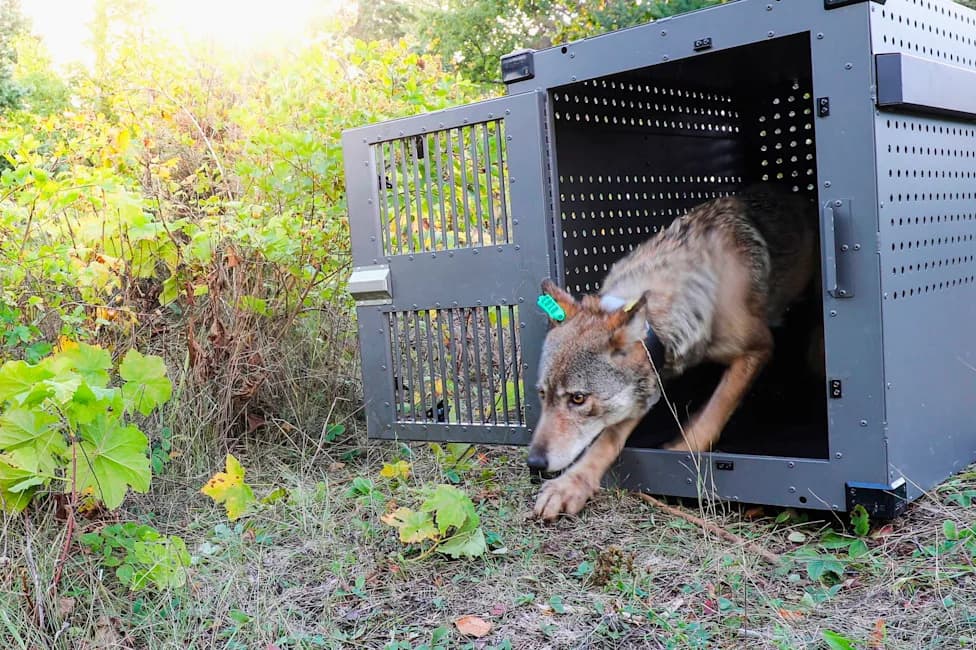
FILE - This Sept. 26, 2018, photo provided by the National Park Service shows a 4-year-old female gray wolf emerging from her cage as she is released at Isle Royale National Park in Michigan. (National Park Service via AP, File)
Researchers who helped reintroduce wolves to Isle Royale report that the restored population is likely to persist for decades, but genetic risks and growing isolation remain serious concerns.
Study Overview
An international team, including Isle Royale National Park staff, tracked wolves translocated to the island in 2018–2019 for five years and published their findings in Conservation Science and Practice. Park officials and researchers moved 19 wolves to the island after the population had dwindled to a single infertile pair in 2016.
Key Findings
The study estimates the wolf population has better than an 80% probability of persisting for 20 years. At the same time, the population shows clear signs of inbreeding and faces increasing isolation from mainland gene flow as warming winters make ice-bridge crossings rarer.
Field teams intentionally selected physically healthy animals for translocation — animals that were not emaciated, had both eyes, and showed no lice or mange. Despite this care, an unexpected social pairing occurred: two siblings from Michipicoten Island bonded and became a dominant breeding pair. That pair founded one of three packs and produced at least 12 pups. By the end of the study period (2023), researchers estimated 27 wolves on Isle Royale and concluded that most pups born during monitoring were related to that family group.
Genetic and Ecological Concerns
Researchers warn that the social dominance of a single family group, combined with the island's growing isolation, may limit genetic diversity and increase the risk of inbreeding depression over time. Inbreeding can reduce body size, weaken immune function, produce physical abnormalities and lower fertility—factors that likely contributed to the population collapse before reintroduction.
Ecologically, the reintroduction has coincided with a sharp decline in moose numbers. Michigan Technological University researchers reported a drop from roughly 2,000 moose in 2019 to about 524 this past winter — a decline of roughly 75% — and counted no moose calves in winter 2026. Researchers attribute the decline to a combination of renewed predation pressure and previous starvation, noting that heavy browsing when moose were more abundant had also damaged key winter browse (balsam fir) that has not yet recovered.
Human–Wildlife Interactions and Management
As wolves repopulated the island, interactions with visitors increased. Park staff reported incidents of a wolf investigating campsites, removing backpacks and entering tents. Managers temporarily closed campsites and used loud deterrents, airhorns and paintball guns to discourage the animal. In the summer of 2025, park personnel euthanized a wolf responsible for repeated unsafe encounters.
To reduce future conflicts, Isle Royale managers tightened food-storage and waste rules, installed 68 food-storage lockers, closed sites when necessary and stepped up visitor education and deterrent use.
Outlook
Separate monitoring after the study period suggested the population continued to grow; a Michigan Tech study estimated about 37 wolves on the island as of the most recent winter count. Researchers emphasize continued genetic monitoring, careful management of human–wolf interactions and consideration of periodic translocations or other genetic interventions if inbreeding begins to impair population health.
Bottom line: The reintroduction has largely succeeded in restoring wolves to Isle Royale, but managers and scientists must remain vigilant about genetic diversity, ecological impacts and visitor safety.
Help us improve.