The U.S. Navy awarded production contracts to Galliano Marine Services, Huntington Ingalls Industries and Saronic Technologies to build 30 MUSVs (10 each) at about $40 million per vessel, with initial deliveries expected before the end of FY2027. Sea Machines, Leidos and PacMar received $15 million for phase-one testing and will be listed on the Defense Department’s drone marketplace. Phase two testing, begun Sept. 23, relaxes some phase-one requirements—such as high-speed and at-sea refueling mandates—to broaden competition as the Navy seeks to grow the MUSV fleet to 30 vessels by 2030, focusing on the Indo-Pacific.
US Navy Awards Contracts for 30 Medium Unmanned Surface Vessels — About $40M Each
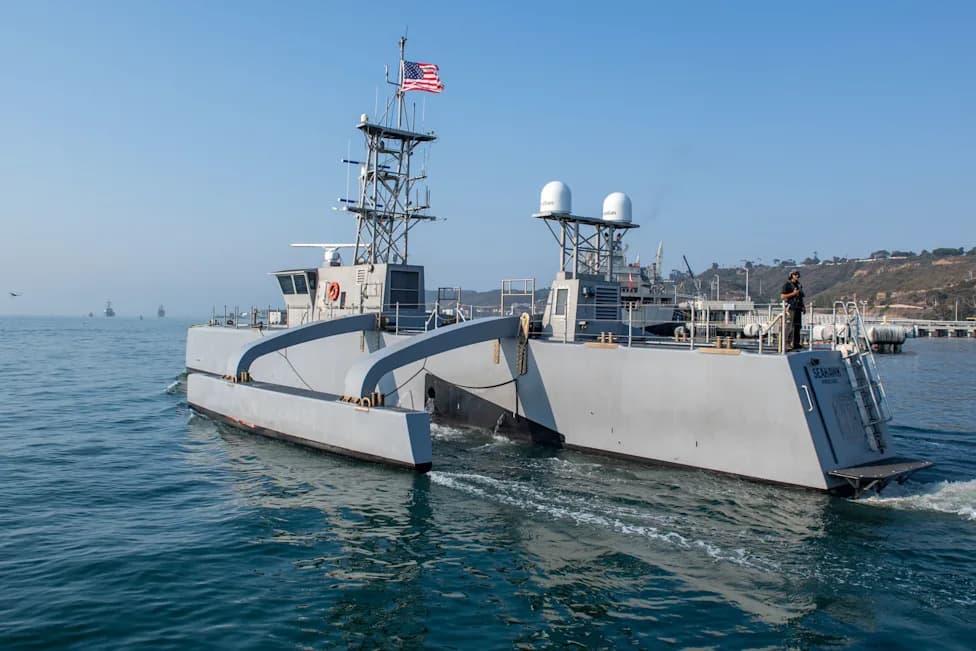
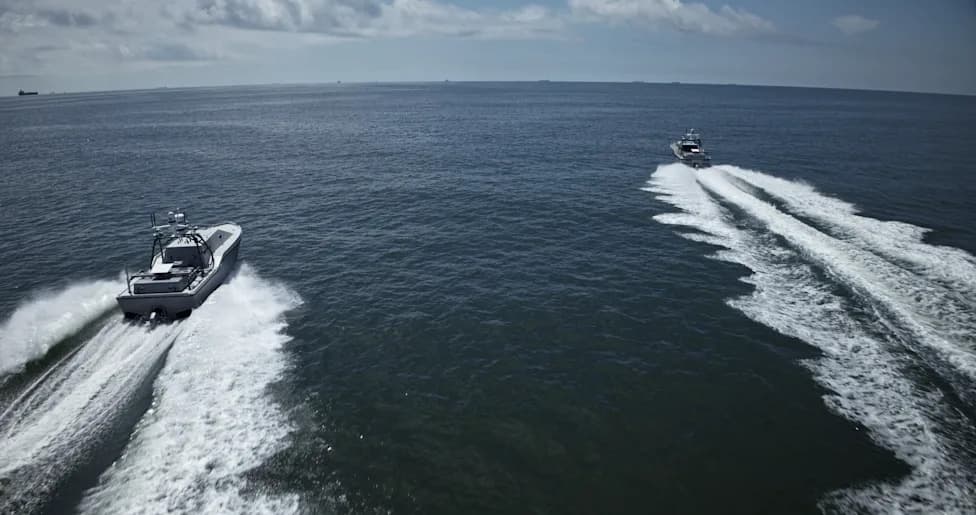
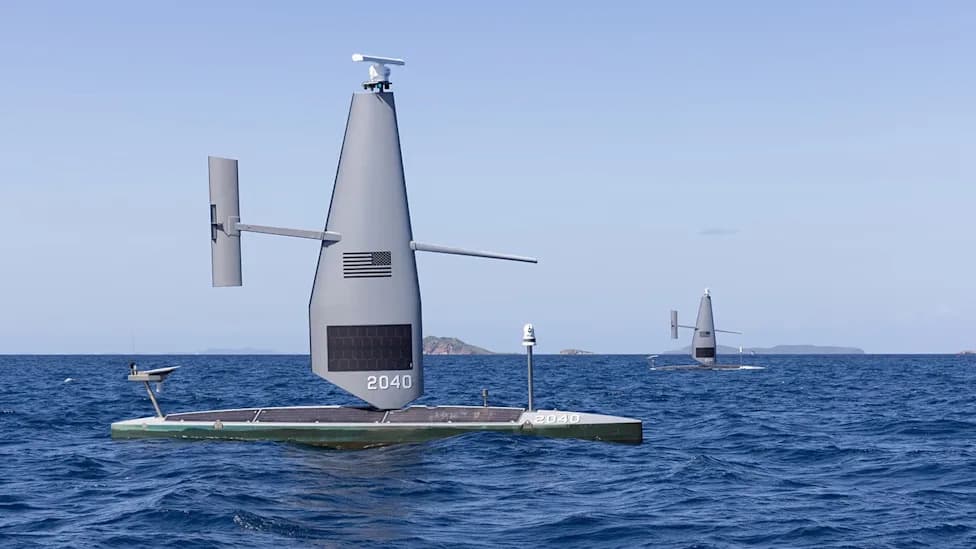
Seahawk, a medium unmanned surface vessel prototype, departs Naval Base Point Loma, California, on Aug. 6, 2025. (MC1 Robert Zahn/U.S. Navy)
The U.S. Navy has awarded production contracts for 30 Medium Unmanned Surface Vessels (MUSVs), selecting Galliano Marine Services, Huntington Ingalls Industries and Saronic Technologies to build 10 vessels apiece at an average procurement cost of roughly $40 million per ship. The service expects the first MUSVs to be delivered before the end of fiscal year 2027.
Phase One Results and Awards
All seven competitors completed phase one at-sea testing for the Navy’s Medium Unmanned Surface Vessel Family of Systems program. In addition to the three winners, Sea Machines, Leidos, PacMar Technologies and Birdon also completed trials. Sea Machines, Leidos and PacMar received $15 million for completing the testing phase and will be listed on the Defense Department’s drone marketplace, making them eligible for future procurement opportunities.
What Phase One Tested
Phase one evaluated each MUSV’s ability to perceive and understand a maritime environment, maneuver autonomously without continuous operator control, and sustain extended deployments. The Navy emphasized autonomous navigation, maritime awareness and long-endurance operations as core capabilities.
Phase Two And Procurement Strategy
The Navy launched phase two testing on Sept. 23 to continue evaluating competing designs and to advance procurement. Navy officials say phase two relaxes some of the stricter phase-one thresholds to preserve competition — notably removing the high top-speed mandate and not requiring at-sea refueling capabilities. Acting Navy leaders framed these adjustments as steps to broaden the industrial base and accelerate fielding.
Acquisition Context And Oversight
Earlier this year the Navy established an MUSV "marketplace" to streamline acquisition and replace the Modular Attack Surface Craft (MASC) program. The move follows a June Government Accountability Office report urging the Navy to rethink how it invests in robotic and autonomous systems to meet urgent fleet needs.
Leadership Changes And Legal Challenges
Rebecca J. Gassler, who had led the Navy’s robotic and autonomous systems portfolio, was removed from her post on Aug. 5 after roughly eight months. Christopher Miller was named acting Direct Reporting Portfolio Manager for Robotic and Autonomous Systems the same day. Separately, firms that participated in the earlier MASC competition — including Blue Water Autonomy and Saildrone — have filed lawsuits alleging they were unfairly excluded from the MUSV process.
Fleet Goals And Regional Focus
The Navy is working to expand its unmanned surface vessel fleet from four vessels to 30 by 2030, prioritizing capabilities and presence in the Indo-Pacific region. The March marketplace solicitation had specified ambitious performance targets — for example, a 2,500-nautical-mile range at 25 knots while carrying a 25-ton payload in moderate conditions — though phase two testing intentionally relaxes some of those targets to encourage broader participation.
Acting officials say the combined approach of phased testing, a marketplace model and relaxed phase-two requirements aims to accelerate delivery while maintaining a healthy competitive industrial base for autonomous surface systems.
Help us improve.