Recent research suggests the final moments of life can be more complex than a steady shutdown. EEG studies have recorded brief organized brain activity as death approached, hospice patients sometimes still process sound hours before death, and cardiac-arrest survivors have reported experiences linked to resuscitation. Vivid end-of-life dreams and rare episodes of terminal lucidity further complicate our understanding, though none of these findings proves consciousness persists after irreversible death.
The Final Moments of Life: 5 Surprising Scientific Findings That Changed How We Think
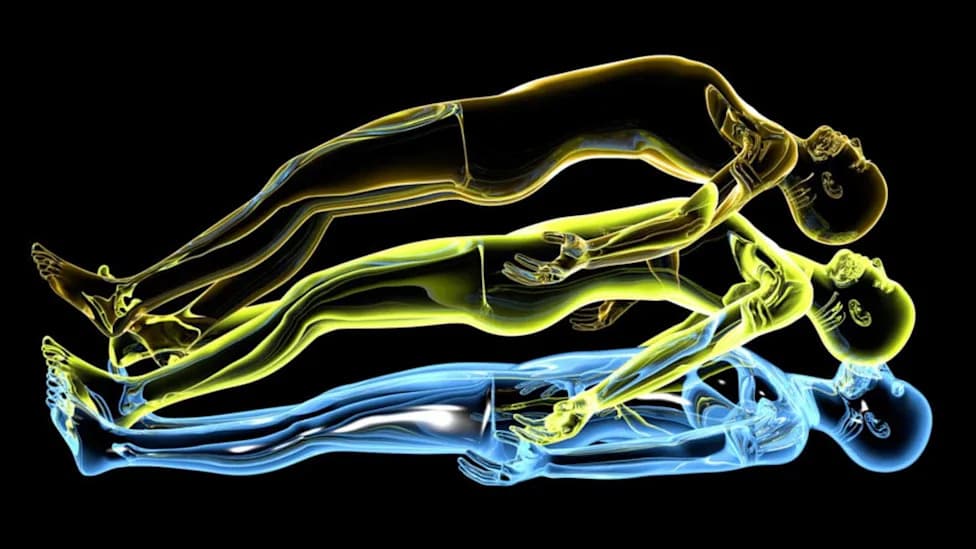
Concept of soul leaving the body
For decades, many imagined dying as a simple, steady biological shutdown: the heart stops, brain activity fades and awareness disappears. Recent research from intensive-care units, hospices and cardiac-arrest studies paints a more complex picture. Across several lines of evidence, scientists have observed brief surges of organized brain activity, preserved sensory processing late in life, vivid end-of-life experiences and rare episodes of sudden clarity.
1. Unexpected Bursts of Brain Activity
In a small PNAS study, researchers analyzed EEG recordings from four comatose patients who died after ventilatory support was withdrawn. Two of the patients showed rapid increases in high-frequency "gamma" activity and stronger connectivity between brain regions as death approached. Gamma oscillations are often linked to attention, memory and conscious processing in other contexts.
What this means: Rather than a smooth, unbroken decline to electrical silence, some dying brains show brief, organized activity. EEG alone cannot prove subjective awareness, but the finding challenges the assumption that brain activity always fades monotonically at the end of life.
2. Hearing May Persist Even When Patients Are Unresponsive
Researchers who recorded EEG activity from hospice patients found that many people who became outwardly unresponsive still produced automatic brain responses to changes in sound. Some even showed higher-level neural responses associated with detecting unusual auditory patterns. Several recordings were made only hours before death.
What this means: Outward unresponsiveness does not necessarily mean the auditory system has shut down. Speaking calmly and respectfully to someone who appears unconscious may still matter to them or to their experience.
3. Awareness and Brain Activity During Cardiac Arrest (AWARE II)
Cardiac arrest gives researchers a different window because circulation — and therefore brain oxygenation — can be temporarily lost and later restored. The AWARE II study, spanning 25 hospitals, combined survivor interviews with EEG monitoring and brain-oxygen measurements during resuscitation. Some survivors reported memories or perceptions tied to the period around their arrest, and investigators sometimes recorded organized electrical patterns during prolonged CPR.

Photo Credit: Deposit Photos
What this means: These findings suggest the brain may retain or regain organized activity for longer during resuscitation than previously assumed. However, timing of recalled experiences and direct evidence of consciousness during irreversible death remain unresolved.
4. Vivid Dreams and Visions Near Death
Longitudinal hospice studies have found that many patients approaching the end of life report vivid dreams and visions. These experiences are often described as realistic, emotionally rich and comforting, frequently featuring deceased relatives or friends. As death draws nearer, comforting encounters with deceased loved ones become more common.
What this means: Whether or not such experiences reflect an external reality, they have meaningful emotional effects and are increasingly recognized components of palliative care.
5. Terminal Lucidity: Rare, Sudden Returns Of Clarity
Terminal lucidity refers to rare episodes in which people with severe cognitive impairment temporarily regain coherent communication, recognition of relatives or lost memories shortly before dying. Much of the evidence is anecdotal or historical, and systematic prospective documentation is scarce.
What this means: If confirmed and measured rigorously, terminal lucidity could offer new insights into memory, consciousness and how damaged brain networks behave near death. For now, it remains an intriguing but poorly understood phenomenon.
Overall Takeaway
Taken together, these findings do not prove that consciousness survives irreversible death. They do show, however, that the biological transition toward death can include brief periods of organized brain activity, preserved sensory processing and vivid subjective experiences that older models did not fully capture. Major caveats remain: neural activity does not automatically equal conscious awareness, timing of recalled experiences can be uncertain, and many observations come from small samples or anecdotal reports.
Question: Which of these five discoveries most changed the way you think about the final moments of life?
Help us improve.