Death is notoriously hard to study in real time. In a rare, accidental recording published in 2022, researchers captured continuous brain activity from a patient who died during monitoring — and the signals hint at a possibly comforting final process.
Dr. Raul Vicente and colleagues at the University of Tartu, Estonia, reported that they recorded 900 seconds (15 minutes) of brain activity around the time of death. Dr. Ajmal Zemmar, a neurosurgeon at the University of Louisville who coordinated aspects of the work, told Frontiers the team focused especially on the 30 seconds before and after the patient's heartbeat stopped.
The patient was an 87-year-old man undergoing monitoring for epilepsy when he suffered a fatal heart attack. Because he was already hooked to monitoring equipment, the team captured the neural oscillations immediately before and after cardiac arrest — an uncommon and otherwise unattainable data set.
What the Researchers Observed
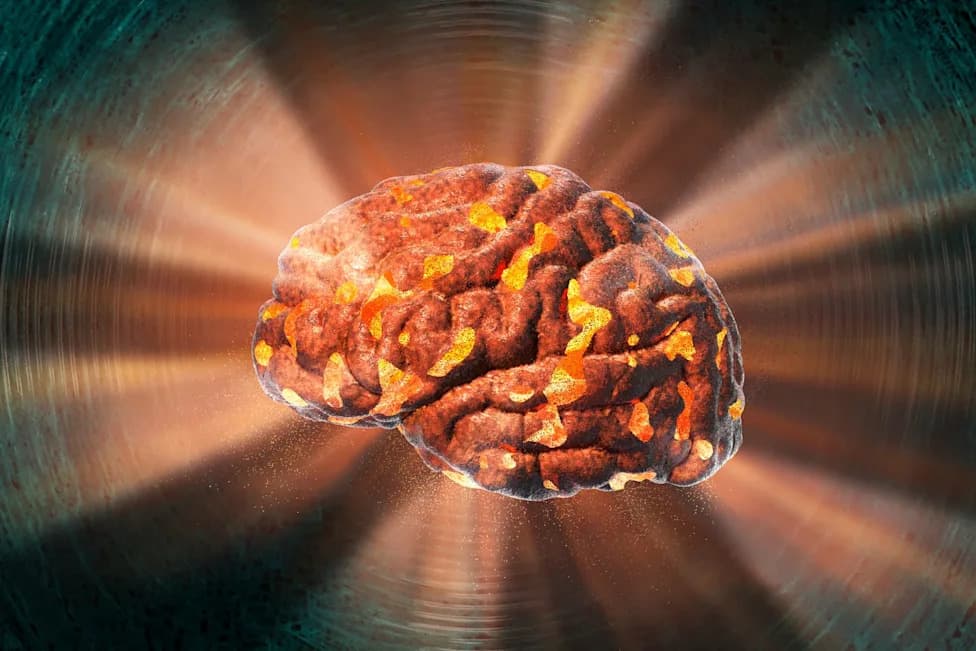
Analysts noted transient changes across multiple frequency bands: gamma oscillations and shifts in delta, theta, alpha and beta activity during the seconds surrounding cardiac arrest. These bands are commonly associated with functions such as attention, dreaming, memory retrieval and vivid recollection.
"Through generating oscillations involved in memory retrieval, the brain may be playing a last recall of important life events just before we die," said Dr. Ajmal Zemmar, reflecting on the findings.
What It Might Mean — And What It Doesn’t
The pattern of activity is consistent with neural processes tied to recollection and vivid imagery, which has led the authors and commentators to propose that some dying people could experience intense memory recall — the familiar idea of a "life flash." These observations also align with anecdotal hospice reports and many near-death experience (NDE) accounts that describe calm, peaceful visions and encounters with loved ones.
However, this was a single, accidental case. Interpreting oscillatory patterns as subjective experiences (what the person actually perceived) remains speculative. The study is an important first step, but it cannot prove that every dying person experiences a life-review or that the activity equates to conscious, narrative memories.
Broader Context And Ethical Questions
Other research shows that aspects of cortical function can persist briefly after clinical death: some people may retain consciousness for up to about 20 seconds after their heart and breathing stop, and CPR can transiently restore blood flow and neural activity. The new data therefore raise practical and ethical questions — for example, about the timing of organ donation and how we define the precise moment life ends.
Ultimately, the study offers a cautiously hopeful perspective: for some people, the final seconds might be accompanied by neural activity linked to memory and calm rather than fear. Researchers emphasize the need for more data and careful interpretation before drawing firm conclusions.
Note: The recording was accidental and involved a single patient; further research is needed to generalize these findings.