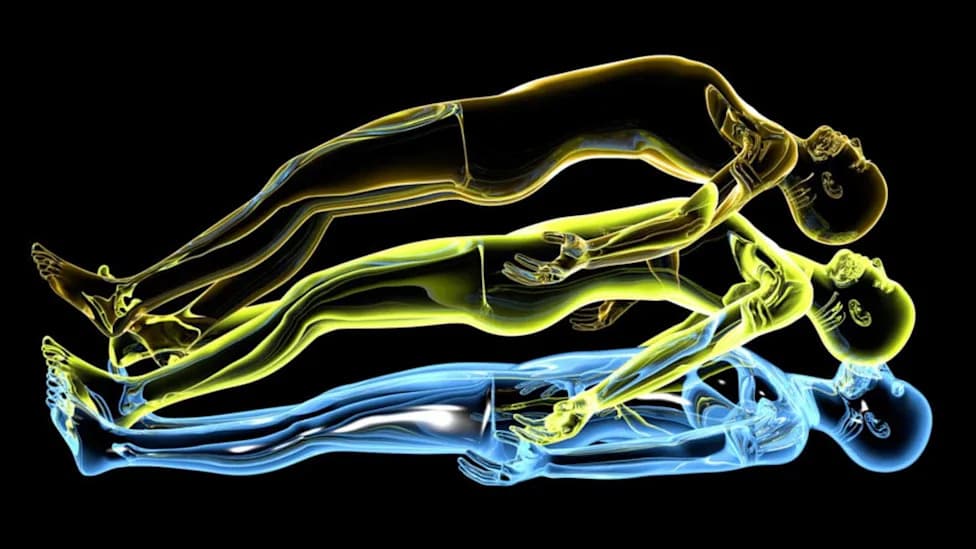
Recent research shows general anesthesia does not simply put the brain to sleep but pushes it into a mix of atypical states: some regions remain active while long-range communication breaks down. Full-scalp EEG and dense electrode studies have revealed regionally distinct, sleeplike and coma-like patterns, and Neuropixels recordings found predictive language responses in the hippocampus of unconscious patients. Scientists hope these discoveries will yield biomarkers to tailor anesthetic dosing, improve intraoperative brain monitoring, and reduce rare events like accidental awareness or postoperative cognitive problems.
What Really Happens to Your Brain Under Anesthesia? New Studies Reveal Surprising Activity
Young woman pointing at digital image of brain
There is an almost instinctive trust involved when a patient accepts general anesthesia: one moment you're answering a nurse beneath bright operating-room lights, and later you wake with no memory of the intervening hours — no sounds, sensations, or dreams, only a blank gap.
For more than a century, clinicians and the public often described anesthesia as a kind of very deep sleep. That shorthand was useful, but recent research shows it misses much of what the brain is doing during the transition from awareness to unconsciousness. Rather than a simple shutdown, the anesthetized brain appears to move through a range of unusual states in which some regions remain active while long-range communication breaks down.
New EEG Evidence: Multiple States, Not One
Work from Yale (published May 2026) analyzed electroencephalogram (EEG) recordings in patients sedated with propofol. Unlike many clinical setups that record only frontal activity, the team placed 20 electrodes across the whole scalp to capture a wider spatial picture. Their results suggest anesthesia does not correspond to a single uniform brain state: different areas can show patterns resembling sleep, others resemble coma, and some dynamics are uniquely anesthetic.
“The old dichotomy that it's either sleep or coma is not true,” said Janna Helfrich of Yale. “It's actually both sleep and coma, and can be similar to both states at the same time, depending on where you look. And yet, there is also an element which is just anesthesia uniquely.”
Dense Electrode Arrays Point to a Biomarker
A separate propofol trial published in Cell Reports Medicine recorded brain activity from 31 participants using 128 scalp electrodes and analyzed signals across nine regions linked to conscious experience. Before sedation, the parietal cortex and thalamus showed strong alpha-band coordination; as anesthesia deepened that coupling weakened. Investigators, including Ti-Fei Yuan, described this change as a potential translatable biomarker that might one day help anesthesiologists titrate drug dose precisely — preventing awareness while avoiding unnecessarily deep states.
Single Neurons Still ‘Listen’ and Predict
Perhaps the most striking findings came from cellular-level recording. A team at Baylor College of Medicine used Neuropixels probes to record single-neuron activity in the hippocampus of patients undergoing epilepsy surgery. While fully sedated patients heard unexpected tones and short spoken stories, hippocampal neurons responded in complex ways: activity patterns could distinguish nouns, verbs and adjectives, and some signals anticipated upcoming words before they were heard.
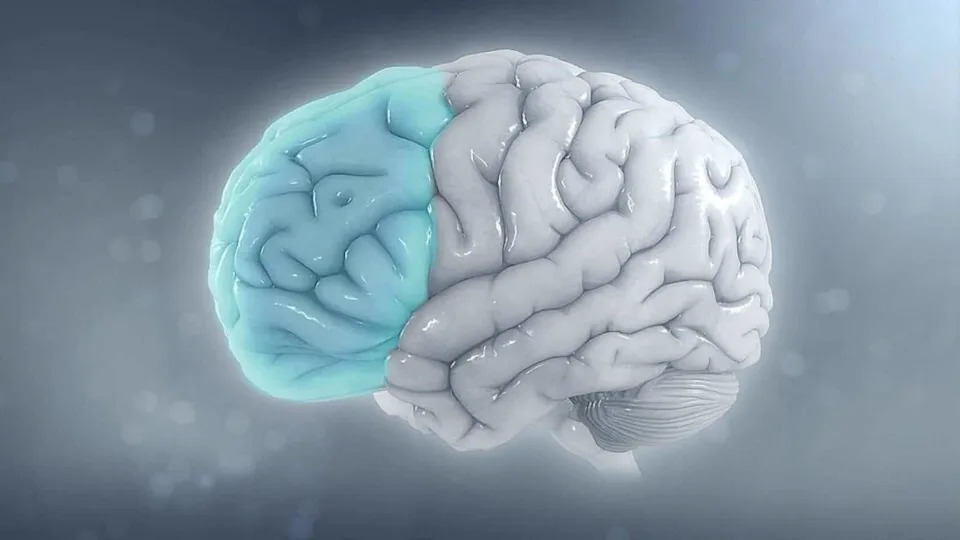
Image Credit:https://www.scientificanimations.com/,CC BY-SA 4.0, via Wikimedia Commons
“The brain appears to anticipate what comes next in a story, even without conscious awareness,” said Sameer Sheth. Benjamin Hayden added, “This kind of predictive coding is something we associate with being awake and attentive, yet it's happening here in an unconscious state.”
Communication Breaks Down More Than Local Activity
Imaging research supports a common theme: anesthesia reduces global activity but more importantly disrupts long-range communication. Individual regions can still respond to stimuli, but the coordinated exchange among distant areas — the conversations that support coherent thought and conscious experience — weakens. Functional MRI studies also show that brains become less distinctive and more similar to one another under sedation.
Clinical Implications And Future Directions
Although anesthetic drugs target the brain directly, routine brain monitoring is not standard in most operating rooms. Researchers argue that better monitoring could steer anesthesia toward brain states that more closely resemble natural sleep instead of deeper, coma-like patterns and might reduce post-operative cognitive or memory problems in older adults or vulnerable patients. The hippocampal findings may also inspire future technologies, such as speech prosthetics for people with certain brain injuries.
There is a practical safety concern as well: accidental awareness during surgery — when a patient regains some consciousness — is estimated at roughly one in 15,000 cases. With hundreds of millions of operations annually, even rare events affect many people.
Takeaway
Scientists still do not have a complete answer for exactly what separates functioning neural circuits from conscious experience during anesthesia. What is becoming clearer is that unconsciousness is not the same as inactivity: beneath apparent silence the brain can remain busy, responsive and far more complex than previously appreciated.
Image credit: https://www.scientificanimations.com/ (CC BY-SA 4.0, via Wikimedia Commons)
Has knowing that the brain remains more active under anesthesia than many assume changed how you think about surgery for yourself or loved ones?
Help us improve.