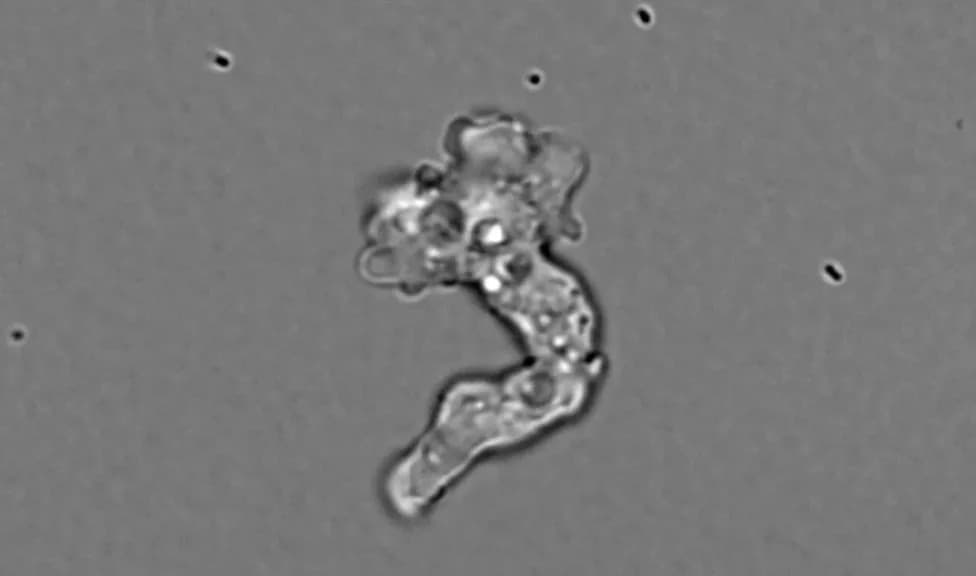
Incendiamoeba cascadensis, a eukaryotic amoeba found in Lassen Volcanic National Park, reproduces at temperatures up to 63 °C (145.4 °F), surpassing the previously assumed eukaryotic limit near 60 °C. The organism grows well at 57 °C and can endure brief exposure to 70 °C by forming a protective layer and changing form. Gene-expression comparisons (48 °C vs 61 °C) revealed upregulated pathways for membrane and protein stability, DNA repair, and cellular preservation—mechanisms resembling those of thermophilic bacteria and suggesting convergent evolution. Researchers are now searching other geothermal sites and related species to map distribution and evolutionary origins.
California “Fire Amoeba” Thrives at 145°F, Pushing the Known Heat Limit for Eukaryotes
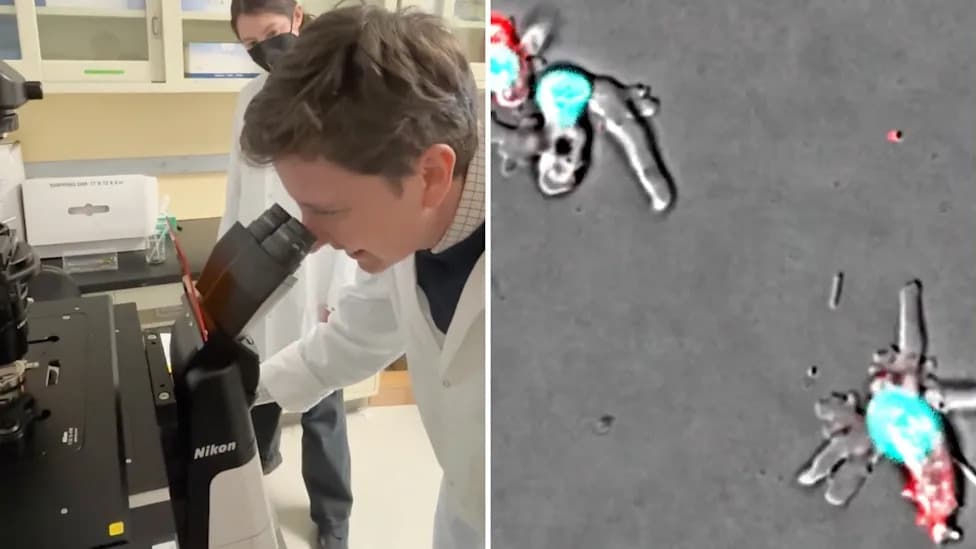
Photo Credit: Syracuse University College of Arts and Sciences
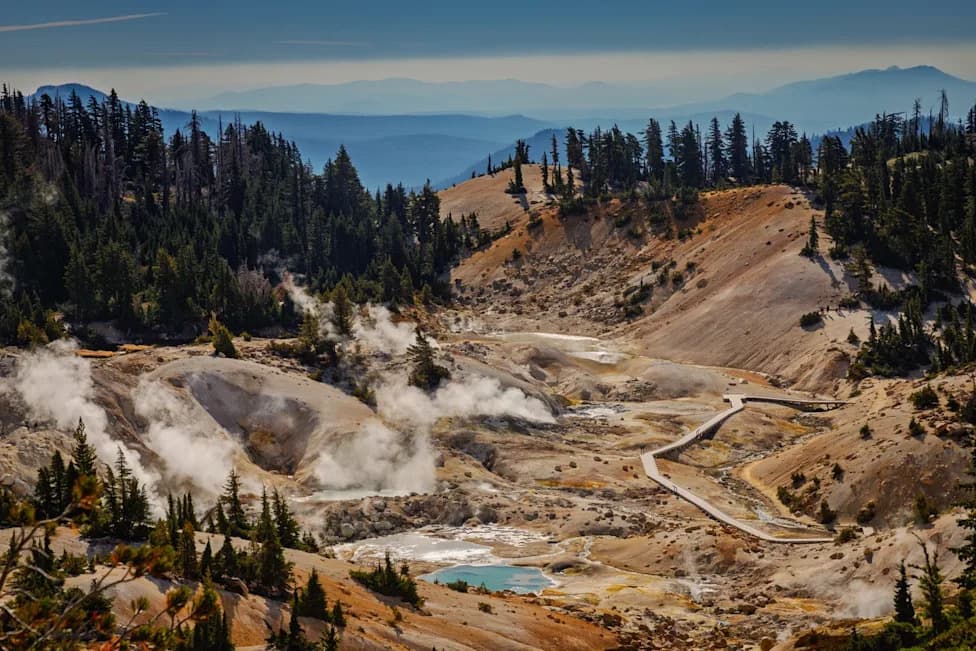
Researchers have discovered a single-celled eukaryote that can reproduce at temperatures previously thought too hot for complex cellular life. Collected from geothermal streams in Lassen Volcanic National Park, the organism—named Incendiamoeba cascadensis—was observed reproducing at up to 63 °C (145.4 °F) and surviving brief exposure to 70 °C (158 °F). The finding, reported in the journal Cell, challenges the long-held assumption that eukaryotes cannot tolerate sustained temperatures above about 60 °C.
Discovery and Context
A team from Syracuse University sampled geothermal waters in Lassen between 2023 and 2025 and isolated an unidentified amoeba that appeared to exceed established thermal limits for eukaryotic life. Unlike prokaryotes—some of which tolerate temperatures well above 200 °F—eukaryotes have internal membranes and organelles that were thought to destabilize near ~60 °C. I. cascadensis shows that more complex cellular architectures can adapt to far hotter conditions than previously documented.
How the Amoeba Survives the Heat
Laboratory observations found the species grew readily at 57 °C and reproduced at 63 °C. When researchers exposed the organism briefly to 70 °C, it survived by altering its shape and forming a protective outer layer, then recovering once temperatures dropped. To probe the mechanisms behind this resilience, the team compared gene expression at 48 °C (118 °F) and 61 °C (142 °F).
"When we compared gene expression of Incendiamoeba grown at 48 °C versus at 61 °C, we found several pathways that were upregulated at 61 °C," said Angela Oliverio, a biologist and biochemist involved in the work, in an interview with Gizmodo.
Genes upregulated at higher temperatures appear linked to maintaining membrane and protein stability, repairing DNA damage, and general cellular preservation under stress. Some of these strategies resemble those used by thermophilic bacteria, suggesting convergent evolution—different lineages independently evolving similar molecular solutions to extreme heat.
Why It Matters
Beyond changing our view of the thermal limits for eukaryotic life, I. cascadensis may serve as a guide for locating other heat-tolerant eukaryotes in geothermal habitats. Studying its adaptations could illuminate how complex cells evolve to survive extreme environments, with implications for evolutionary biology, biotechnology (heat-stable enzymes, stress-resilient biomolecules), and even astrobiology—how life might persist in hot extraterrestrial niches.
"We are searching for Incendiamoeba cascadensis in other geothermal environments to understand its broader distribution," said Beryl Rappaport, a doctoral candidate and co-author. "We are also studying close relatives to trace how high-temperature adaptation evolved and what distinguishes I. cascadensis from related amoebae that cannot tolerate such heat."
The researchers hope their work will prompt broader characterization of unusual microbial eukaryotic lineages that challenge existing rules in biology.
Related Topics
- Spread of heat-tolerant organisms such as Naegleria fowleri in warming waters
- Amoebae that resist chlorine and can harbor other pathogens
- Studies on heat-resistant plant mechanisms (for example, in thale cress)
Help us improve.