Key Finding: Researchers led by Beryl Rappaport discovered Incendiamoeba cascadensis, a eukaryotic "fire amoeba" from Lassen Volcanic National Park that remains motile at temperatures up to 147°F (64°C), exceeding the prior eukaryotic record. Genomic analysis shows inducible stress‑response and protein‑folding genes and a distinctive protein‑stability strategy based on positive charge enrichment. Similar DNA sequences at other geothermal sites hint at undiscovered relatives, and NASA notes the discovery's relevance to astrobiology and the search for complex life in extreme environments.
Meet the 'Fire Amoeba' — A Eukaryote That Thrives Near‑Boiling Heat
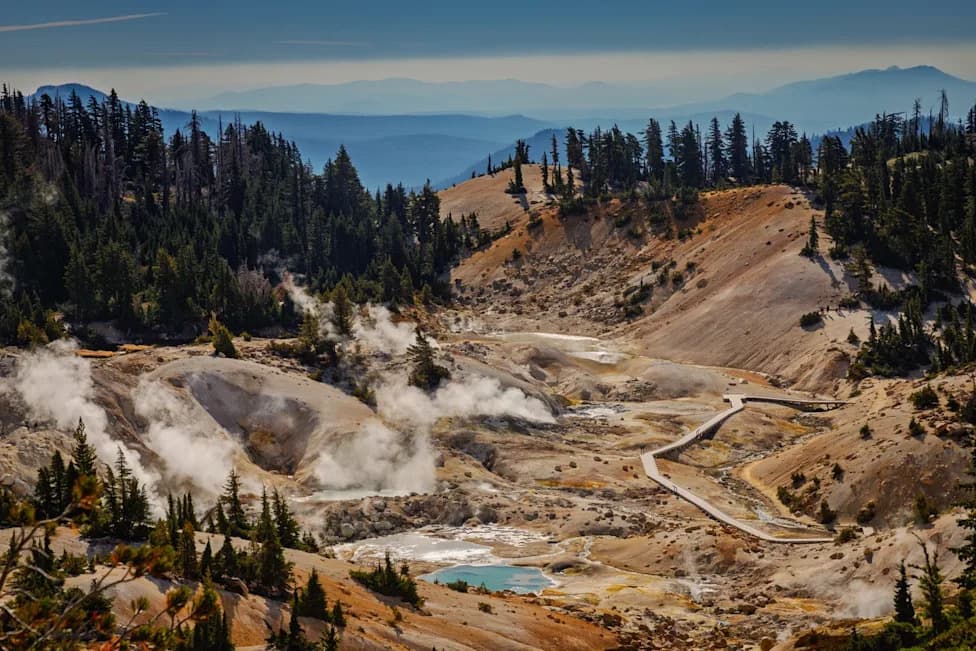
Scientists Found a Lifeform That Shouldn't ExistChristian Moreno - Getty Images
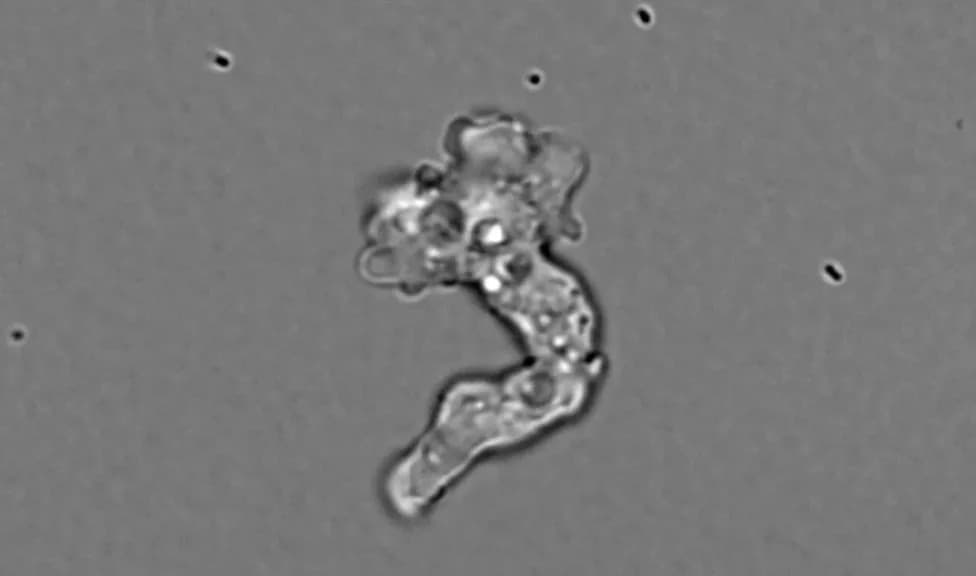
Deep in the steaming pools and fumaroles of Lassen Volcanic National Park, researchers have discovered a remarkable single‑celled eukaryote that challenges long‑held assumptions about how hot complex cells can survive. The organism, Incendiamoeba cascadensis — nicknamed the "fire amoeba" — was isolated from a geothermal creek and remains motile at temperatures up to 147°F (64°C).
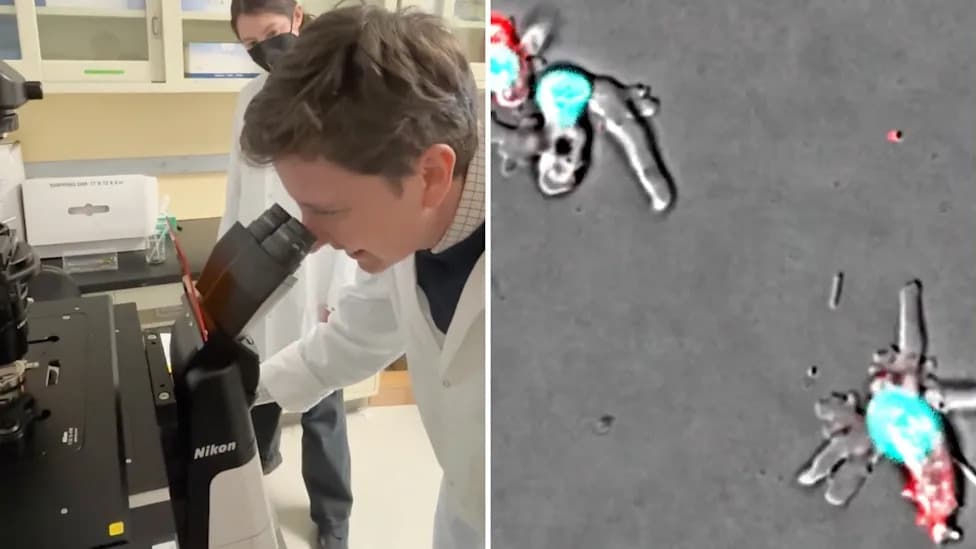
Microbiologist Beryl Rappaport of Syracuse University led the team while surveying thermophilic bacteria and archaea. Using careful field sampling (the researchers lowered sealed vials into scalding waters with tongs), they recovered mixed samples of water, sediment, and bacterial biofilm, then isolated amoeba strains in the lab. The isolates continued to divide with rising incubator temperatures until about 145°F, when cell division slowed and stopped; the cells however still moved and hunted bacterial prey at temperatures as high as 147°F (64°C), surpassing the previous eukaryotic record of roughly 140°F (60°C).
Genomic sequencing reveals how Incendiamoeba withstands such heat. The genome encodes an inducible suite of stress‑response genes that protect DNA, proteins, and organelles as temperatures climb. Genes involved in protein folding are strongly upregulated, and the amoeba appears to use an uncommon biochemical strategy: its proteins are enriched in positively charged amino acids and depleted in negatively charged residues. This compositional bias favors compact, heat‑stable structures and differs from the salt‑bridge stabilization typical of thermophilic bacteria and archaea.
Researchers also detected stretches of DNA in the amoeba's genome that closely resemble sequences recovered from geothermal thermophiles in Yellowstone and New Zealand, suggesting evolutionary relatives may exist at other hotspots. The discovery, published in the journal Cell with partial support from NASA, raises new questions about the true thermal limits of eukaryotic life and points to underexplored diversity among heat‑tolerant complex cells.
Beyond ecology and cell biology, the finding has implications for astrobiology: by expanding the known limits of eukaryotic survival, Incendiamoeba cascadensis helps refine expectations for where and how complex life might persist in extreme environments on other worlds. The team emphasizes that this organism is adapted to Earth's specific chemical conditions, but its unconventional defenses and genomic links to distant geothermal sites make it a compelling model for future searches on land, under the sea, and beyond.
Study Note: Field sampling included geothermal features such as Hot Springs Creek and Boiling Springs Lake; key results are reported in Rappaport et al., Cell.
Help us improve.