Michael Marra, newly elected leader of Scottish Labour, accused the Scottish government of centralising funds and powers at Holyrood and called for money and decision-making to be devolved to councils, colleges and industry. He criticised the SNP's record on education, child poverty and the Glasgow sack-and-rehire plan, and warned Scotland missed out on potential growth — an estimated £30bn if regions had matched Manchester. Marra pledged to make Scottish education world class again as his party rebuilds following a poor election showing.
Michael Marra Accuses Scottish Government of 'Hoarding' Power, Urges Return of Funds to Local Areas
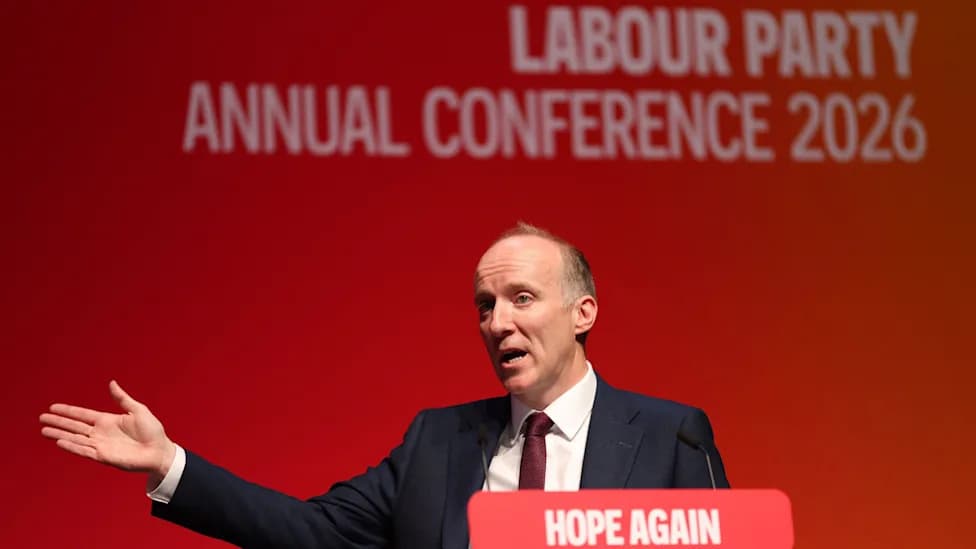
Michael Marra made his first speech to the UK Labour conference in Liverpool [PA Media]
Michael Marra, the newly elected leader of Scottish Labour, used his inaugural address at the UK Labour conference in Liverpool to accuse the Scottish government of centralising money and decision-making at Holyrood and to call for greater devolution of powers to local councils, colleges and industries.
Marra argued that local communities are best placed to decide how to grow their economies and manage public services. He warned delegates against mistaking what he called the SNP's 'progressive posturing' for genuine progressive policy and said it was his job to remind Scots what Labour stands for after a disappointing Holyrood election in May.
'Had our regions grown at the same pace as Manchester in the last decade, the Scottish economy would be £30bn larger,' Marra told the conference.
He said too much authority is concentrated in Edinburgh and accused the Scottish government of keeping funds and control 'at the expense of Scotland's communities.' Marra criticised the SNP's record on education and child poverty and highlighted the row over Glasgow City Council, where the administration had proposed a plan to sack and re-hire 23,000 staff.
Using Scotland's shipbuilding heritage as an example, Marra argued the country currently relies too heavily on foreign labour because skills policy has failed to produce enough trained local workers. 'Shipbuilding – Scotland is famous for it. We're world class at it,' he said. 'There should be a sense of national pride that the ships being built in Scotland provide opportunity and security for Scottish workers.'
Marra urged officials at Bute House to put 'control and money in the hands of the councils, colleges and industries who know what their local economies need better than any bureaucrat in Edinburgh.'
He became leader a week after defeating Joe Fagan in an internal contest and succeeded Anas Sarwar, who stood down from the party leadership and is moving into a new role in the House of Lords. Marra said Andy Burnham was the first senior figure to call him after the victory and joked that while they might not agree on everything – including 'dancing to The Smiths' – different ideas and approaches were welcome.
Scottish Labour returned 17 MSPs in May, leaving the party tied with Reform UK as the second-largest group in Holyrood. Marra acknowledged that the election result 'hurt' and that the party must confront some difficult truths as it rebuilds.
He also spoke about his background in Dundee, where he grew up in a family of committed trade unionists. Marra recalled delivering his first leaflets at age eight for the 1987 general election and paid tribute to his grandmother Margaret, who was the only one of seven siblings to attend college while others worked long hours in the jute mills. He said he remained 'forever grateful' for the sacrifices that enabled later generations to benefit from education.
Turning back to policy, Marra warned that 'not enough lives' in Scotland are being transformed by education and pledged to restore Scottish education to the top international ranks. 'It's no longer the SNP's priority, if it ever was,' he said. 'I will make Scottish education the best in the world again. Not just steady, not just average, the best in the world again.'
Help us improve.