SignalTrace pairs wireless device signatures with license-plate reader data to detect clusters of devices that regularly travel together. While Leonardo says the system "does not identify people," repeated co-location with a vehicle or other known devices can let investigators infer who carried a device. Research on mobility data and recent Supreme Court rulings (Carpenter and Chatrie) highlight the privacy and Fourth Amendment questions this technique raises. Policymakers should consider transparency, oversight and limits on retention and queries for such systems.
New Surveillance Tool Links Nearby Device Signals to License-Plate Readers — Raising Privacy and Legal Questions
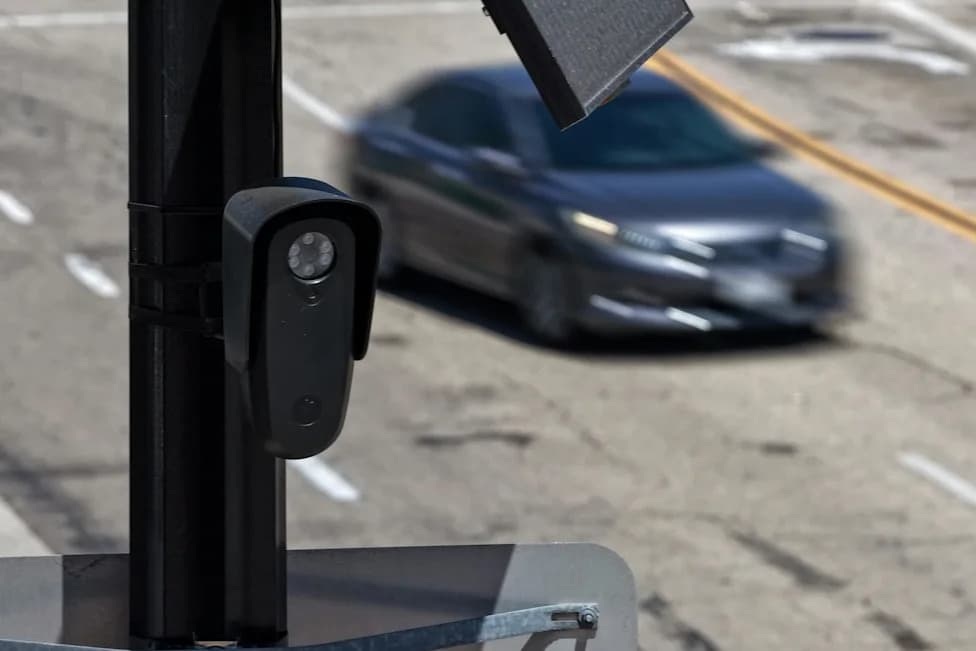
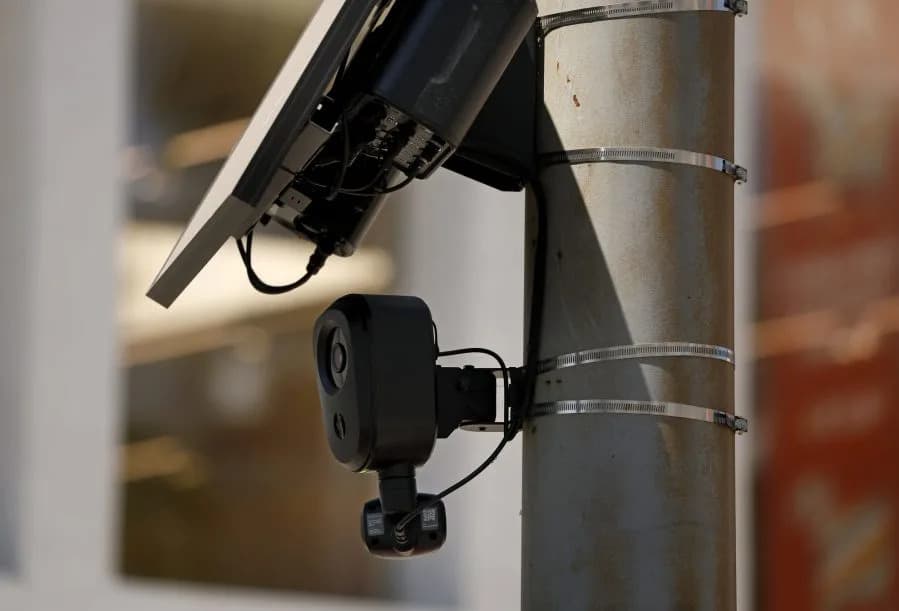
License plate readers like this one could soon be joined by sensors that detect phones inside passing cars.Justin Sullivan/Getty Images
Imagine you carpool with the same colleague most mornings. A license-plate reader logs the vehicle as it passes, and a nearby sensor simultaneously records wireless signals emitted by devices in or around the car — a smartphone, a smartwatch or an in-car Bluetooth device. Over time, software can learn that certain device signatures routinely travel with that vehicle. Weeks later, if one of those same signatures appears beside a different car involved in an investigation, investigators may treat the prior association as a clue to who carried the device.
How SignalTrace Works
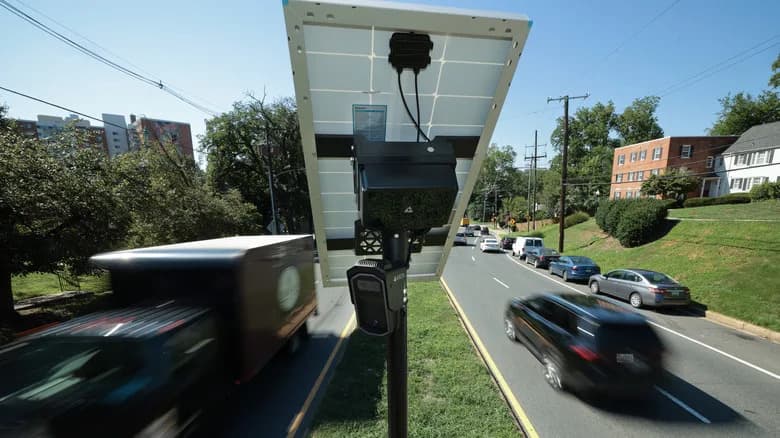
SignalTrace, a system marketed by the security company Leonardo, is designed to operate alongside automatic license-plate readers. Leonardo says the product detects and stores electronic signatures broadcast by consumer devices (such as Bluetooth and some RFID signals), groups signatures that frequently move together, and links those groups to license-plate records and time-stamped locations. Investigators can then search for patterns of co-location even when they do not already have a specific plate number.
What The Company Says — And What That Means
Leonardo’s materials emphasize that SignalTrace “does not identify people,” noting it only records electronic signatures rather than extracting names. But the distinction is limited in practice. Repeated correlations — a device signature consistently seen with a particular car, outside a particular home, or near other devices already tied to a person — can allow investigators to infer device ownership. In other words, an initially nameless pattern can become identifying when combined with other records.
Evidence, Capabilities, And Limits
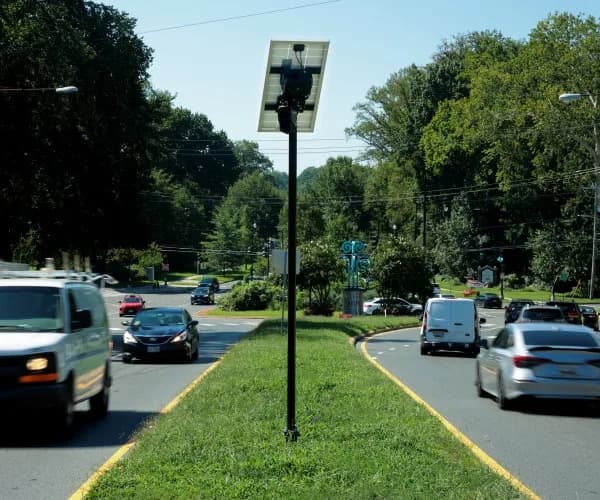
Company documents indicate SignalTrace stores electronic fingerprints for later queries, can sometimes recognize a vehicle without visually reading its plate, and is designed to help identify suspects by the mix of devices they carry. The firm’s predecessor technology appears on a New York State contract price list, and reports indicate installations of related devices in locations such as Oxon Hill, Maryland. Independent, peer-reviewed evaluations of SignalTrace’s real-world accuracy and error rates are not publicly available.
Legal And Privacy Implications
Federal guidance defines personally identifiable information broadly. The National Institute of Standards and Technology (NIST) treats data as identifying if it can distinguish or trace an individual alone or when combined with other linkable information. Research on mobility data underscores this risk: a Scientific Reports study of 1.5 million people found that four specific time-and-place points were enough to uniquely identify about 95% of individuals in the dataset.
The U.S. Supreme Court has recognized that location records can reveal intimate details of people’s lives. In Carpenter v. United States the Court held that people have a reasonable expectation of privacy in detailed historical location records. In June 2026 the Court’s decision in Chatrie v. United States found that acquiring anonymized location datasets and narrowing suspects by movement patterns can amount to a Fourth Amendment search, noting even short-term monitoring can reveal political, familial and other associations.

Your devices – and the devices of people near you – emit unique electronic signals.Nisian Hughes/Stone via Getty Images
Chatrie focused on historical location records held by third parties; SignalTrace instead senses broadcasts from nearby devices. Whether collection of proximate wireless signatures by roadside sensors constitutes a Fourth Amendment search has not been settled, but both technologies raise closely related constitutional and policy questions: what protections apply when investigators start from unidentified device signatures and use movement and co-location to identify likely owners?
Practical Risks And Sources Of Error
Association is not proof. Devices move independently of people: they can be lent, left in vehicles, or carried by different people on different days. Roadside sensors can capture bystanders standing near a target vehicle. A correct match between a device signature and a vehicle does not prove who carried the device at a specific time. Nevertheless, such patterns can shape investigative choices and direct further scrutiny, potentially producing false leads or disparate impacts.
Why This Matters
Patterns of repeated proximity can reveal social ties and routines — family members, commuters, protest participants or casual passengers. Academic work shows proximity data can strongly indicate relationships: a Proceedings of the National Academy of Sciences study of 94 participants found that Bluetooth proximity and calling patterns could classify 95% of reported friendships. Although SignalTrace uses different methods and lacks independent validation, the underlying insight is the same: repeated co-location can become identifying.
Policy Considerations
SignalTrace illustrates a broader shift: surveillance systems may increasingly allow investigators to start from anonymous movement patterns and then attach names using existing records. Policymakers and courts should consider whether existing rules for license-plate readers and location data adequately address systems that identify people indirectly through patterns and associations. Areas for consideration include transparency about deployments, limitations on retention and query use, auditability, and judicial oversight for searches that rely on inferred associations.
Author: Nicole M. Bennett, Center for Refugee Studies, Indiana University.
Republished from The Conversation. Originally published August 11, 2026.
Help us improve.