New killifish species Laimosemion laranja was discovered in the Rio Cajari region of Amapá in the Brazilian Amazon. Males display bright orange chevrons and the species is diagnosed by a unique row of eight scales and distinct mitochondrial DNA. Known from only three small forest pools (~10 sq mi / 26 km²), it faces threats from deforestation, mining, urban expansion and plastic pollution, prompting researchers to recommend IUCN endangered status and immediate conservation action.
Dazzling New Killifish Discovered in the Brazilian Amazon — Scientists Urge Endangered Listing
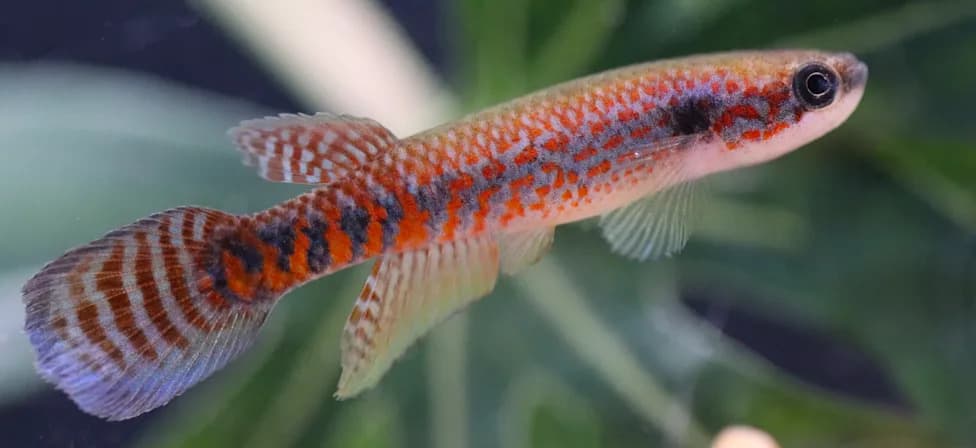
Researchers have described a striking new killifish species, Laimosemion laranja, from the Rio Cajari region of Amapá in the Brazilian Amazon. The species is notable for the males’ bright orange chevron-shaped bars and an unusual diagnostic scale count, and the discovery team is already recommending it be listed as endangered because of its tiny range and mounting habitat threats.
Details of the Discovery
Laimosemion laranja was found during a biodiversity survey of freshwater fauna in rivers and small forest pools near Laranjal do Jari. The specific name, laranja, is Portuguese for both the color orange and the fruit, honoring the fish’s vivid coloration and the municipality close to the discovery site.
Appearance and Size
Even among killifish, L. laranja is very small. Males are more vividly colored and slightly larger than females; the largest specimen recorded measured about 1.1 inches (≈28 mm) in length. Females are noticeably duller, lacking the bold orange chevrons on the rear half of the body and exhibiting yellowish or greenish fin tones rather than the brighter orange and blue seen in males.
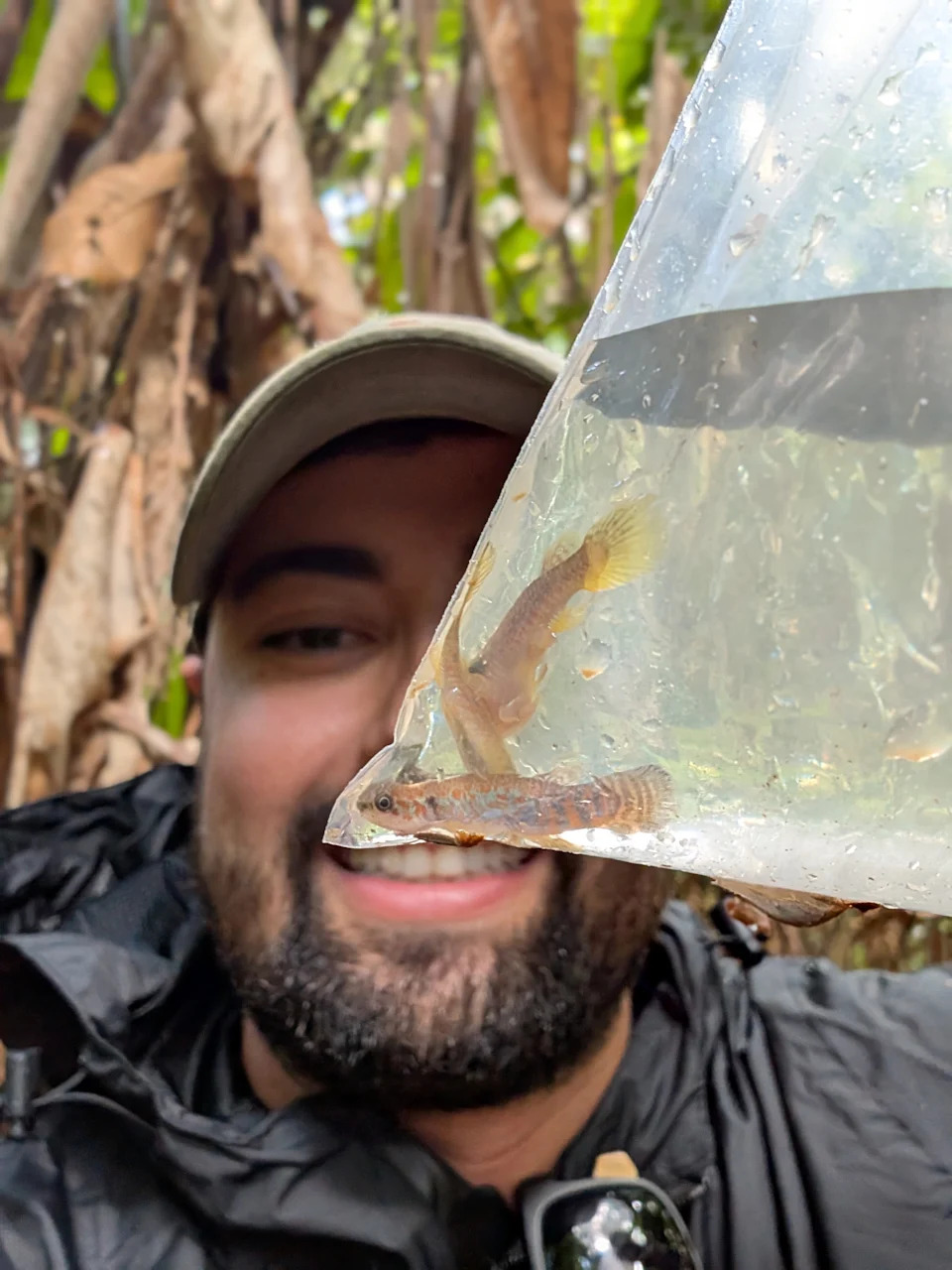
Researcher Waldir Miron Berbel-Filho with collected L. laranja.Credit: Yuri Abrantes
How Scientists Confirmed a New Species
The research team used a combination of morphological and genetic evidence. They examined body proportions, scale counts and skeletal characters; the most conspicuous diagnostic trait is a row of eight scales across the body, a count not found in close relatives. The scientists also sequenced mitochondrial DNA — a common genetic “barcode” — and found differences that support recognition of L. laranja as a distinct species.
“We wanted a name that highlighted a characteristic of the fish while fostering a connection with the local people,” said study author Yuri Abrantes of the Universidade Federal do Rio Grande do Norte. The species description appears in the journal Zoosystematics and Evolution.
Conservation Concerns
To date, L. laranja has been documented in just three small forest pools covering roughly 10 square miles (≈26 km²). Its habitat faces multiple threats, including deforestation, mining, expanding urban areas and plastic pollution. Because of its very limited distribution and these pressures, the research team recommends that the species meet the International Union for Conservation of Nature (IUCN) criteria for listing as endangered.
Field collector Waldir Miron Berbel-Filho contributed specimens used in the species description. The authors emphasize that rapid conservation measures are needed to protect L. laranja while populations remain extant.
Lead image: Yuri Abrantes
Help us improve.